24V Lithium Batteries
24V is the sweet spot for a lot of builds — same power at half the current, so cables run cooler and longer runs get cheaper. Our range runs 50Ah to 200Ah in native 24V: one BMS, one set of cells, no pairing puzzles.
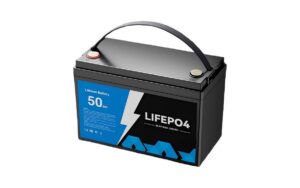 24V 50Ah LiFePO4 Deep-Cycle BatteryView details →
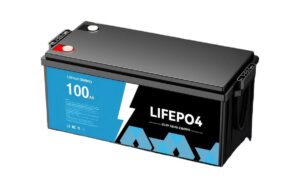 24V 100Ah LiFePO4 Deep-Cycle BatteryView details →
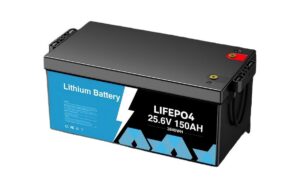 24V 150Ah LiFePO4 Deep-Cycle BatteryView details →
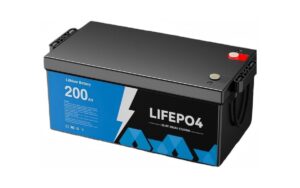 24V 200Ah LiFePO4 Deep-Cycle BatteryView details →
24V LiFePO4 Capacity: What Each Size Delivers
| Model | Nominal energy | Typical use |
|---|---|---|
| 24V 50Ah | 1.28kWh | Compact van builds, backup, small trolling setups |
| 24V 100Ah | 2.56kWh | Campervans, marine house loads, off-grid cabins |
| 24V 150Ah | 3.84kWh | Longer autonomy: fridges, inverters, work sites |
| 24V 200Ah | 5.12kWh | Whole-system storage for vans, boats and small homes |
Two 12V in series, or one native 24V?
Both work. A native 24V pack means one BMS balancing one set of cells — no mismatched pairs, no “why is one battery always weaker” emails. If you already own 12V units, series is fine — just match model, age and charge level.
24V Lithium Battery Supplier & Wholesale: What Buyers Check
LINEX supplies native 24V LiFePO4 batteries from 50Ah to 200Ah — wholesale, OEM and private label — from Shenzhen to distributors, solar installers and RV or marine dealers in Africa, Southeast Asia, the Middle East and South America.
- One BMS, one cell batch. Each pack is built from a single cell model and a matched batch, so units in the same order behave the same way in the field.
- Capacity mix in one shipment. 50Ah, 100Ah, 150Ah and 200Ah models can be combined in one order, which keeps distributor stock balanced and freight per kWh lower.
- Export documentation. UN38.3 test summary, MSDS and a Class 9 dangerous goods declaration are prepared for the exact model and destination market.
- OEM and after-sales. Private-label cases and labels, custom cable lengths, and a 5-year warranty on applicable models — agreed in writing before production.
Before the first container, run the seven supplier checks for importers and the cell verification checklist — they apply to 24V packs exactly as they do to 48V.
Related: see the 24V battery supplier page for wholesale and OEM terms, or compare 24V vs 48V before choosing a system voltage.
Native 24V vs Two 12V in Series
| Factor | Native 24V battery | 2 x 12V in series |
|---|---|---|
| BMS | One BMS manages 8 cells | Two BMS units must stay balanced |
| Balancing | Cell-level inside one pack | Pack-to-pack drift over time |
| Wiring | Single connection | Series link plus midpoint monitoring |
| Replacement | Replace one unit | Replace both if mismatched |
| Best for | New 24V builds | Upgrading an existing 12V pair |
24V Sizing: Weight, Dimensions and Continuous Current
Capacity tells you the energy; the case and the BMS tell you whether it fits and what it can run. All four native 24V models are IP65 and use the same cell batch, so mixed-capacity orders behave consistently in the field.
| Model | Energy | Weight | Dimensions (L × W × H) | Continuous discharge |
|---|---|---|---|---|
| 24V 50Ah | 1.28 kWh | ≈10 kg | 332 × 172 × 218 mm | 50A (1,280W) |
| 24V 100Ah | 2.56 kWh | ≈22 kg | 524 × 245 × 220 mm | 100A (2,560W) |
| 24V 150Ah | 3.84 kWh | ≈30 kg | 524 × 245 × 220 mm | 100A (2,560W) |
| 24V 200Ah | 5.12 kWh | ≈40 kg | 523 × 269 × 222 mm | 100A (2,560W) |
The 150Ah and 200Ah share the 100A BMS, so extra capacity buys runtime, not more instantaneous power. If a load needs more than 2,560W, parallel two packs or move to 48V.
Charging a 24V LiFePO4
A 24V pack needs a 24V charger. Two 12V chargers cannot be stacked — each regulates its own output, so the two halves never settle at the same voltage and one will carry the other. The numbers below are from the 24V 100Ah datasheet and scale with capacity.
| Parameter | Value |
|---|---|
| Nominal voltage | 25.6V |
| Fast / absorption voltage | 29.2V |
| Float voltage | 27.0–27.6V |
| Charge current (standard / recommended / max) | 20A / 50A / 100A |
| Charging temperature | 0–50°C |
| Cycle life | 6,000 at 80% DoD, 25°C |
For alternator charging, use a 24V DC-DC charger rather than a series pair of 12V units: the alternator sees one bank, one profile and one temperature signal.
24V Cable and Fuse Sizing
Doubling the voltage halves the current for the same load, which is the main reason to choose 24V over 12V on longer runs. The table converts inverter size into DC current and a starting point for fuse and cable.
| Inverter (continuous) | Approx. DC current at 24V | Fuse | Cable |
|---|---|---|---|
| 1,000W | ≈46A | 63A | 16mm² |
| 2,000W | ≈93A | 125A | 25mm² |
| 3,000W | ≈139A | 175A | 35mm² |
Keep the fuse within 30 cm of the positive terminal, use tinned lugs in damp locations, and size the cable for the round-trip length rather than the one-way distance.
Same capacity in 12V or 48V
If the build is new, pick the voltage first and the capacity second. These are the direct equivalents in our range:
Frequently asked questions
No — 24V packs need a 24V (29.2V) charge profile. Most controllers and inverters sold as 24V have it built in.
2,560Wh — about 90 minutes of a 1500W inverter at full load, or a fridge plus lights for a couple of days. Size by daily consumption, not by the inverter sticker.
Yes — containers, mixed pallets and OEM labels. Send us your market and we will spec the right mix.
Compact builds run happily on 50–100Ah; for longer autonomy in vans, marine and off-grid systems, step up to the 24V 150Ah (3.84kWh) or 24V 200Ah (5.12kWh). Start from your daily consumption — our battery bank sizing guide shows the math.
LINEX supplies native 24V LiFePO4 packs from 50Ah to 200Ah in wholesale and project quantities, with OEM and private-label options. Orders ship from Shenzhen with UN38.3 and MSDS documentation for Class 9 transport.
MOQ is flexible and confirmed per model and order — evaluation samples can be arranged first, and different capacities can be mixed in one shipment. Send the capacity mix, quantity and destination for a quotation.
Yes — private-label cases and labels, custom cable and connector options, and model-specific documentation. OEM terms, artwork approval and lead time are confirmed with the quotation.
No. Each charger regulates its own output, so the two halves never settle at the same voltage and one will carry the other. Use a 24V charger, or a 24V DC-DC charger if the source is an alternator.
For a new build, yes: one BMS, one cell batch, one warranty, no balancing. Series is reasonable when you already own matched 12V units, provided both are rated for series connection.
Up to about 2,000W continuous (≈93A at 24V) stays inside the 100A BMS. A 3,000W inverter draws around 139A, so it needs a larger bank in parallel or a 48V system.
Battery tool: convert Ah to kWh for any battery in seconds — Ah to kWh Calculator.
Need a reliable LiFePO4 battery supplier?
Wholesale pricing · OEM/ODM · Flexible MOQ · Global shipping