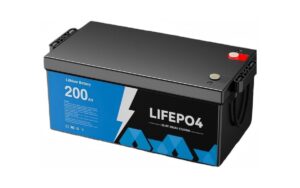
Two suppliers quote the same line: “48V 100Ah LiFePO4, UN38.3, 5-year warranty.” One is 40% cheaper. Both send a spec sheet. Both send a certificate. Eight months later one bank is still balanced and the other has a runner cell tripping the BMS at 60% state of charge.
The difference is rarely in the datasheet. It is in the cells inside the case, which factory made them, how long they sat in storage, how tightly they were matched, and whether the paperwork actually covers the pack you paid for. This guide is the checklist we would use ourselves if we were buying from a supplier we had never met.
Why cell verification matters more than the datasheet
A LiFePO4 datasheet is mostly a template. Capacity, voltage window, cycle count and operating temperature are written once and reused across a whole product family. The cells inside, however, change batch to batch, and that is where the real variability lives: cell grade, production date, capacity spread, internal resistance matching and the BMS parameters configured at the end of the line.
For a 48V 100Ah pack that means roughly 1,500 individual prismatic cells’ worth of manufacturing decisions compressed into one case. You will not inspect all of them. You do not need to. A handful of checks on a sample batch tells you how the whole line is being run.
1. Read the QR code and the date code
Prismatic LiFePO4 cells from tier-one makers carry a laser-etched or printed QR code that resolves to the manufacturer, cell model, capacity, production date and a serial number. On a genuine, factory-built pack those codes are readable and consistent across the batch.

Ask for close-up photos of five random cells from the production batch. Not a marketing photo of a single cell on a white background. Then check three things:
- Same cell model across all five. Mixed models in one pack is the single most common cost-cutting trick, and it is invisible from outside.
- Codes are intact. Sanded, over-labelled or missing QR codes mean the cell’s origin cannot be traced. There is no legitimate reason to remove a cell’s identity.
- Production date is recent. Cells age on the shelf, especially stored at high state of charge. For most projects, cells produced within the last 6–12 months are a reasonable expectation; ask what the storage state of charge was if the date is older.
2. Ask for a capacity test at two rates
Capacity is rate-dependent. A cell rated 100Ah will deliver close to 100Ah at 0.2C (20A) and measurably less at 1C (100A). A supplier who only shows a 0.2C result is showing you the easiest number in the room.
Ask for a per-unit table, not an average, with both rates:
- 0.2C discharge: fresh, well-matched cells typically test at or slightly above rated capacity. 100–105% of nameplate is normal.
- 0.5C discharge: expect roughly 97–100% of the 0.2C figure for good cells. A large drop here points to high internal resistance or an inflated nameplate.
- Spread across the batch: unit-to-unit capacity should sit within about 3%. A batch that ranges from 96Ah to 104Ah is not a matched batch, whatever the label says.
Test temperature matters as well. Capacity measured at 0°C will be lower than at 25°C for the same cell, so ask for the test conditions alongside the numbers.
3. Compare internal resistance across the batch
Internal resistance (IR) is the best early warning for mismatched or aged cells. Two packs can pass a capacity test on day one and behave completely differently in year two if one was built from IR-matched cells and the other was not.
Ask for AC 1kHz IR readings for the same sample units, measured at the same temperature. What you are looking for is not an absolute number, it varies by cell capacity and design, but consistency:
- Within a pack, cells are usually matched to within roughly ±5–10% IR. Tighter is better for long strings.
- A spread above 15% means the builder is not matching cells, or is mixing production batches.
- IR rises with age and with cold. If the numbers look high, ask when the cells were produced and at what temperature they were measured.
Poor IR matching shows up later as one cell reaching cut-off voltage first, the BMS ending discharge early, and the pack never delivering its rated capacity again. It is one of the most expensive invisible defects in the industry.
4. Check the BMS limits against your load, not the label
The BMS is where a cheap pack quietly becomes an undersized pack. A “48V 100Ah” battery with a 50A BMS is not the same product as one with a 100A BMS, even though both labels say 100Ah.
Ask for the BMS model and its parameter sheet, then check:
- Continuous and peak discharge current against your inverter or rectifier load. At 48V, 100A continuous is roughly 4.8kW; a 3kW inverter with a 6kW surge needs headroom, not a 50A board.
- Charge cut-off at low temperature. LiFePO4 should not be charged below 0°C. A BMS without low-temperature charging protection relies on the user to remember.
- Cell balancing current. Passive balancing in the tens of milliamps is normal for small packs; larger packs benefit from stronger or active balancing.
- Communication protocol. RS485, RS232 or CAN must match your rectifier, UPS or inverter. “Smart BMS” alone is not a specification.
5. Match the UN38.3 report to the exact model
UN38.3 is a transport test, not a quality certificate, but the paperwork still has to match what you are shipping. The test summary lists the cell model and the pack model that were tested. If your purchase order says a different pack model, the report does not cover your shipment, and an airline or forwarder can reject it at the airport.
Check that:
- The cell model and pack model in the test summary match your order exactly.
- The report is a full test summary (T1–T8), not a one-page cover letter.
- An MSDS is provided alongside it, with the same model reference.
- The report date is consistent with the cell production date. An old report attached to brand-new cells deserves a question.
For sea freight you will also need the dangerous goods declaration and proper packaging. Class 9 shipments are routine, but only when the documents line up.
6. Look inside: busbars, welding and bracing
Ask for a teardown photo or short video of the exact model you are buying. The case opened, cells visible, connections shown. It is a five-minute request that separates assemblers from resellers.
What to look at:
- Connection method. Laser welding or properly torqued bolted busbars are the norm for quality packs. Thin spot-welded nickel strip on a 100Ah pack is a warning sign.
- Busbar cross-section. It has to carry the rated current without heating. Ask for the material and thickness if the photo is not clear.
- Cell bracing and insulation. Cells should be mechanically restrained and insulated from each other, with flame-retardant materials where the design calls for them.
- Terminal and cable hardware. Terminal torque, cable gauge and fuse rating should match the BMS rating. Not the marketing headline.
7. Read the cycle-life test conditions
“6,000 cycles” is a headline, not a specification. The number only means something alongside the depth of discharge, temperature, charge and discharge rate, and the capacity threshold that defines end of life.
Ask for the test conditions in writing. A credible cycle-life claim usually states:
- Depth of discharge (80% is common for LFP claims; 100% is a harder test)
- Ambient temperature (25°C is standard; 45°C is a stress test)
- Charge and discharge C-rate (0.5C is typical)
- End-of-life threshold (80% of initial capacity is the usual definition)
A third-party report is worth more than an internal one, but an internal report with full conditions is still far better than a number with no context.
The red flags that usually mean “walk away”
| Check | What good looks like | Warning sign |
|---|---|---|
| Cell identity | Readable QR codes, one model, recent date | Sanded codes, mixed models, “no photos allowed” |
| Capacity test | Per-unit results at 0.2C and 0.5C | One average number, 0.2C only |
| IR matching | Spread under ~10% within a pack | No IR data, or spread above 15% |
| BMS | Model + parameter sheet, low-temp cut-off | “Smart BMS”, no datasheet |
| UN38.3 | Test summary matches cell and pack model | Report for a different model, cover page only |
| Build quality | Teardown photos, laser welding, braced cells | Renderings instead of photos, thin nickel strip |
| Cycle claim | DoD, temperature, C-rate, end threshold stated | “6,000 cycles” with no conditions |
A 30-minute verification routine
You do not need a laboratory to do this. A structured request over two days filters most of the market:
- Day one. Documents. Ask for the model-specific spec sheet, the UN38.3 test summary, the MSDS, the BMS parameter sheet and five cell photos from the current batch. A supplier who has these on file answers the same day.
- Day two. Live proof. Ask for a short video call showing the production line and a capacity test running on your model. Screens, cells and test equipment in one frame are hard to fake.
- Before shipment. Independent inspection. For a first order, a pre-shipment inspection by SGS, BV, TÜV, Intertek or your own agent is money well spent. Specify the sampling plan, the capacity test, IR measurement and a visual check of the packing.
- Keep the data. File the test results with the shipment documents. If a warranty claim ever happens, those numbers are your evidence of the condition at delivery.
Frequently asked questions
Read the QR code on the cells and confirm it resolves to the manufacturer and model you ordered, check that the production date is recent, and compare the cell model in the UN38.3 test summary with the cell inside the pack. Genuine tier-one cells are traceable at cell level; sanded or missing codes cannot be verified at all.
“A-grade” and “B-grade” are not standardized industry definitions. In practice, B-grade usually means cells that failed capacity, self-discharge or appearance criteria for a primary application and were sold into a secondary market. They can still work, but the capacity spread and cycle life are less predictable, which is why test data matters more than the grade label.
Some do, especially at the low end of the market, because mixing batches is a way to hit a price. It is difficult to detect from outside, which is why cell-level photos from the production batch and IR matching data are worth asking for. A supplier using one cell model should be able to prove it easily.
Yes, within limits. A capacity test at 0.2C and 0.5C, an IR check and a visual inspection can be done with a programmable load, a multimeter and a calibrated scale. What you cannot easily test is long-term cycle life or self-discharge over months. For that you rely on documented test reports and the supplier’s process controls.
At minimum: the UN38.3 test summary for the exact cell and pack model, an MSDS, a dangerous goods declaration for transport, a commercial invoice and packing list, and the model datasheet. For projects, add capacity test records and BMS parameter sheets. Missing or mismatched documents can stop a shipment at the airport or port regardless of product quality.
The bottom line
Cell verification is not about distrust. It is about making the invisible part of the purchase visible. Five cell photos, one capacity table, one IR comparison and a UN38.3 summary that matches your model will tell you more about a supplier than an hour of sales conversation.
If you are comparing suppliers now, the seven supplier checks for importers cover the commercial side, the guide to choosing a lithium battery manufacturer in China goes deeper on factory selection, and what goes into a LINEX battery shows how our cells, BMS and end-of-line testing are put together. For a specific project, send the model and destination market. We will share the test documentation for that exact product before you order.