Portable Power Stations for Camping & Outdoor
Silent, fume-free power from 100W to 3000W — solar chargeable, safe indoors and out.
Short answer: Camping power stations run from 100W to 3,000W with LiFePO4 cells and 76.8Wh to 3kWh of capacity. A 300Wh unit covers phones, lights, a fan and a laptop for a weekend; 1,000W and above run fridges, kettles and small tools, and recharge from solar in four to eight hours depending on panel size.
Portable Power Stations for Camping and Outdoor Use
Select a portable power station by required AC output, connected load, recharge method, battery chemistry and available ports. LINEX supplies nine models from 100W to 3000W for camping, RV and van travel, outdoor events, mobile workshops, work sites, emergency backup and value-focused light-commercial applications.
- 100W to 3000W range — choose a compact station for personal electronics or a higher-output unit for appliances, tools and site equipment
- LiFePO4 and SLA options — lithium models are available alongside sealed lead-acid models for selected value-focused applications
- Model-specific inverter waveforms — selected large-capacity stations use pure sine wave output, while several compact and value models use modified sine wave output
- Solar recharging across the range — confirm the compatible panel voltage, input power and connector arrangement for the selected station
- Multiple output formats — configurations may include 220V or 110V AC sockets, USB-A, QC3.0, USB-C PD, DC 5521 and cigarette-lighter ports
Select the Station by Load and Application
Start with the highest continuous load and check the startup requirement of motors, compressors and power tools. Then review the station’s battery capacity, inverter waveform, port layout, solar input and enclosure features. Output ratings and connector combinations vary by model, so confirm the product specification before quotation and purchase.
| Use | Station | Powers or checks |
|---|---|---|
| Personal electronics and light camping | 100W Portable Power Station | Phones, lights and small electronics. Check AC waveform, USB ports and compact solar input requirements. |
| Camping, outdoor events and mobile work | 300W Portable Power Station or 500W Portable Power Station | Review total continuous load, AC socket version, USB-C PD availability and the required solar panel configuration. |
| RV, van travel and workshop equipment | 1000W Portable Power Station | Check appliance startup current, modified or pure sine output, DC ports and simultaneous charging and load requirements. |
| Work sites, backup and higher loads | B3000 3000W Portable Power Station | Confirm the connected load, AC version and 36V 500W solar input arrangement before system selection. |
Station Size by Load and Runtime
| Load | Typical draw | 300Wh station | 1,000Wh station |
|---|---|---|---|
| Phone, lights, camera | 10W | about 27 hours | about 90 hours |
| Fan or router | 30W | about 9 hours | about 30 hours |
| Laptop | 60W | about 4.5 hours | about 15 hours |
| TV or projector | 80W | about 3.4 hours | about 11 hours |
| Small fridge (cycling) | about 60W average | about 4.5 hours | about 15 hours |
Runtime = usable Wh ÷ load W. We calculate with 90% inverter efficiency; add 20% if the load is used at low temperature.
Recommended Portable Power Station Models
Compare the standard range with compact, music and lithium configurations for the intended channel or project. Wholesale supply, logo printing, packaging and selected OEM or ODM configurations are available, subject to model review.
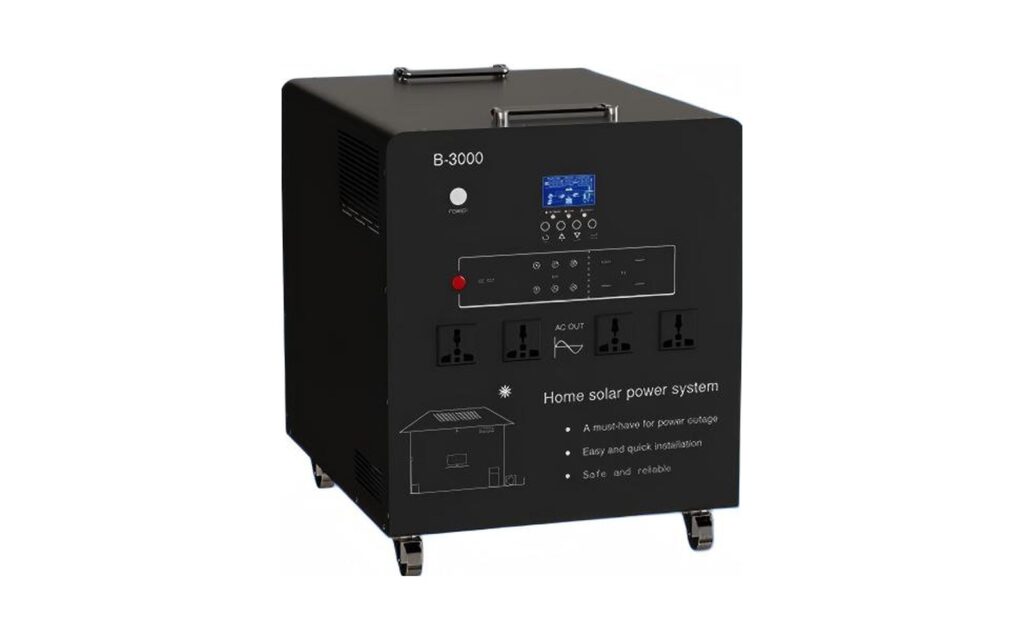 B3000-3000W Portable Power Station
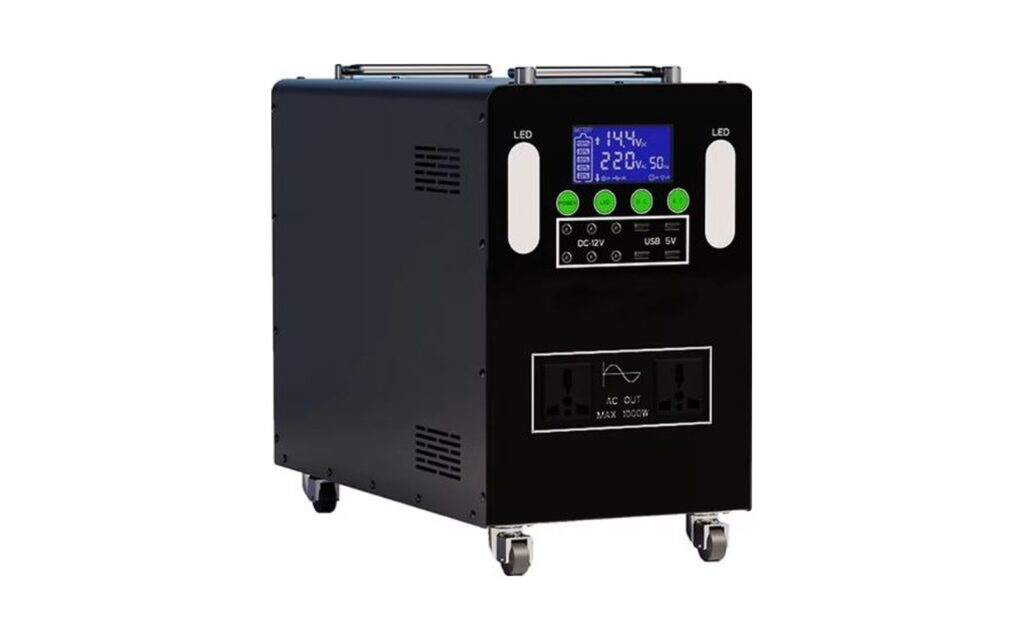 B500-500W Portable Power Station
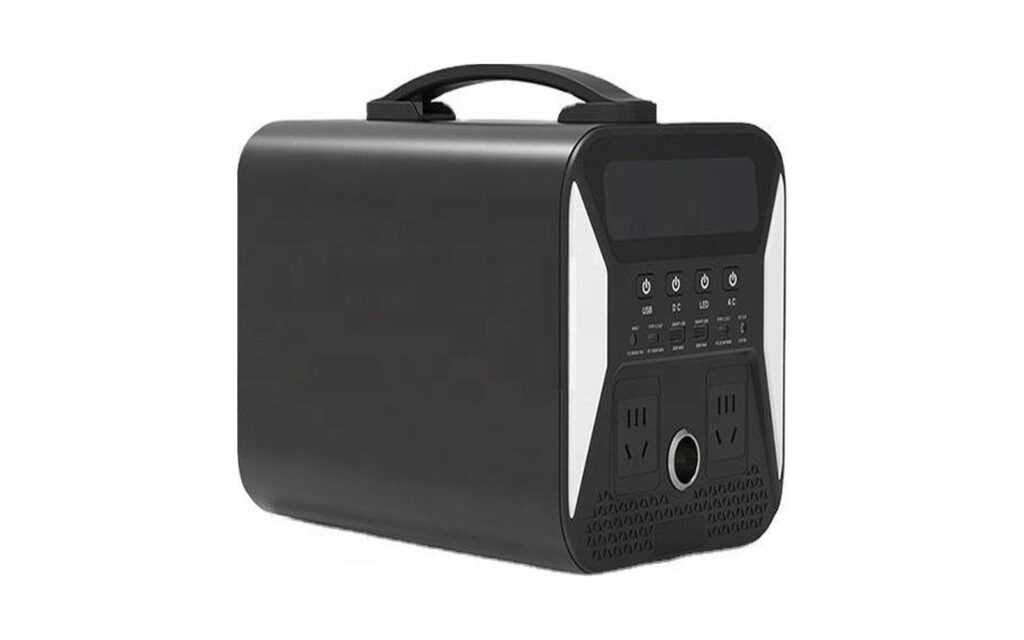 D1000Li-1000W Portable Power Station
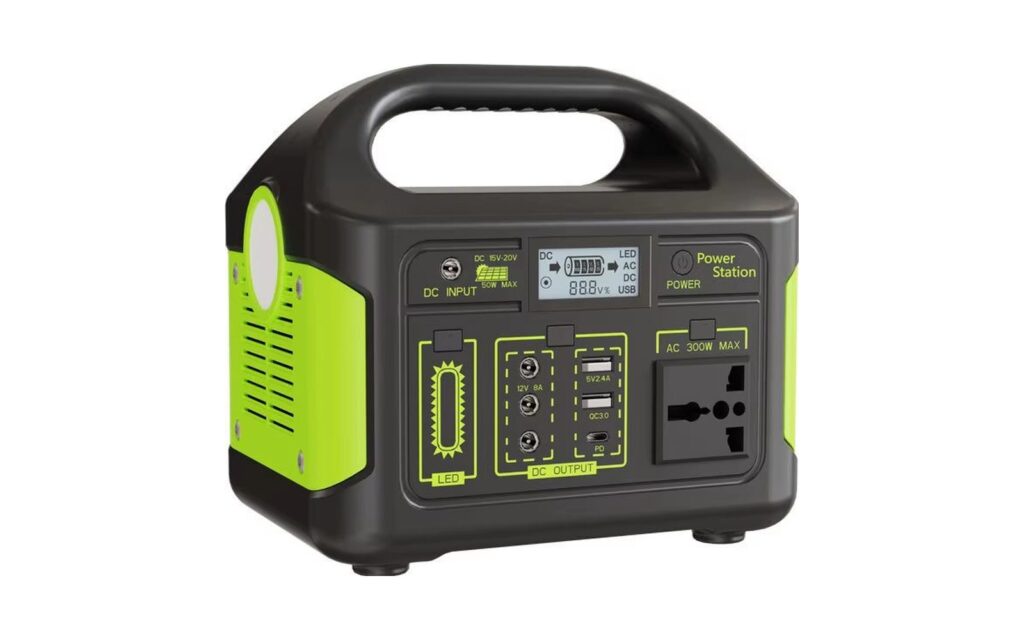 EG009Li-300W Portable Power Station
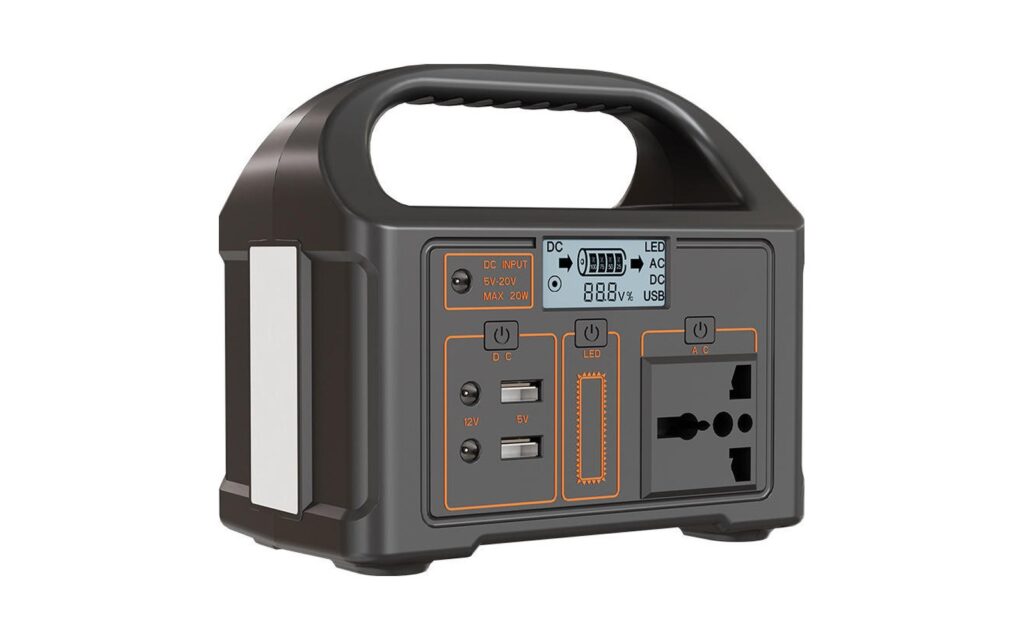 EG012Li-100W Portable Power Station
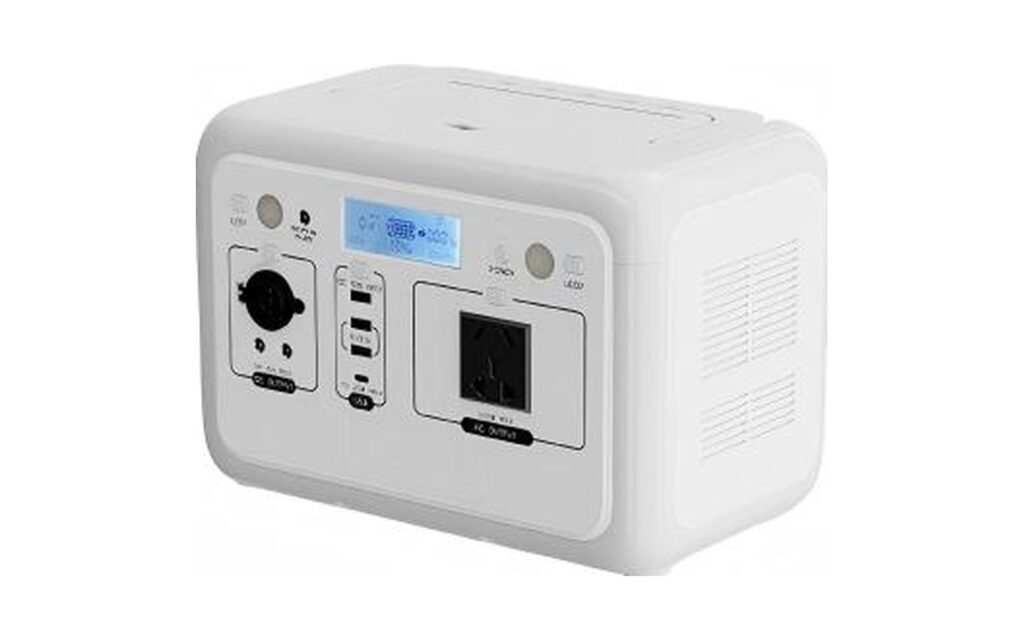 Eg007Li-500W Portable Power Station
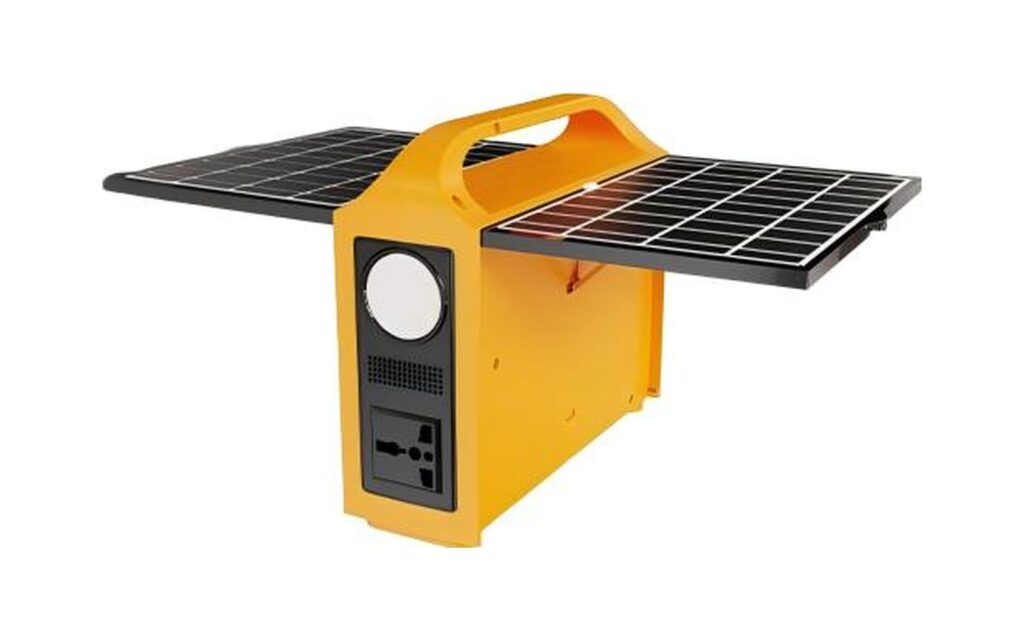 Eg013Li-100W Portable Power Station
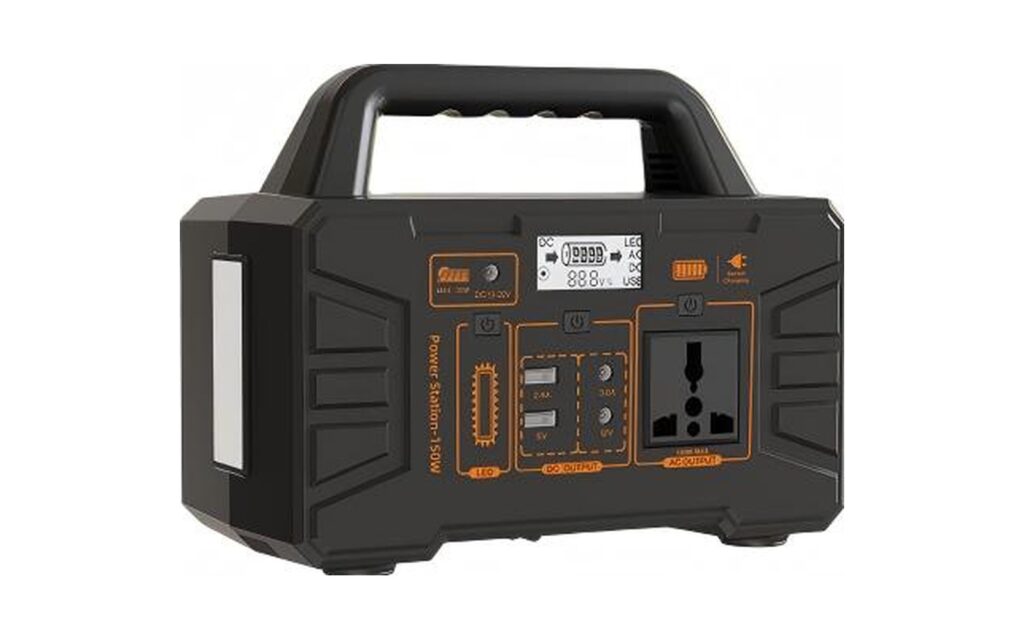 Eg017Pb-150W Portable Power Station
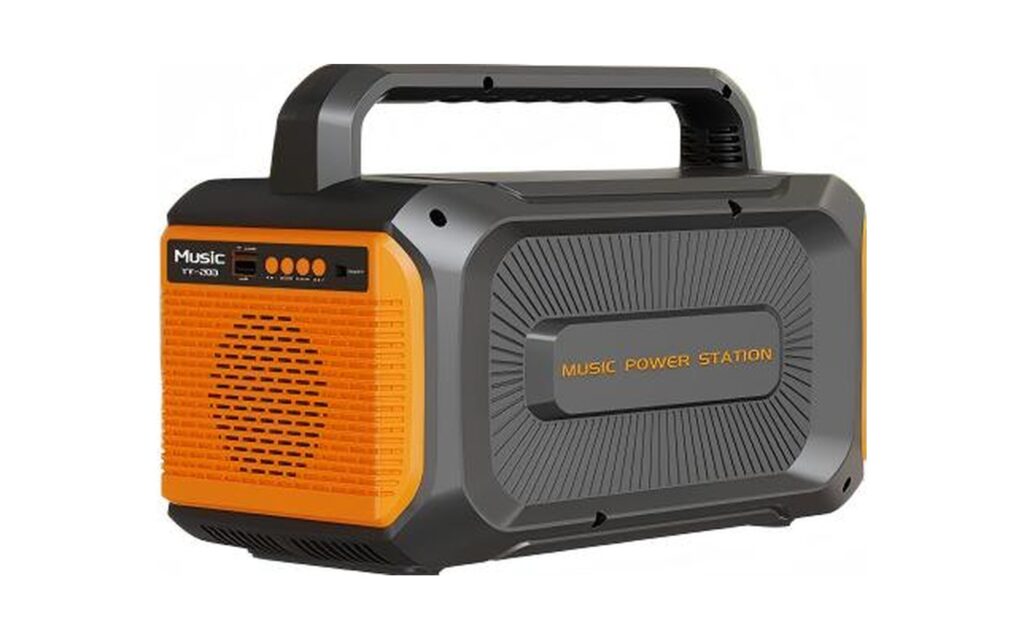 YY203-200W Music Power Station
Only with enough capacity. A compressor fridge drawing about 60W average needs roughly 500Wh for eight hours, so a 1,000Wh station covers it with margin; a 300Wh station covers three to four hours.
Recharge time ≈ usable Wh ÷ (panel watts × 0.7). A 200W panel refills a 1,000Wh station in about seven hours of good sun, so plan a full day for a deep recharge.
No. Larger stations weigh more and cost more per unit; for phone, light and laptop use a 300Wh unit is cheaper and easier to carry. Size to the largest load you actually run, then add 30%.
Portable Power Station FAQ
Choose output from the highest continuous load and check startup requirements for motors, compressors and tools. Select battery capacity from the required operating period and connected load, then review the station’s inverter, ports and recharge inputs. The 100W to 3000W range covers compact electronics through higher-load outdoor, workshop and backup applications. Confirm the complete load list before selecting a model.
LiFePO4 models suit buyers prioritizing lithium battery technology, while selected SLA models provide a value-focused alternative. The choice should consider application duty, expected handling, operating environment, weight requirements and project specification. Confirm the exact chemistry, battery capacity, charging method, enclosure and documentation for each model because the range does not use one battery technology across all stations.
Selected large-capacity models use pure sine wave inverters. Several compact and value models use modified sine wave inverters. Pure sine output is generally the safer selection for sensitive or waveform-dependent equipment, but compatibility must be confirmed for every connected device. Review the product specification and the load manufacturer’s requirements before using a modified sine model with medical, electronic, motor or audio equipment.
Solar recharging is available across the range, but the suitable panel configuration is model-dependent. Compact stations may accept small panels such as 16V 20W or 18V 30W options, while the B3000 accepts a 36V 500W solar input. Confirm panel voltage, input power, connector type and charging controls before quotation. Do not combine panels or use a configuration that exceeds the selected station’s input specification.
Typical applications include camping and outdoor power, RV and van travel, outdoor events, mobile workshops, work sites, emergency backup and value-focused light-commercial use. For channel sourcing, group models by output, chemistry, inverter waveform, ports and solar input. For project supply, confirm the operating environment, connected equipment, quantity, enclosure requirements and required documents before proposing a configuration.
Review the required AC socket voltage, number of AC sockets and inverter waveform first. Then check for USB-A 5V, QC3.0, USB-C PD, DC 5521 and cigarette-lighter ports according to the connected equipment. Some models also include LED lights, LCD displays, a 20W speaker system or an emergency jump starter. Port availability is model-dependent, so include it in the quotation specification.
Applicable models may be supplied with CE and RoHS documentation. Lithium-battery models have UN38.3 transport documents. Confirm the document set for the selected model before order placement, especially when the project requires technical files, transport records, product labels or compliance evidence. The product specification should also confirm chemistry, output, input, waveform, ports and compatible solar configuration.
Provide the intended application, required output, connected loads, AC socket voltage, battery chemistry preference, operating environment, port list, solar input, quantity and packaging or logo requirements. Include whether the station is for channel distribution, an RV or outdoor project, a work site or emergency backup. LINEX can then review the suitable model, documents and selected OEM or ODM configuration.
Choose a portable power station by adding the running wattage of connected devices, checking startup surge, estimating required runtime, and confirming output type and port requirements. For camping, allow capacity for lighting, phones, cooling or communication equipment rather than relying only on peak wattage. This method also supports end-user sales and channel programs.
Portable Power Station Resources
Review the LINEX portable power station product line, the portable power station stocking guide for distributors and the solar panel sizing article before preparing a channel or project specification.
Need a reliable LiFePO4 battery supplier?
Wholesale pricing · OEM/ODM · Flexible MOQ · Global shipping