Solar Home Systems & PayGo Solutions
Complete solar home kits from 15W to 1000W — PAYGO-ready for distributors running pay-as-you-go programs.
Short answer: A solar home or PayGo kit combines a PV array, a LiFePO4 battery and a controller sized to daily energy use. Typical systems deliver 0.2–4kWh per day: a 50Wp panel with a 20Ah battery for lights and phones, up to 400Wp with 150Ah for a small shop with a fridge. PayGo controllers allow weekly payments and remote disconnect.
LiFePO4 Solar Home Systems and PayGo Solutions
LINEX supplies solar home system configurations for lighting, communications, entertainment, cooling and small household or shop loads. The range combines solar panels, LiFePO4 batteries, charge controllers, output ports and optional DC appliances. PayGo models use code-based activation through a built-in keypad, allowing distributors to define daily, monthly or yearly usage plans without adding an unconfirmed network or software requirement.
- 15W to 80W PayGo kits — 12.8V LiFePO4 batteries from 6Ah to 24Ah, 5m solar panel cables, USB and DC outputs, radio, MP3 and Bluetooth
- 150W to 1000W home systems — battery capacities from 24Ah to 100Ah, AC output, USB and DC ports, with LCD monitoring on 300W and higher models
- Code-based PayGo control — built-in 4×4 keypad for activation, with distributor-defined daily, monthly or yearly plans
- Matched solar appliances — DC TVs, freezers, refrigerators and fans selected according to available system capacity
- Distributor and OEM configuration — branding, packaging, appliance combinations and configuration review for project quotations
Why PayGo Works for Distributors
Pay-as-you-go removes the biggest barrier to solar adoption — the upfront cost. Mobile money makes micro-payments practical, and remote locking lets a distributor manage devices and payments across thousands of households without visiting them.
What that means for product selection: reliable DC appliances (TVs, fridges, freezers, fans) that run directly from a 12V system, plus controllers and LiFePO4 batteries that survive daily cycling for years. The kit has to be built for the payment model, not adapted to it afterwards.
Select a System by Load and Application
Start with the appliances that must operate each day, then check panel size, battery capacity, inverter output and available DC or AC connections. The listed system ratings are starting points for configuration. Actual operating time depends on solar conditions, appliance consumption and the daily energy requirement.
| Need | System | Powers or checks |
|---|---|---|
| Lighting, phones and small electronics | 15W, 30W, 50W or 80W PayGo kit | 15W to 80W panel, 6Ah to 24Ah battery, LED lighting, phones, cameras, tablets and USB or 12V DC loads; the 80W model also supports a fan |
| Family room and entertainment loads | 150W to 500W PayGo system | 24Ah to 60Ah battery, 150W modified sine wave inverter or 300W to 500W pure sine wave inverter, TV, lights, fan and charging loads |
| Household or small shop with higher loads | 1000W PayGo system | 250W panel, 100Ah battery, 1000W pure sine wave inverter, 20A PWM controller and capacity for TVs and refrigerators, subject to load review |
| System matched to a specific appliance | Solar DC TV or DC freezer | Confirm appliance power, battery energy, expected daily use, connector type and whether the selected system has sufficient reserve |
Size the PV Array and Battery Bank
| Daily energy need | PV array (4–5 peak sun hours) | 12V bank (80% DoD) | 48V bank (80% DoD) |
|---|---|---|---|
| 0.5 kWh | 150–200W | 60Ah | 20Ah |
| 1 kWh | 300–400W | 100–120Ah | 30Ah |
| 2 kWh | 600–700W | 200Ah | 50Ah |
| 4 kWh | 1,200–1,400W | 400Ah (use 48V) | 100Ah |
Sizing rule: battery Ah = daily kWh ÷ voltage ÷ 0.8; PV watts = daily kWh ÷ peak sun hours ÷ 0.75. Add one day of autonomy for sites without a generator.
Recommended Solar Home and PayGo Systems
Compare the 15W to 80W and 150W to 1000W configurations for wholesale supply, project deployment or OEM programs. LINEX can review branding, packaging, appliance combinations and system configuration before quotation.
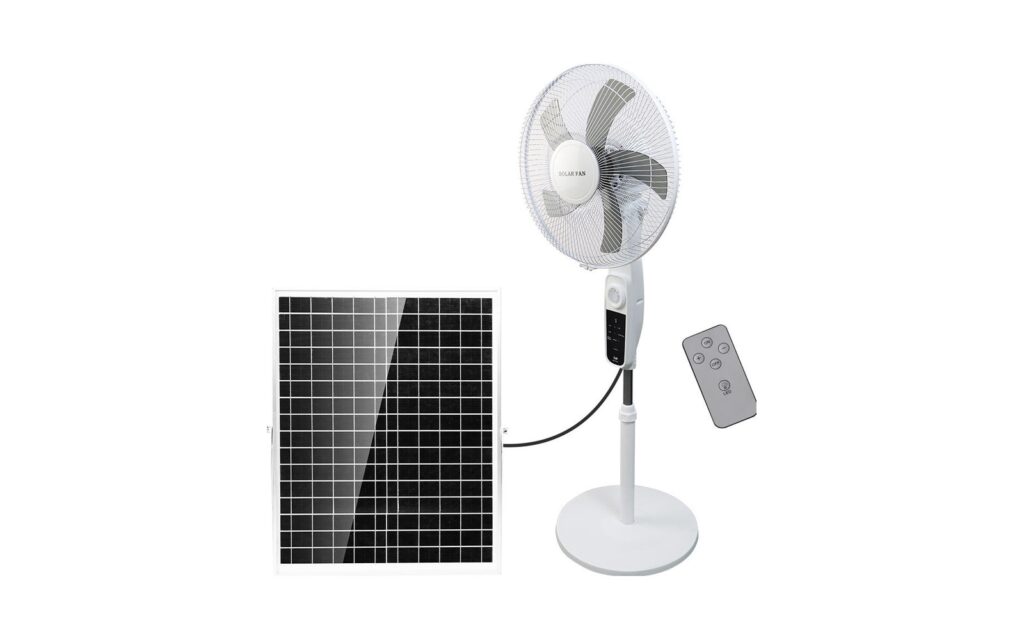 Solar DC Fan
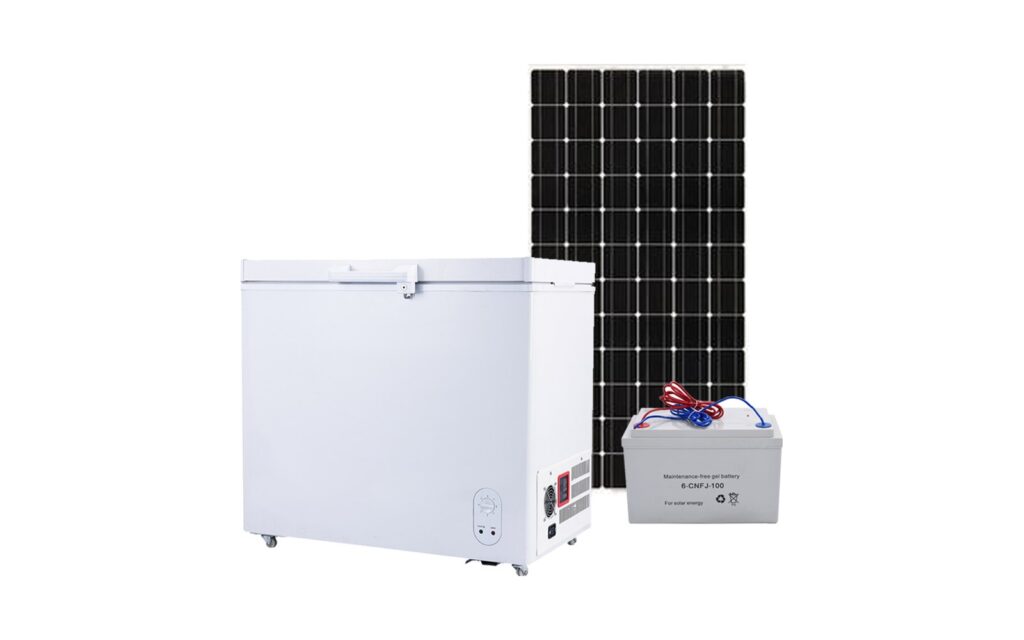 Solar DC Freezer
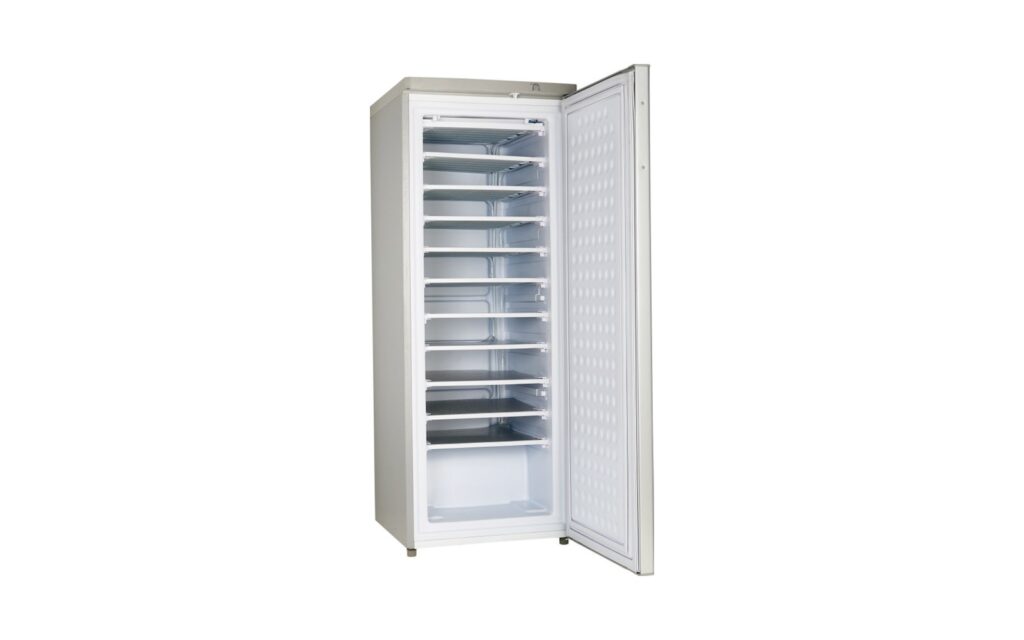 Solar DC Refrigerator
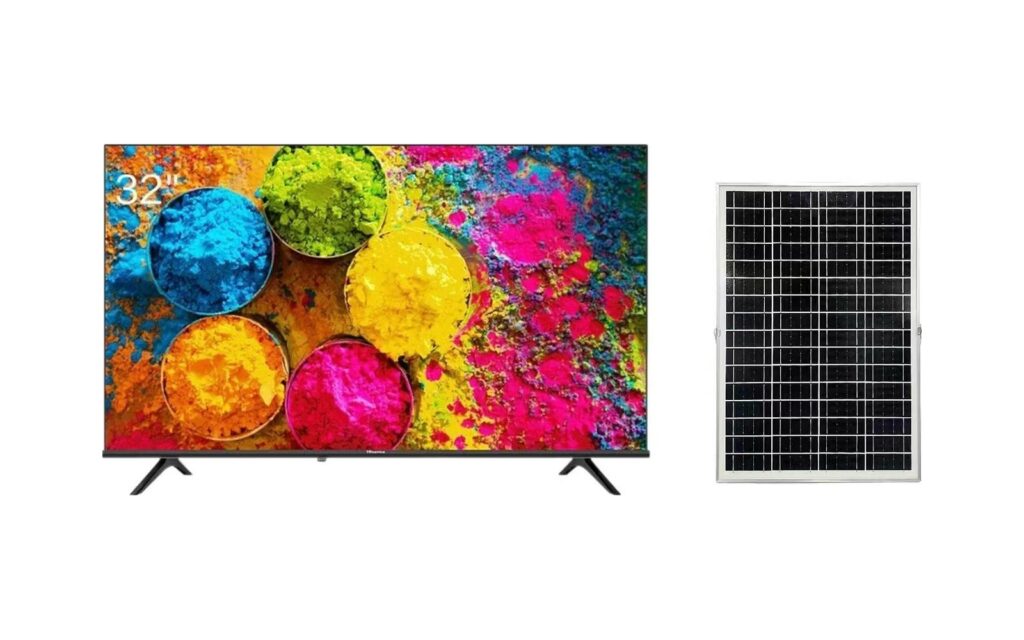 Solar DC TV
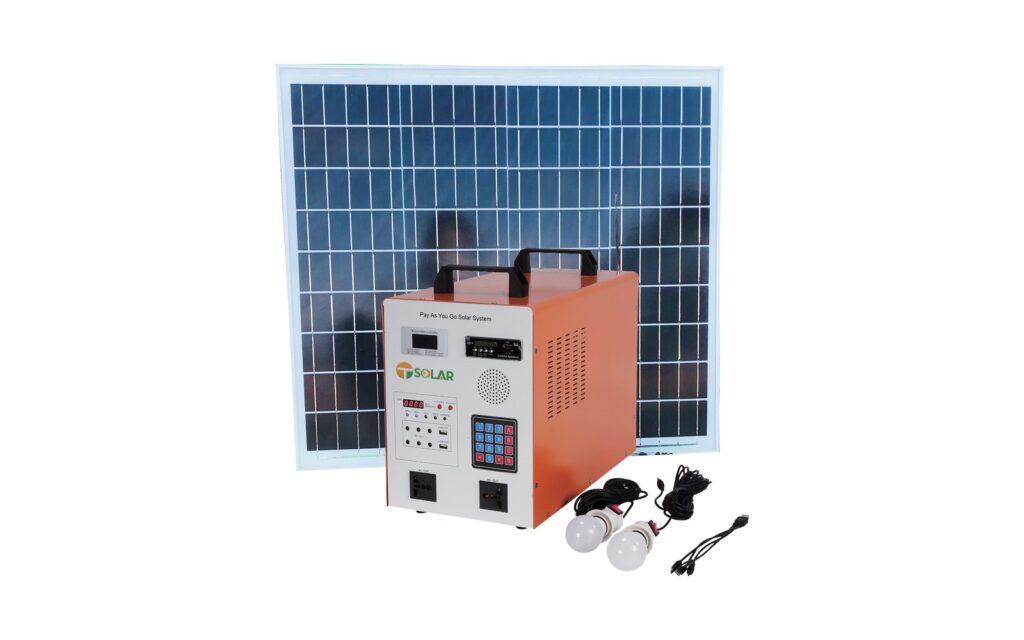 Solar PayGo 150W/300W/500W/1000W
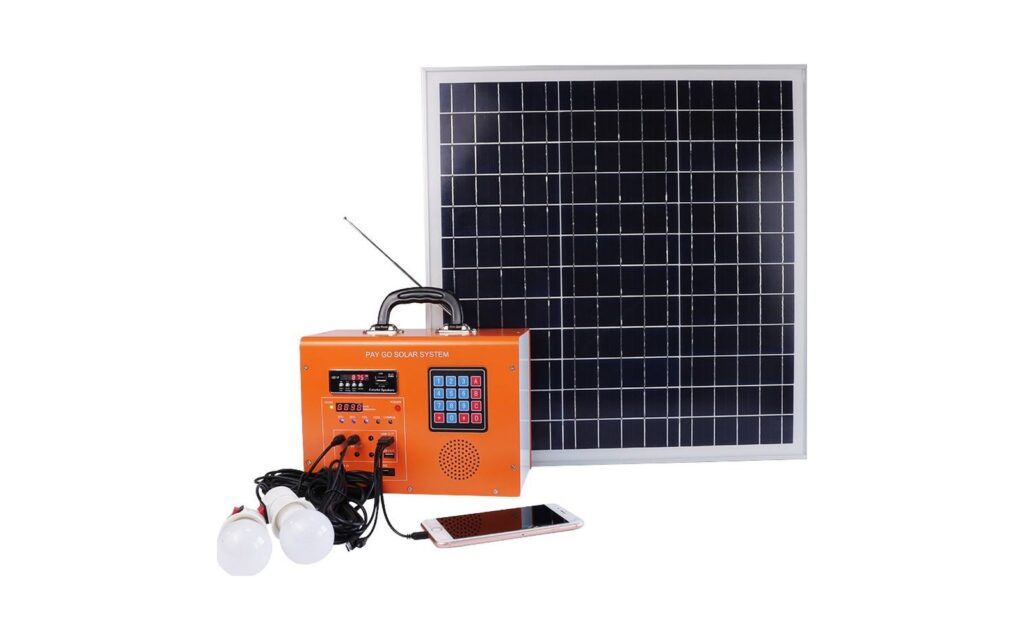 Solar PayGo 15W/30W/50W/80W
Related: size a home bank with the home energy storage battery guide, or see how to size a 48V battery for solar.
Most PayGo deployments use one to two days of autonomy. One day keeps cost down where the sun is reliable; two days protects revenue during cloudy periods, but adds roughly 30–40% to battery cost.
Yes for small kits up to about 1kWh per day. Above that, 48V is cheaper per kWh because the current, cable size and charge-controller rating all drop.
PayGo controllers disconnect the load remotely rather than damaging the battery. The battery BMS keeps the pack at a safe state of charge, and service resumes when payment is restored.
Solar Home Systems and PayGo FAQ
Choose from the required loads first, then confirm daily operating hours and starting currents. Lighting and phone charging generally fit the smaller 15W to 80W range. TVs, fans and broader household loads require the 150W to 500W range, while a refrigerator or shop load requires review of the 1000W system and its pure sine wave inverter.
List each appliance, its rated watts and expected hours of use, then multiply watts by hours and add the results. Include charging losses and a practical reserve when selecting the battery and panel. For refrigerators, freezers and fans, use measured or published consumption where available rather than assuming the appliance runs at its maximum rating continuously.
PayGo activation is code based. The user enters an issued code through the built-in 4×4 keypad, and the system accepts the usage period defined by the distributor. Plans can be set as daily, monthly or yearly arrangements. The documented activation method is keypad-based code entry; the exact payment workflow should be confirmed during configuration.
Match the appliance voltage, rated power, connector and expected operating time with the selected system. Solar DC TVs are available from 19 to 65 inch and 10W to 30W. DC freezers cover 50 to 600L and 45W to 150W, while refrigerators cover 60 to 245L and 72W to 130W. Confirm battery reserve before combining appliances.
A complete kit includes a solar panel with a 5m cable, a LiFePO4 battery, a charge controller and output ports. The smaller models provide USB 5V ×2 and DC 12V ×6 connections, while larger models also provide AC output. Matched DC appliances can be included when required, and the final combination should be confirmed against the system rating.
DC appliances avoid inverter conversion and can reduce conversion losses when their voltage and connectors match the system. AC appliances require an inverter and must remain within its continuous and starting-load limits. The 150W model uses a 150W modified sine wave inverter. The 300W, 500W and 1000W models use pure sine wave inverters, with the 1000W model specified for TVs and refrigerators.
CE and RoHS documents are available for applicable products. Document availability should be checked for each selected model and included in the procurement file. A technical review can also confirm panel rating, battery capacity, controller rating, inverter type, output arrangement and appliance combination before the quotation is finalized.
Provide the target system range, panel and battery configuration, required AC and DC outputs, appliance list, operating voltage, branding and packaging requirements. Also specify the intended PayGo plan structure, keypad activation requirements, documents needed and any preferred appliance combination. For OEM review, include product labels, packaging artwork and the required configuration so the technical scope can be checked before quotation.
Solar Home System Resources
Browse the solar appliances product line. Review how to size solar panels for a 100Ah battery and what LiFePO4 batteries are before selecting a system for a project.
Need a reliable LiFePO4 battery supplier?
Wholesale pricing · OEM/ODM · Flexible MOQ · Global shipping