12V Lithium Batteries: 10Ah to 300Ah LiFePO4 Range
Drop-in LiFePO4 replacement for lead-acid — 12V from 10Ah to 300Ah. 6,000+ cycles, half the weight, 5-year warranty.
Whether you are replacing a pair of tired lead-acid batteries in a caravan, building a small solar setup, or spec’ing units for a dealer order, 12V is usually where the conversation starts. Our 12V range runs from 10Ah right up to 300Ah — including slim models for tight compartments and a trolling-motor model with a 100A BMS.
12V Lithium Battery Models (10Ah – 300Ah)
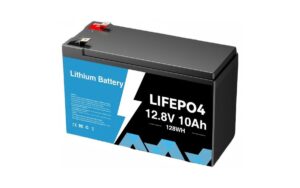 12V 10Ah LiFePO4 Compact BatteryView details →
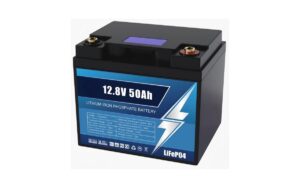 12V 50Ah LiFePO4 Deep-Cycle BatteryView details →
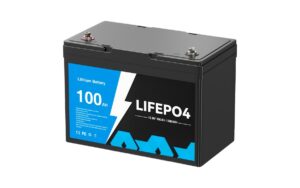 12V 100Ah LiFePO4 Battery for RV & MarineView details →
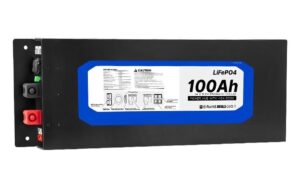 12V 100Ah Power Hub with 40A DC-DC for Van ConversionsView details →
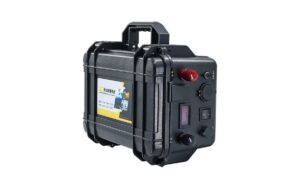 12V 100Ah Trolling Motor Battery for BoatsView details →
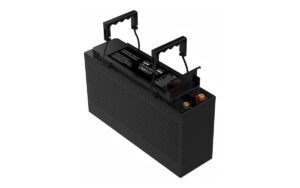 Thin 12V 100Ah LiFePO4 Battery for Narrow RV CompartmentsView details →
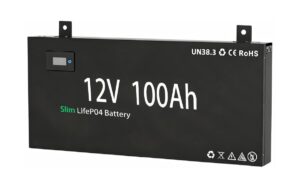 Ultra Slim 12V 100Ah LiFePO4 Battery for Tight InstallationsView details →
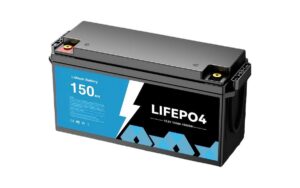 12V 150Ah LiFePO4 Deep-Cycle BatteryView details →
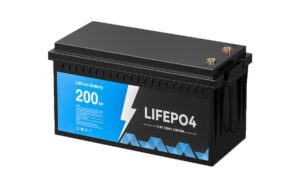 12V 200Ah LiFePO4 Deep-Cycle BatteryView details →
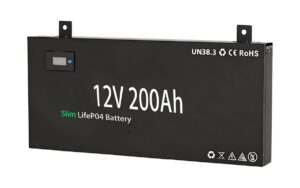 Ultra Slim 12V 200Ah LiFePO4 BatteryView details →
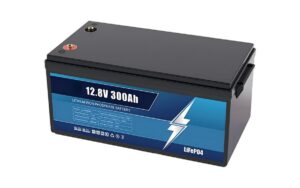 12V 300Ah LiFePO4 Deep-Cycle BatteryView details →
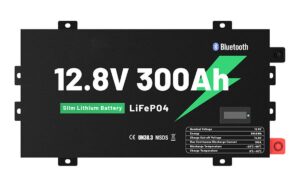 Ultra Slim 12V 300Ah LiFePO4 BatteryView details →
Which 12V capacity do you need?
Start from the load list, not from the old battery. Add the watts of everything that runs at once, multiply by the hours you need, then add 30% for inverter losses and ageing. The table below converts that number into a case size and a realistic weight.
| Capacity | Energy | Weight | Typical use |
|---|---|---|---|
| 50Ah | 0.64 kWh | ≈5 kg | Small trailers, kayak motors, backup lighting |
| 100Ah | 1.28 kWh | ≈10 kg | RV house bank, marine, trolling motor |
| 150Ah | 1.92 kWh | ≈15 kg | Larger vans, weekend off-grid |
| 200Ah | 2.56 kWh | ≈22 kg | Full-time vans, small cabins |
| 300Ah | 3.84 kWh | ≈30 kg | Long-range off-grid, big inverters |
For a worked example with real numbers, see what a 12V 100Ah battery actually runs. Fishing setups can jump straight to the 12V 100Ah trolling motor battery.
12V LiFePO4 vs AGM: what actually changes
The case size is often the same, so the difference is not physical — it is usable energy, weight and how the battery behaves at the end of its life. The AGM column below is an industry-typical reference for a 12V 100Ah block, not a specific product.
| Factor | 12V 100Ah LiFePO4 (LINEX) | Typical 12V 100Ah AGM |
|---|---|---|
| Usable energy | 1.28 kWh (100% of rated, BMS-limited) | ≈0.6 kWh at 50% depth of discharge |
| Weight | ≈10 kg | ≈30–33 kg |
| Cycle life | 6,000 cycles at 80% DoD, 25°C | ≈300–500 cycles at 50% DoD |
| Charging | 14.6V fast, 13.5–13.8V float, no absorption taper | 14.4–14.7V absorption, 13.2–13.6V float |
| Maintenance | None; terminal check once a year | Water top-up, terminal cleaning, sulfation risk |
| Low-temperature charging | BMS blocks charge below 0°C | Charges below 0°C, with capacity loss |
One practical consequence: a 100Ah LiFePO4 replaces a 200Ah AGM bank in usable terms while weighing about a third as much — which is why caravan and marine builds move first. The other is the charger: a lead-acid charger with a desulfation or equalise mode must not be used on LiFePO4. Check that the profile can be set to 14.6V maximum and 13.5–13.8V float.
Charging a 12V LiFePO4: voltages and current
These are the numbers published on our 12V 100Ah datasheet. Other capacities in the range follow the same profile; the current limits scale with capacity.
| Parameter | Value |
|---|---|
| Nominal voltage | 12.8V |
| Fast / absorption voltage | 14.6V |
| Standby / float voltage | 13.5–13.8V |
| Operating range | 8.8–14.6V |
| Low-voltage protection | 8.8–10V |
| Charge current (standard / recommended / max) | 20A / 50A / 100A |
| Charging temperature | 0–50°C |
| Discharge temperature | −20–60°C |
| Cycle life | 6,000 at 80% DoD, 25°C |
Alternator charging needs a DC-DC charger rather than a direct cable: the alternator’s fixed 14.2–14.4V will not top the battery properly and can overload the alternator at idle. Our 12V 100Ah power hub with 40A DC-DC is built for that case. Full voltage curves for 12V, 24V and 48V are on the battery voltage charts page.
Series or parallel: 12V, 24V or 48V
Parallel adds capacity at the same voltage. Series adds voltage at the same capacity — but with four independent 12V BMS units in series, one BMS can disconnect before the others and take the whole string offline. That is why we recommend native 24V or 48V units for new builds, and reserve series connection for retrofits where the 12V models are rated for it.
| Configuration | Result | When it makes sense | Watch out for |
|---|---|---|---|
| 2 × 12V 100Ah parallel | 12V 200Ah, 2.56 kWh | Same voltage, more runtime | Equal cable lengths; fuse each battery |
| 2 × 12V 100Ah series | 24V 100Ah, 2.56 kWh | Retrofit where a 24V charger already exists | Series-rated models only; add a balancer |
| 4 × 12V 100Ah series | 48V 100Ah, 5.12 kWh | Rare; 48V native is usually cheaper | BMS imbalance; insulation and breaker ratings |
| Native 24V or 48V unit | One BMS, one warranty | New builds, telecom, ESS | Charger and inverter must match system voltage |
Cable and fuse sizing follows the continuous current, not the capacity label. A 100A continuous 12V unit needs roughly 25mm² cable for runs under 1.5m with a 125A fuse; a 200A parallel bank moves to 50mm² and a 250A fuse. Treat these as starting points and check against local wiring rules.
Same capacity, other voltages
If the build is new, match the voltage first and the capacity second. These are the direct equivalents in our range:
| Capacity | 12V | 24V | 48V |
|---|---|---|---|
| 100Ah | 12V 100Ah | 24V 100Ah | 48V 100Ah |
| 200Ah | 12V 200Ah | 24V 200Ah | 48V 200Ah |
| 300Ah | 12V 300Ah | On request | On request |
Frequently asked questions
Only if the model is rated for series connection, and only with two units of the same model, age and state of charge. For new builds a native 24V unit is safer: one BMS, one warranty, no balancing.
Only if the profile can be set to 14.6V maximum with a 13.5–13.8V float and the desulfation or equalise mode can be switched off. A fixed 14.4V automotive charger will leave the battery at roughly 90–95% and is not ideal for daily cycling.
Same 1.28 kWh of energy, different footprint — the slim version fits cabinets and under-seat compartments that the standard case will not.
≈10 kg for the standard 12V 100Ah, against roughly 30–33 kg for a comparable AGM block. The 200Ah is ≈22 kg and the 300Ah ≈30 kg.
The 100Ah model has a 100A continuous BMS (1,280W), which covers most 55–80lb thrust motors at 12V. For 24V or 36V motors, use two or three units in series only if the model is series-rated, or move to a native 24V pack.
Yes — containers, mixed pallets and OEM/private label are our day job. Send your target spec and destination port, and we will quote within 24 hours.
Battery tool: convert Ah to kWh for any battery in seconds — Ah to kWh Calculator.
Prefer to see everything side by side? Browse the full 12V/24V deep-cycle range or send your load list and we will size the bank for you.
Need a reliable LiFePO4 battery supplier?
Wholesale pricing · OEM/ODM · Flexible MOQ · Global shipping