12V 300Ah LiFePO4 Deep-Cycle Battery
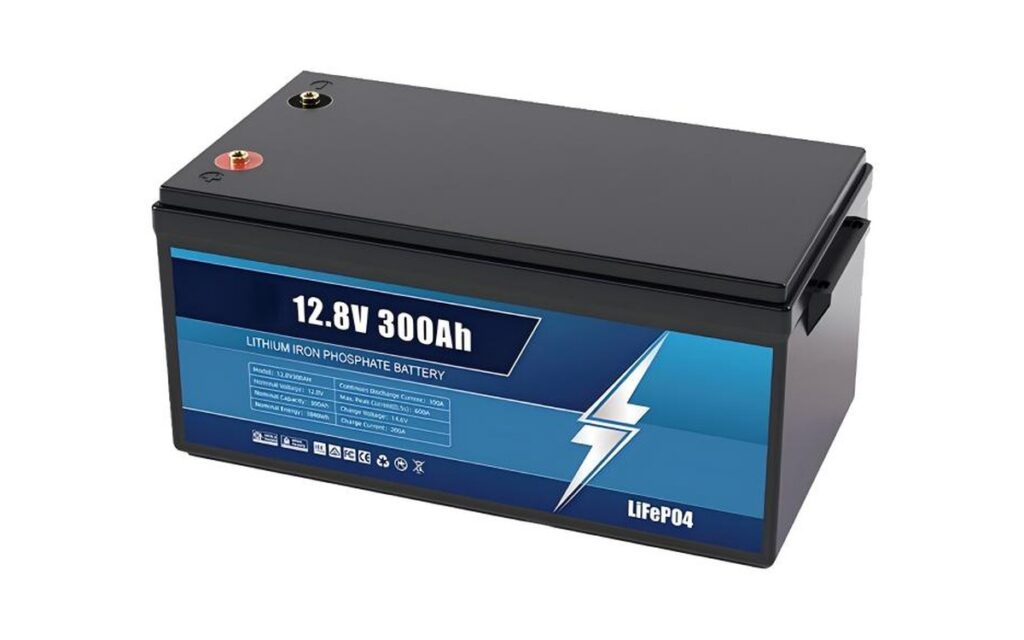
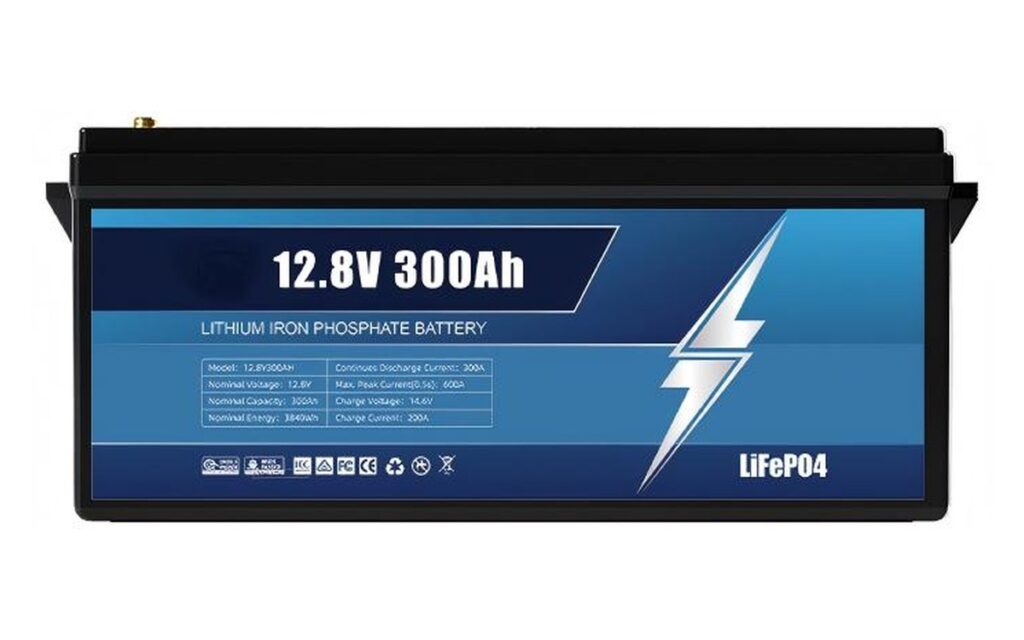
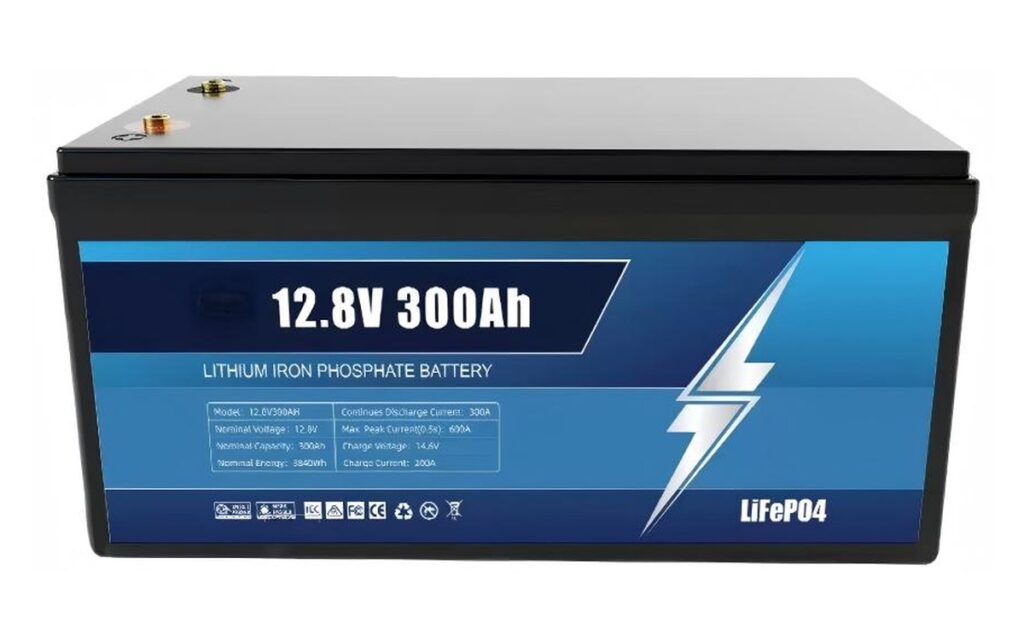
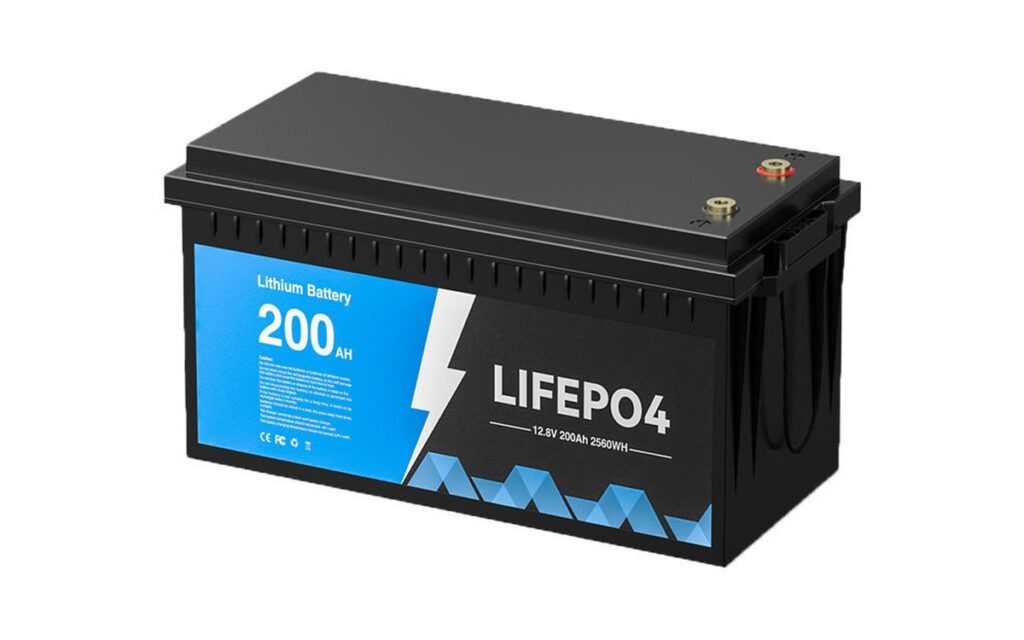
The LINEX 12.8V 300Ah LiFePO4 battery provides 3.84kWh of rated energy for large RV, marine house-bank, solar and off-grid systems. It supports up to 100/150A continuous discharge and 1.28/3.84kW continuous power, with 100A recommended and 100/150A maximum charging current. Its built-in BMS, IP65 enclosure, approximately 30kg weight and 523 × 269 × 222mm case support projects where charger settings, current limits, cabling, protection and installation space have been verified.
Key Features
- ✓3.84kWh rated energy at 12.8V and 300Ah
- ✓Up to 100/150A continuous discharge and 1.28/3.84kW continuous power
- ✓100A recommended and 100/150A maximum charging current
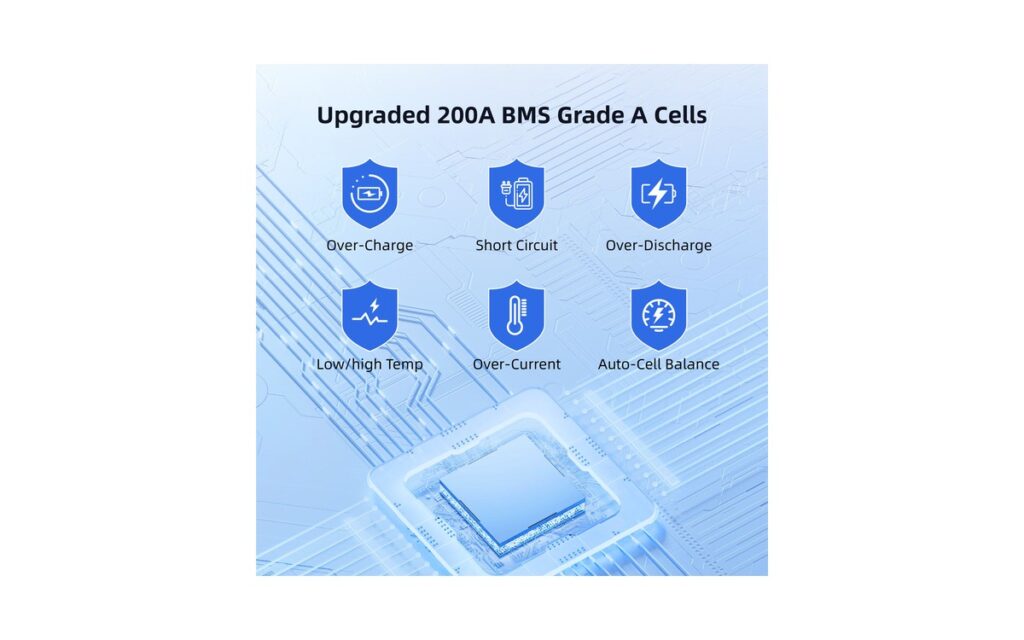
- ✓Built-in BMS for voltage, current, short-circuit and temperature protection
- ✓IP65 enclosure for dust and water resistance
- ✓6,000-cycle rating at 25°C and 80% depth of discharge
- ✓Approximately 30kg with a 523 × 269 × 222mm case
- ✓Designed for large RV, marine house-bank, solar and off-grid systems
Technical Specifications
| Model | 12.8V 300Ah |
| Operating Voltage Range (V) | 8.8 ~ 14.6 |
| Nominal Voltage (V) | 12.8 |
| Nominal Capacity (Ah) | 300 |
| Minimum Capacity (Ah) | 195/295 |
| Rated Energy (Wh) | 3840 |
| Maximum Continuous Discharge Power (W) | 1280/3840 |
| Fast Charging Voltage (V) | 14.6 |
| Standby Charging Voltage (V) | 13.5 ~ 13.8 |
| Floating Charging Voltage (V) | 13.5 ~ 13.8 |
| Discharge Low Protection Voltage (V) | 8.8 ~ 10 |
| Standard Charging Current (A) | 60 |
| Recommended Charging Current (A) | 100 |
| Maximum Charging Current (A) | 100/150 |
| Standard Discharge Current (A) | 60 |
| Maximum Continuous Discharge Current (A) | 100/150 |
| Internal Resistance (mΩ) | ≤50/≤10 |
| Charging Temperature (°C) | 0 ~ 50 |
| Discharge Temperature (°C) | -20 ~ 60 |
| Cycle Life (25°C, 80% DoD) | 6000 |
| Cells Connection Configuration | 4S |
| Dustproof and Waterproof Level | IP65 |
| Weight (kg) | ≈30 |
| Product Size (LWH mm) | 523*269*222 |
Product Details
The 12.8V 300Ah LiFePO4 battery provides 3.84kWh of rated energy for large RV, marine house-bank, solar and off-grid systems. It supports up to 100/150A continuous discharge, 100A recommended charging, IP65 protection and a 523 × 269 × 222mm enclosure weighing approximately 30kg. It is intended for verified deep-cycle installation projects.
What a 12V 300Ah battery will run
Runtimes below assume 80% depth of discharge (about 3840Wh rated, so roughly 3072Wh usable) and a 25°C pack. Real numbers move with temperature, inverter efficiency and how hard the load pulls.
| Load | Typical draw | Approx. runtime at 80% DoD |
|---|---|---|
| LED lighting | 20W | 153 hours |
| 12V compressor fridge | 45W (≈50% duty) | 68 hours continuous, ≈136 hours cycling |
| Water pump | 60W | 51 hours |
| CPAP machine | 30W | 102 hours |
| 1,000W inverter load | ≈93A at 12V | ≈3 hour(s) |
| Trolling motor | ≈50A | ≈4.8 hours at full throttle |
Charging and BMS limits
The pack charges at 14.6V absorption and 13.5–13.8V float, with a 100A BMS limiting continuous output. A lead-acid charger with a fixed 14.4V profile will leave the pack at roughly 90% — usable, but not full; a charger with a lithium profile is the better match.
| Parameter | Value |
|---|---|
| Rated energy | 3840Wh |
| Continuous discharge | 100A standard, 150A high-output option |
| Absorption / float | 14.6V / 13.5–13.8V |
| Charging temperature | 0–50°C — BMS blocks charging below 0°C |
| Weight / size | ≈30kg / 523 × 269 × 222 mm |
| Cycle life | ≥6,000 cycles at 80% DoD |
Same capacity in 24V or 48V
If the build runs a 24V or 48V inverter, start with a native pack instead of wiring 12V units in series — native packs ship with one BMS and one set of terminals.
There is no 24V 300Ah in the standard range; a 24V bank at this capacity is built from two 12V 300Ah units in series (confirm series rating first) or from a native 24V 200Ah pair.
Common questions
How long will it run a 12V fridge?
About 68 hours continuous at 45W, or roughly 136 hours in normal cycling. Add 20–30% in hot weather.
Can I mount it on its side?
Install upright. The case and terminal layout are designed for a horizontal base; side mounting puts stress on the lid and can trap heat.
Can I parallel two units?
Yes, for capacity. Use the same model, similar age and state of charge, fuse each positive separately, and keep cable lengths equal.
Does it need a lithium charger?
A charger with a 14.6V lithium profile is ideal. A lead-acid charger will charge it to roughly 90% and must not run desulfation or equalisation modes.
Common FAQs
The model is intended for large RV, marine house-bank, solar and off-grid systems. Confirm system voltage, load current, required operating time, charger profile, installation space and environmental conditions before selection. Rated energy is 3.84kWh, but actual runtime depends on the complete load and system efficiency.
Start with 3.84kWh of rated energy, then apply the selected depth of discharge, inverter or conversion losses, temperature effects, cable losses and reserve capacity. Divide usable watt-hours by the measured load in watts for an initial estimate rather than using Ah alone.
Use a charger compatible with the model's published voltage range. The technical table lists 60A standard, 100A recommended and 100/150A maximum charging current. Confirm charging voltage and current before installation.
The model publishes up to 100/150A continuous discharge and 1.28/3.84kW continuous power. Check inverter efficiency, surge current, cable size, fuse or breaker rating and BMS limits. Do not size the load from Ah capacity alone.
Replacement requires checking nominal voltage, charger profile, alternator or DC-DC charging, inverter settings, low-voltage protection, terminals, physical dimensions and maximum current. A similar case size does not confirm electrical compatibility.
Only when the selected model and BMS support the planned configuration. Use identical batteries with matched age and state of charge, equal cable paths and correctly sized protection. Confirm maximum series or parallel quantity before installation.
The published charging range is 0°C to 50°C and discharge range is -20°C to 60°C. The enclosure is rated IP65. IP65 does not permit continuous submersion, and charging below 0°C is not supported without suitable low-temperature protection.
Documentation for UN38.3, CE, RoHS and FCC review is available, with a 5-year warranty. Confirm destination-market requirements and provide the application, quantity, charging system, installation environment and destination with the inquiry.
RV, Marine & Trolling Resources
Use these application pages and guides to check voltage, energy use, charging compatibility, current limits and installation space before selecting a battery.