All-In-One 4KWh ESS
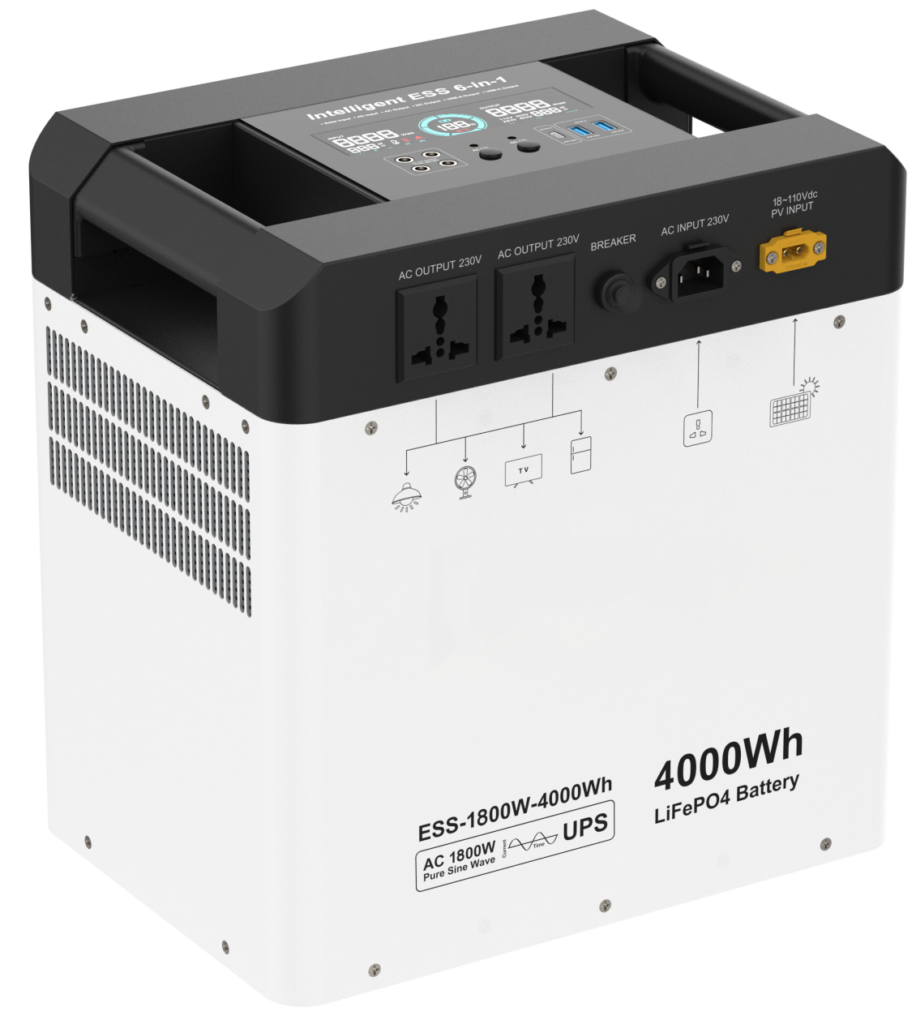
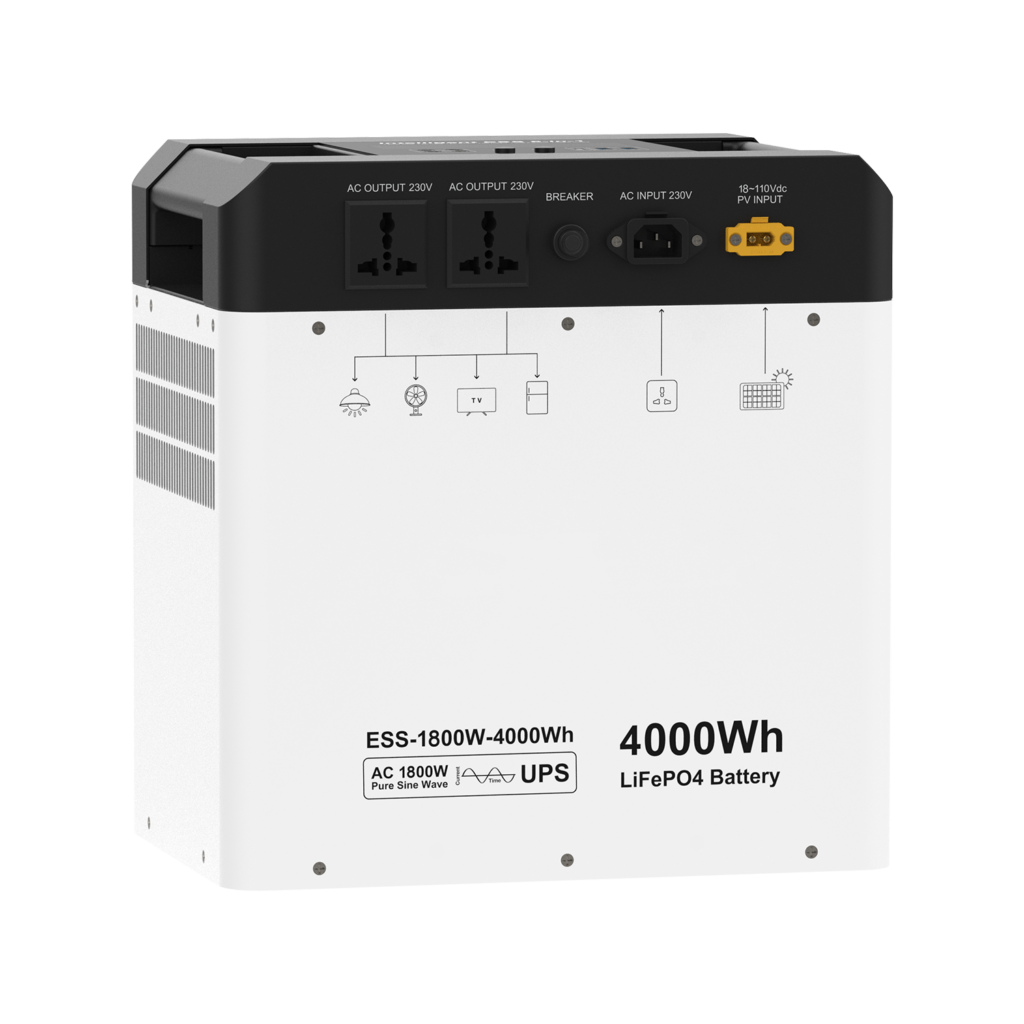
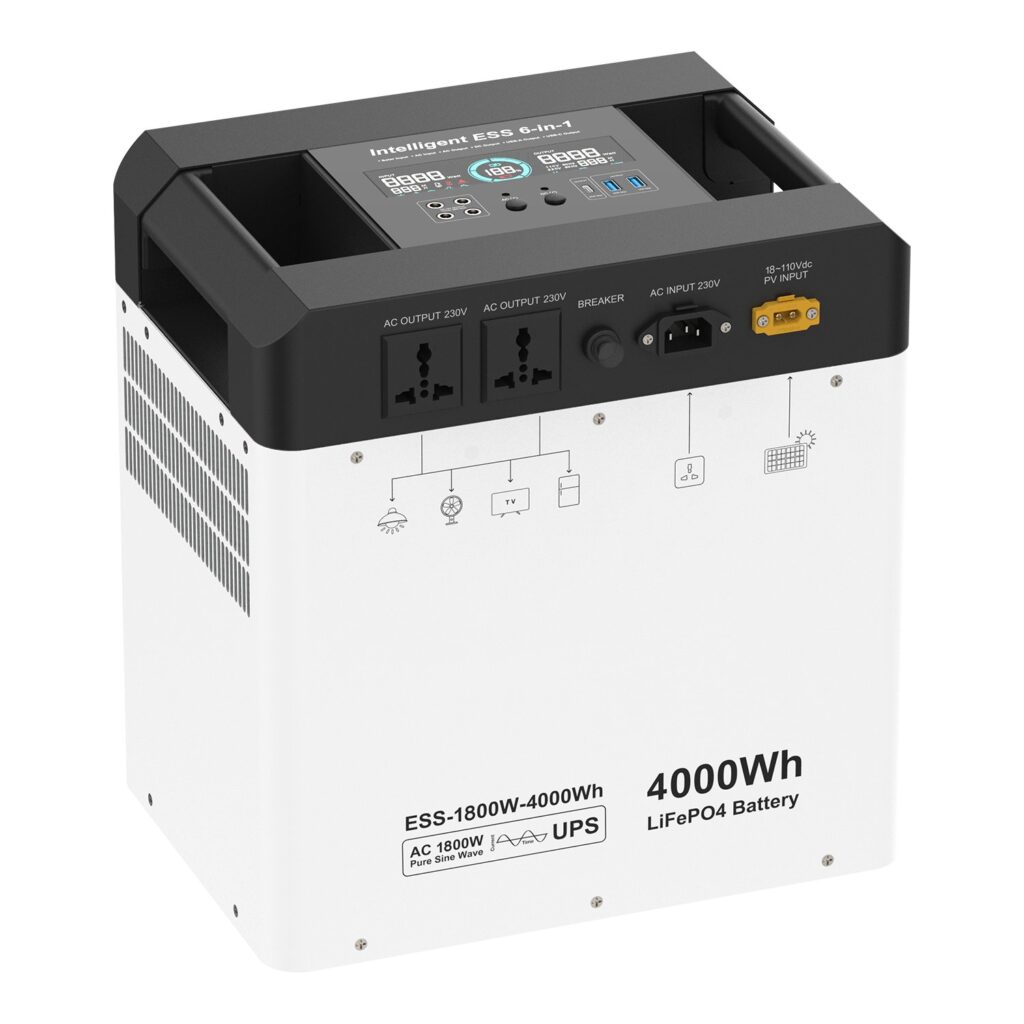
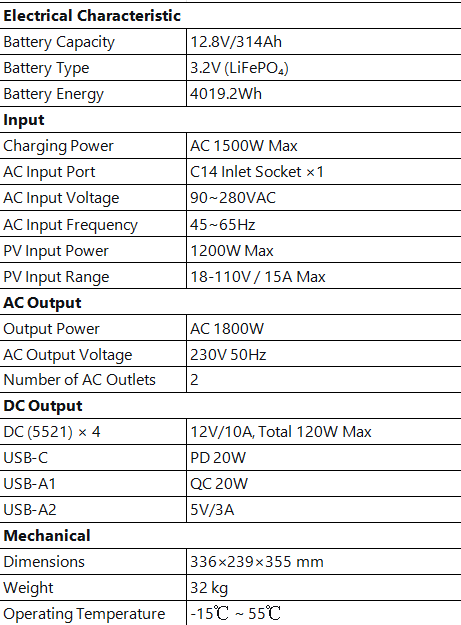
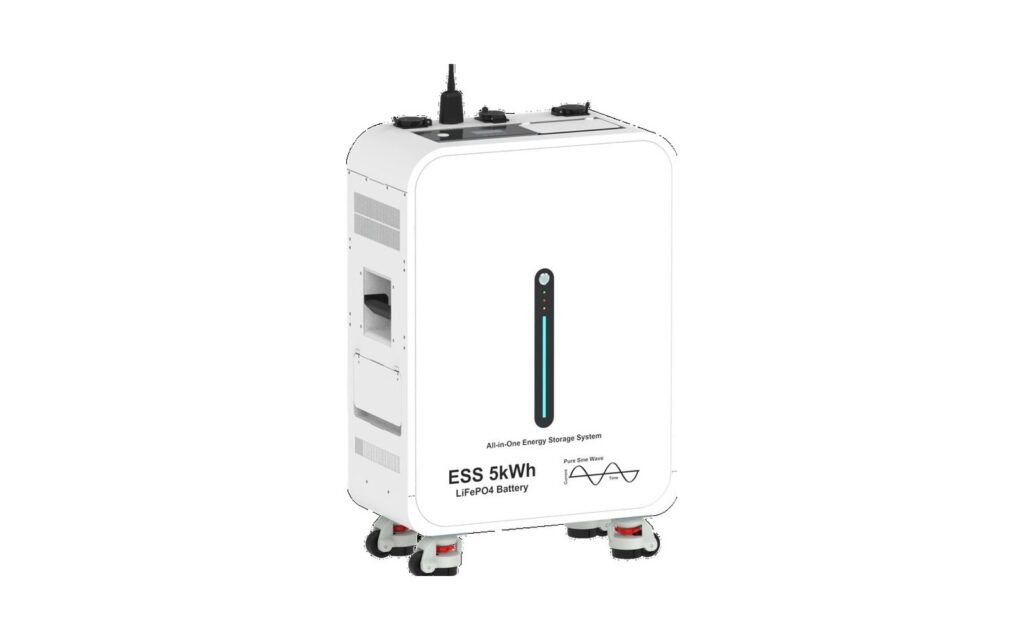
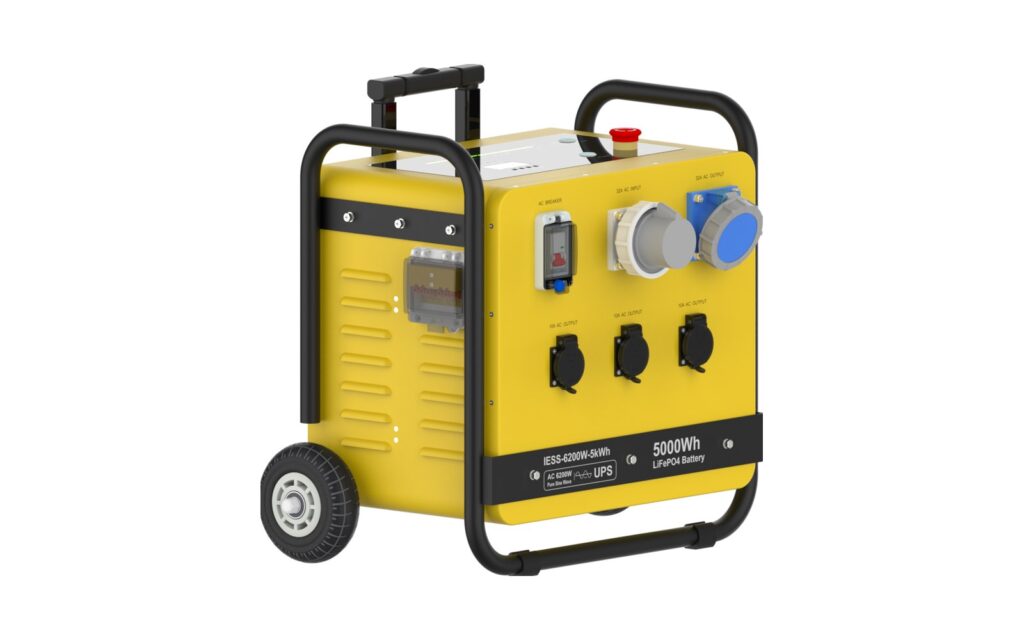
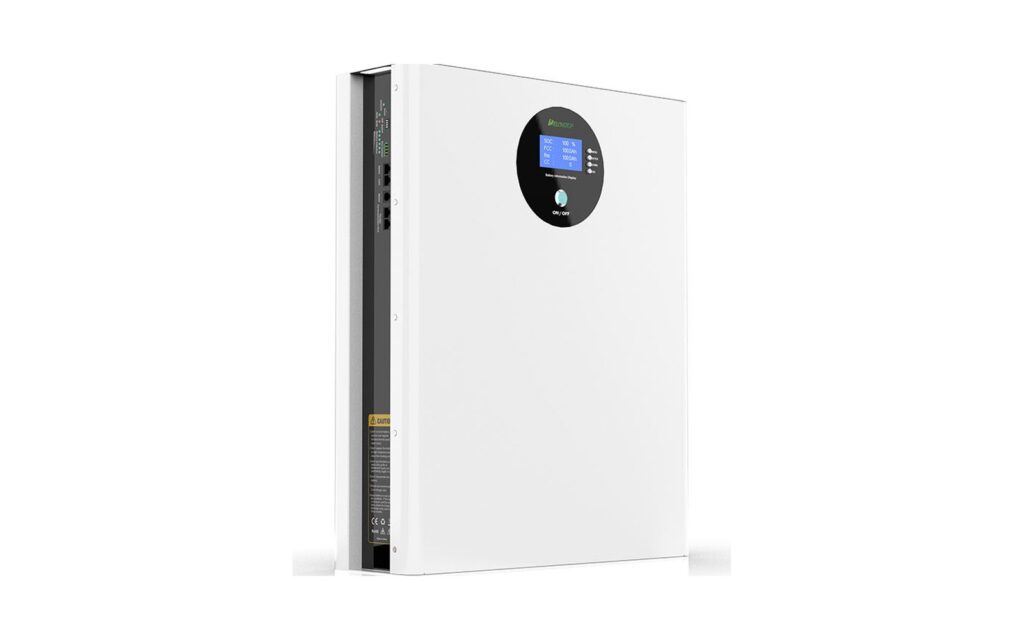
The All-In-One 4kWh ESS combines a 4019.2Wh LiFePO4 battery, inverter and controller for residential energy storage projects. It delivers 1800W pure sine wave output through two 230V outlets, accepts up to 1500W AC charging and 1200W PV input, and includes four 12V DC ports, USB-C PD, USB-A outputs and smart BMS protection.
Key Features
- ✓4019.2Wh LiFePO4 energy capacity for residential backup and integrated storage projects
- ✓1800W pure sine wave AC output through two 230V outlets
- ✓AC charging up to 1500W through one C14 inlet socket
- ✓Solar PV input up to 1200W across an 18-110V range
- ✓Four 12V DC ports with 120W total maximum output
- ✓USB-C PD 20W, USB-A QC 20W and USB-A 5V/3A outputs
- ✓Smart BMS protection against over-voltage, over-current, over-temperature and short circuits
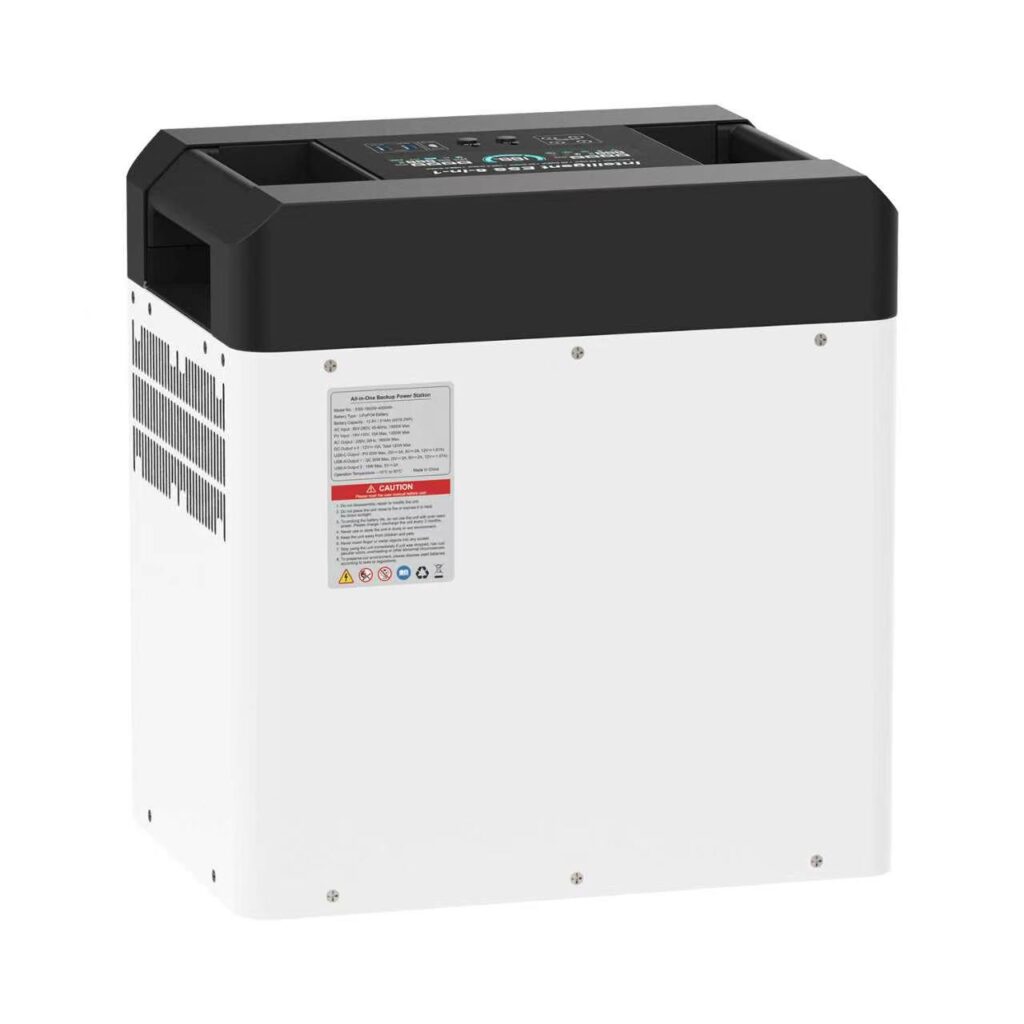
- ✓336 × 239 × 355mm enclosure weighing 32kg for indoor project planning
Technical Specifications
Common FAQs
The model supplies 1800W pure sine wave AC output through two 230V outlets, with additional DC and USB outputs. Compare the combined continuous load, appliance startup demand, power factor and desired backup duration with these limits. Confirm the complete load schedule before selecting this unit for a residential installation.
The published 4019.2Wh energy figure provides the initial sizing basis. Estimate usable energy after allowing for inverter efficiency, battery reserve, temperature, conversion losses and the actual load profile, then divide by measured demand in watts. Runtime is application-dependent, so confirm the calculation using the intended appliances and operating conditions.
Keep the solar input within 18-110V, 15A maximum and 1200W maximum PV power. Confirm the panel string voltage at expected operating and temperature conditions, along with connector polarity and cable sizing, before installation. The final array arrangement should be checked against the complete project design and site conditions.
The unit accepts AC charging up to 1500W through its C14 inlet socket. The AC input range is 90-280VAC at 45-65Hz. Confirm the available supply, protection, cable sizing and charging profile for the installation. Actual charging conditions can vary with source quality, temperature and system operating status.
Two 230V AC outlets provide the 1800W AC output, while four 12V DC ports provide 120W total. The unit also includes USB-C PD 20W, USB-A QC 20W and USB-A 5V/3A. Match every load to its voltage, current and connector, and check starting demand before connection.
The enclosure measures 336 × 239 × 355mm, weighs 32kg and operates from -15 to 55°C. Confirm the support surface, handling method, ventilation, clearances, cable routing and service access at the installation site. The supplied data does not define a mounting system, so confirm the intended installation with our team.
UN38.3, CE and RoHS documents are available for this model. Confirm target-market labeling, import requirements, project records and any additional documents needed by the buyer or installer. Share the application, quantity, destination and installation conditions so the available documentation can be reviewed before purchase.
Provide the load schedule, required backup duration, AC voltage and frequency, PV module voltage and current, installation environment, quantity and destination. Include charging-source details and output-port requirements. This allows the 4019.2Wh configuration, technical documentation and commercial details to be confirmed with our team.