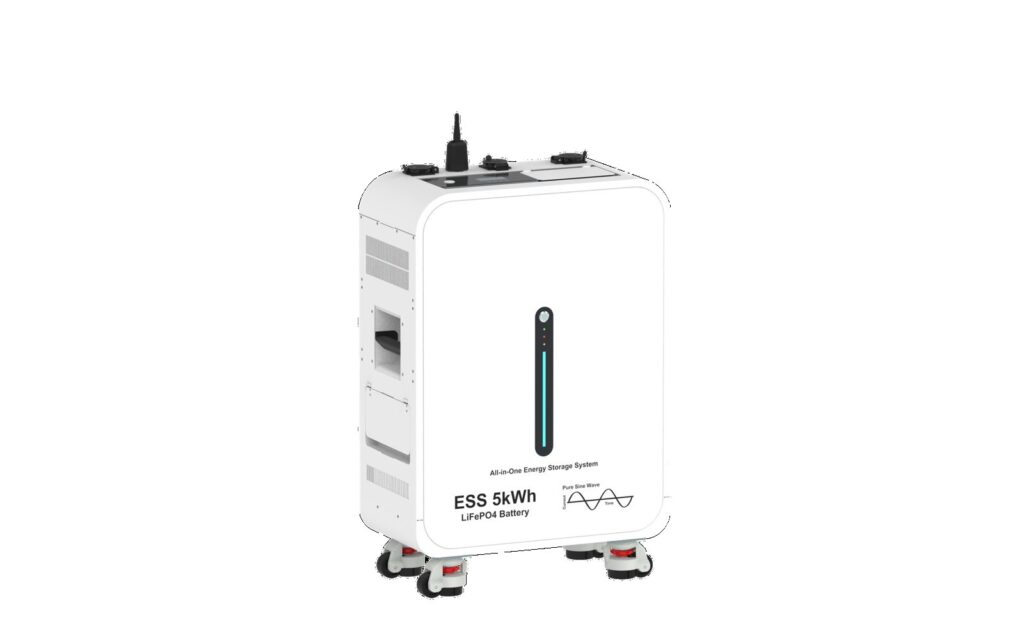
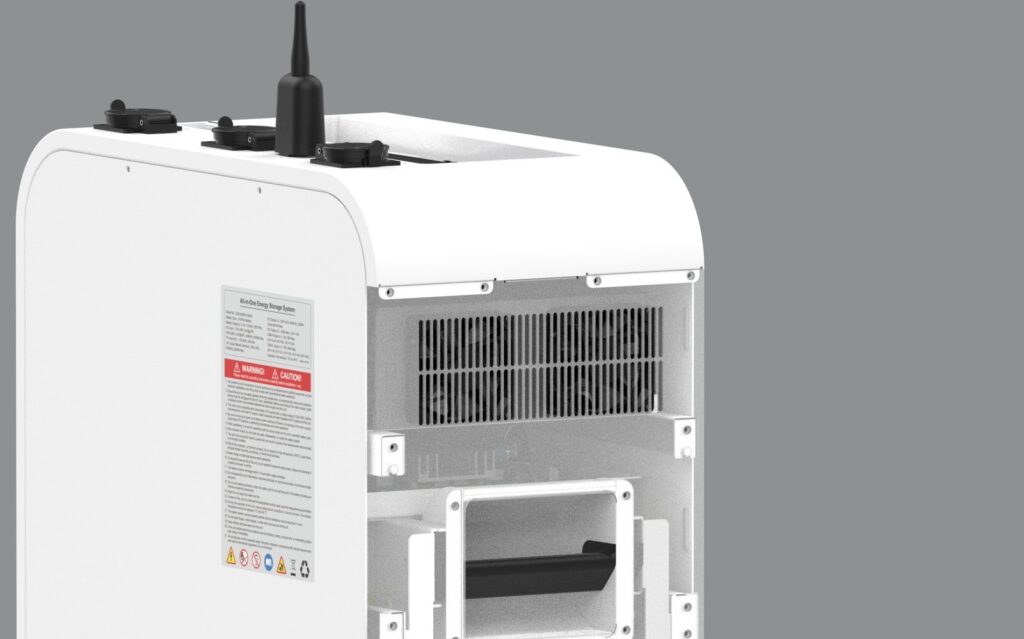
All-In-One 5/10/16KWh ESS
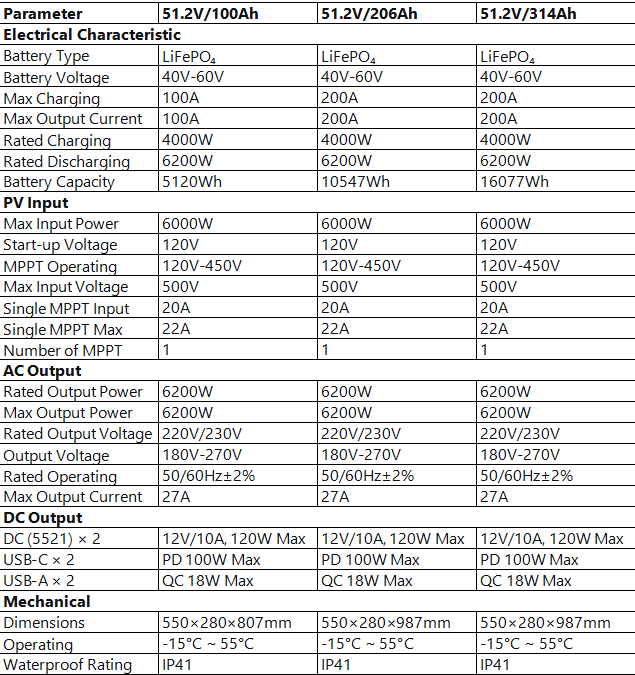
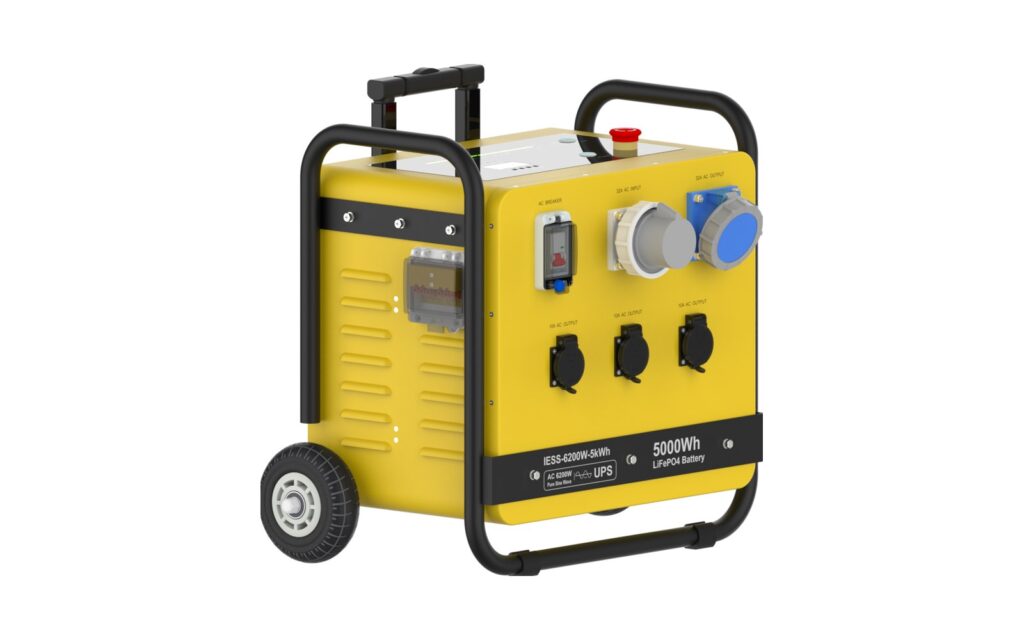
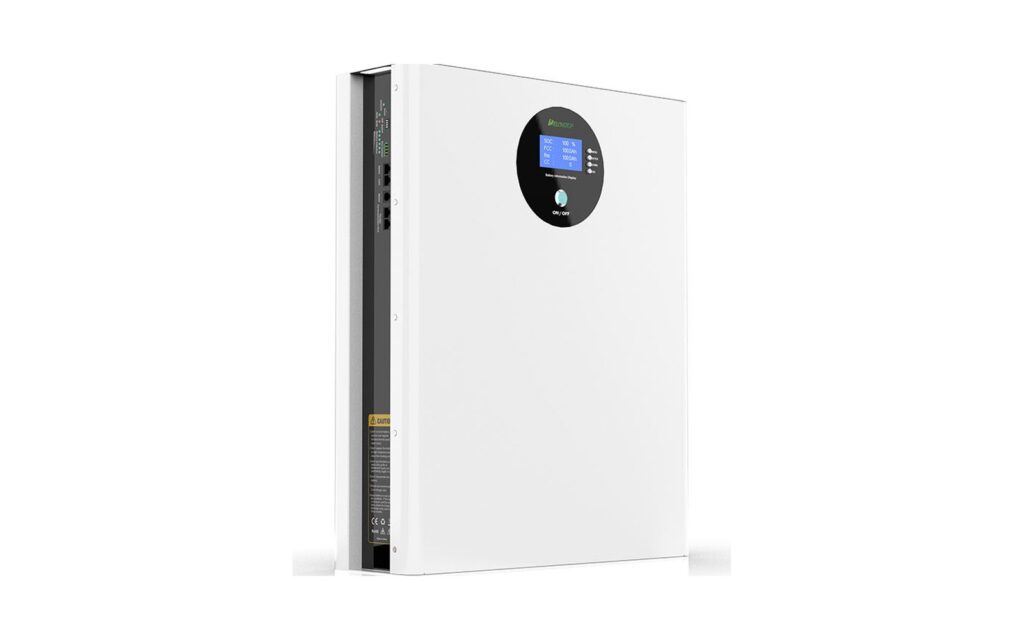
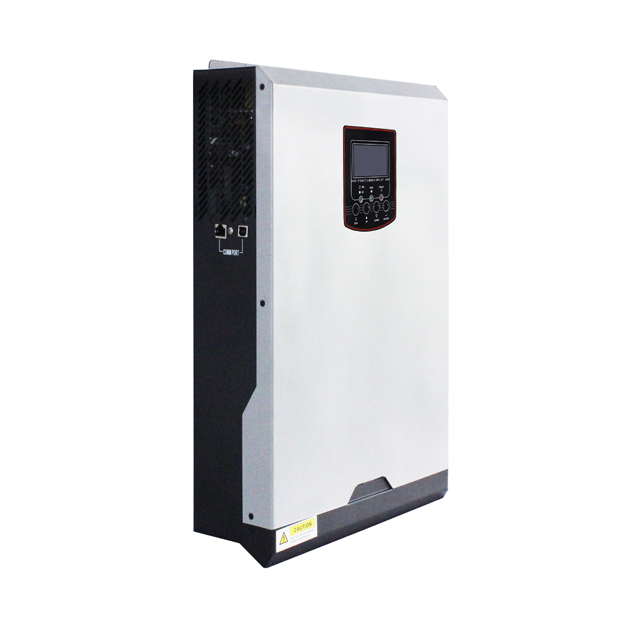
The All-In-One 5/10/16kWh ESS series provides three capacity choices: 5120Wh, 10547Wh and 16077Wh. Each platform combines a LiFePO4 battery, pure sine wave inverter and MPPT controller, with 6200W rated and maximum AC output, up to 6000W PV input, automatic grid-tied or off-grid transition, smart BMS and multiple auxiliary outputs.
Key Features
- ✓Three LiFePO4 capacity options: 5120Wh, 10547Wh and 16077Wh
- ✓6200W rated and maximum AC output for residential system loads
- ✓PV input up to 6000W with 120-450V MPPT operating range
- ✓500V maximum PV input voltage and 22A maximum single MPPT input
- ✓Rated charging power of 4000W and rated discharging power of 6200W
- ✓Automatic transition between grid-tied and off-grid operation
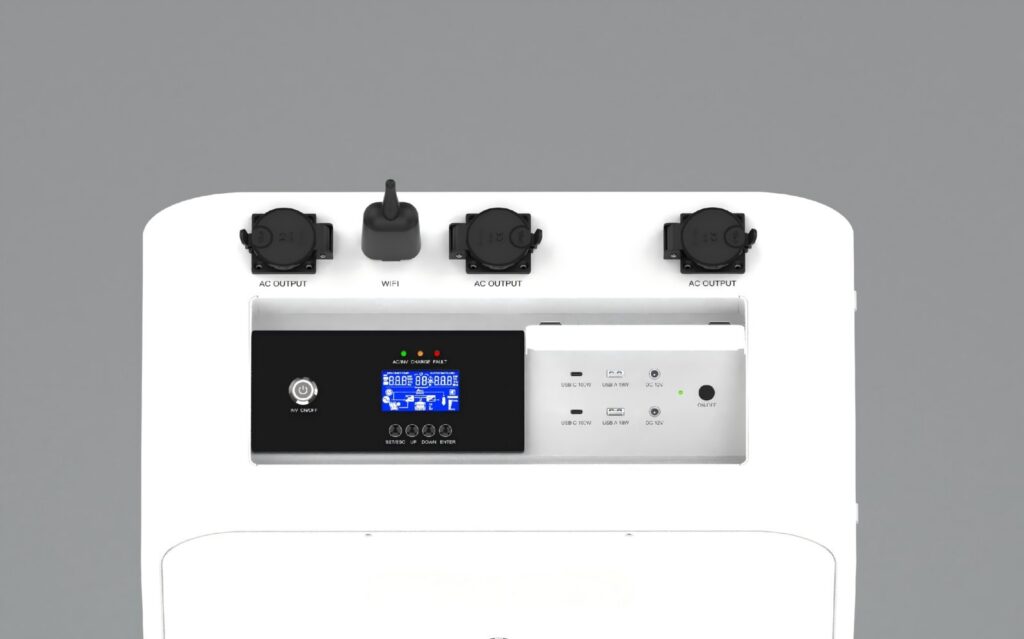
- ✓Two 12V ports, dual USB-C PD and dual USB-A QC outputs
- ✓IP41 enclosure operating from -15 to 55°C
Technical Specifications
Common FAQs
Choose according to required usable energy, load profile, backup duration and project space. The available capacities are 5120Wh, 10547Wh and 16077Wh, all using 51.2V LiFePO4 batteries. Compare measured consumption and required reserve with each option, then confirm the selected configuration before ordering.
The system provides 6200W rated and maximum AC output at 220V/230V, with output voltage from 180-270V and maximum current of 27A. It can support loads within those published limits, subject to starting demand and power factor. Confirm the full load schedule and any surge requirements before installation.
Keep the array within 6000W maximum PV input, 120V startup voltage, 120-450V MPPT operating range, 500V maximum input voltage and 22A maximum single MPPT input. Check voltage at expected temperatures and current under operating conditions. Confirm string design, protection and wiring with the project engineer before connection.
The battery voltage range is 40-60V, with maximum charging current of 100A for the 5K option and 200A for the 10K and 16K options. Rated charging power is 4000W. Confirm the selected model, source conditions, cable sizing and protection devices against the complete system design before commissioning.
The unit includes two 5521 12V ports rated at 10A and 120W maximum, two USB-C ports with 100W maximum PD output and two USB-A ports with 18W maximum QC output. Match connected devices to the specified voltage, current and connector. Keep auxiliary demand within the published port ratings.
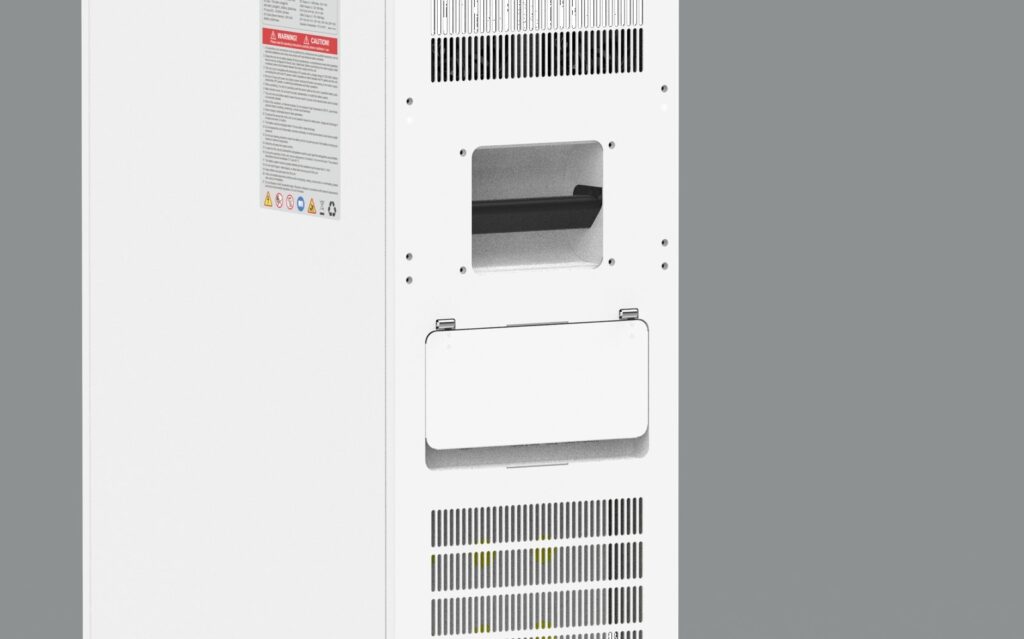
The 5K model measures 550 × 280 × 807mm, while the 10K and 16K models measure 550 × 280 × 987mm. All are IP41 and operate from -15 to 55°C. Confirm clearances, support, ventilation, cable routing, handling and site conditions for the chosen capacity before installation.
UN38.3, CE and RoHS documents are available for this platform. Provide the target application, capacity option, quantity, destination and installation conditions. The records needed for procurement, integration and target-market review can then be checked with our team.
Provide the required capacity, load schedule, backup duration, grid-tied or off-grid mode, AC voltage and frequency, PV array data, installation footprint, quantity and destination. Include transition requirements and auxiliary output needs. This information allows the configuration, technical documents and commercial details to be confirmed for the project.