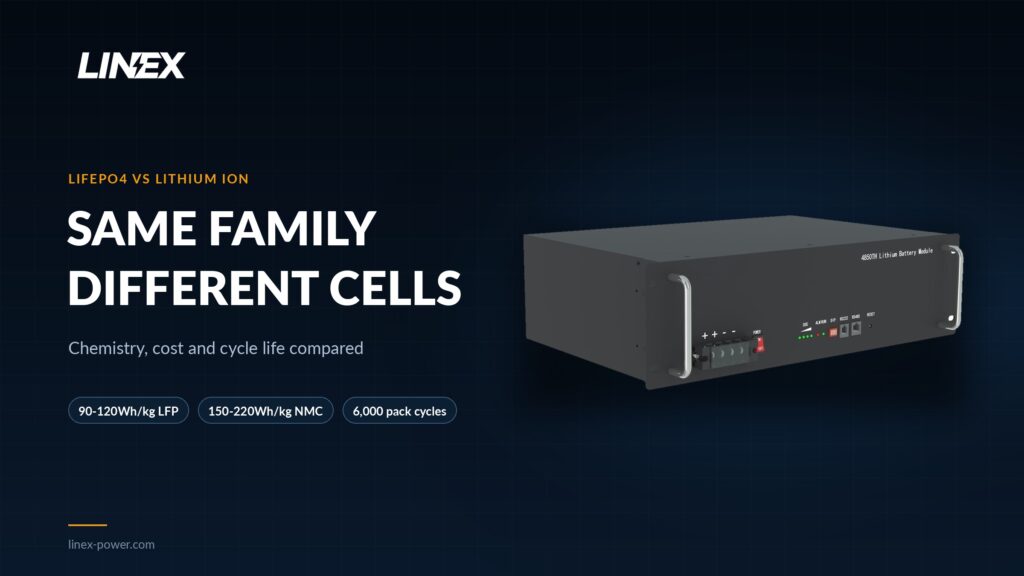
LiFePO4 is a lithium-ion chemistry, not a rival family
LiFePO4 is one of several lithium-ion chemistries, so a label that says only “lithium ion” does not tell you whether the cathode is LFP, NMC, NCA or LCO. LFP stands for lithium iron phosphate. NMC stands for lithium nickel manganese cobalt oxide. Both move lithium ions between a cathode and a graphite anode during charge and discharge.
The cell voltage differs. An LFP cell has a nominal voltage of 3.2V, so four cells in series make 12.8V, the nominal voltage on a 12V LFP pack. An NMC cell has a nominal voltage of 3.6V to 3.7V, so a 12V NMC pack uses a different series count and a different charger profile. The pack label should state the chemistry and the nominal voltage, not just the family name.
This naming problem is common in import quotes. A supplier may quote “12V 100Ah lithium ion” and ship an LFP pack, an NMC pack, or a pack with a different BMS. The chemistry line on the datasheet is the first check.
Cathode chemistry sets energy density and thermal behavior
LFP cells deliver 90Wh/kg to 120Wh/kg, while NMC cells deliver 150Wh/kg to 220Wh/kg, according to Battery University’s BU-205 summary. The gap comes from the cathode: LFP uses iron and phosphate, while NMC uses nickel, manganese and cobalt. NMC packs are lighter for the same energy, which matters in a vehicle or a portable device.
The thermal numbers run the other way. Battery University lists a thermal runaway temperature of about 270°C for LFP and about 210°C for NMC. LFP is described as a “very safe battery even if fully charged” in the same summary. NMC is not unsafe, but its mixed metal oxide cathode is less tolerant of high charge and high temperature.
Those cell-level numbers do not remove the need for a BMS. A pack still needs over-voltage, under-voltage, over-current and temperature protection, plus a fuse and a charger that follows the profile. The chemistry sets the margin. The BMS, fuse and charger decide how much of that margin the installation keeps.
| Property | LiFePO4 (LFP) | NMC |
|---|---|---|
| Nominal cell voltage | 3.2V | 3.6V to 3.7V |
| Specific energy, cell level | 90Wh/kg to 120Wh/kg | 150Wh/kg to 220Wh/kg |
| Cycle life, cell level | 2,000 cycles and higher | 1,000 to 2,000 cycles |
| Thermal runaway temperature | about 270°C | about 210°C |
| Cathode materials | iron and phosphate | nickel, manganese and cobalt |
| Typical applications | stationary storage, telecom, RV and marine house banks | e-bikes, medical devices, EVs and industrial equipment |
Pack-level energy density is lower than cell-level claims
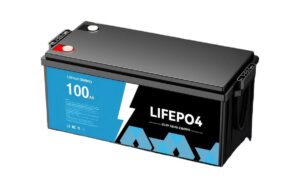
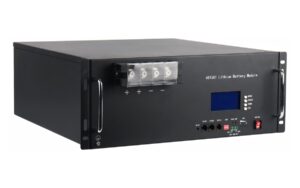
A LINEX 12V 100Ah pack delivers 1,280Wh from about 10kg, or 128Wh/kg at pack level, because the case, BMS, terminals and internal wiring add mass. The 12V 200Ah pack delivers 2,560Wh from about 22kg, or 116Wh/kg. The 48V 100Ah rack pack delivers 4,800Wh from 43kg, or 112Wh/kg.
The 12V 100Ah figure sits slightly above the top of the LFP cell range, while the larger packs sit inside it. The calculation uses rated energy and rounded weight. None of these figures are directly comparable with an NMC cell claim of 150Wh/kg to 220Wh/kg. A cell claim excludes the pack hardware; a pack claim includes it.
For a buyer, the pack-level number is the one that matters. A 12V 100Ah LFP pack at 10kg is easy to carry. A 12V 200Ah pack at 22kg needs two people or a lift. The energy density difference between LFP and NMC is real, but the pack hardware narrows it.
| Pack | Rated energy | Weight | Energy density | Cycle rating |
|---|---|---|---|---|
| 12V 100Ah | 1,280Wh | about 10kg | about 128Wh/kg | 6,000 at 80% DoD |
| 12V 200Ah | 2,560Wh | about 22kg | about 116Wh/kg | 6,000 at 80% DoD |
| 48V 100Ah | 4,800Wh | 43kg | about 112Wh/kg | 6,000 at 80% DoD |
Cycle life favors LFP, but only at the same test conditions
Battery University rates LFP cells at 2,000 cycles and higher, and NMC cells at 1,000 to 2,000 cycles. LINEX rates its 12V and 48V LFP packs at 6,000 cycles at 25°C and 80% depth of discharge. The three numbers are not interchangeable: two are cell estimates, one is a pack rating, and each uses its own end-of-life threshold.
Battery University’s cycle table shows the effect of depth of discharge. At 80% DoD, a generic LiFePO4 cell reaches about 900 cycles and an NMC cell about 400 before capacity falls to 70%. At 40% DoD, the same table shows about 3,000 cycles for LiFePO4 and about 1,000 for NMC. The direction is consistent: shallower cycles last longer.
A pack rating of 6,000 cycles at 80% DoD is higher than the generic cell table because the pack uses a specific cell, a specific BMS and a specific test protocol. Ask the supplier for the end-of-life capacity, the charge and discharge current, and the temperature used in the test. A 6,000-cycle claim at 25°C and 80% DoD is a different claim from 6,000 cycles at 45°C and 100% DoD.
| Depth of discharge | NMC cycles | LiFePO4 cycles |
|---|---|---|
| 100% | about 300 | about 600 |
| 80% | about 400 | about 900 |
| 60% | about 600 | about 1,500 |
| 40% | about 1,000 | about 3,000 |
| 20% | about 2,000 | about 9,000 |
The cycle count also changes the energy throughput. A 12V 100Ah pack at 6,000 cycles and 80% DoD moves about 6,144kWh over its rated life. A 12V 200Ah pack at the same cycle count moves about 12,288kWh. The larger pack does not last longer in cycles, but it moves twice the energy per cycle.
Cost per cycle is the number that survives a quote comparison
Cost per cycle equals the quoted price divided by usable kWh and rated cycles, so a 6,000-cycle pack can cost one-sixth as much per cycle as a 1,000-cycle pack at the same price and usable kWh. The formula turns two different quotes into one number: price ÷ (usable kWh × cycles). It also exposes a low upfront price attached to a short cycle life.
LFP has a cost-structure advantage in this calculation. Its cathode uses iron and phosphate, not cobalt or nickel, so the material cost is less exposed to cobalt and nickel prices. NMC uses nickel, manganese and cobalt, and its cathode cost moves with those metals. The pack price still depends on cells, BMS, case, testing and freight, so ask for a quote by configuration rather than a headline price per kWh.
Installation and replacement costs belong in the same comparison. A pack that is replaced twice needs two sets of labor, two freight movements and two disposal transactions. A 6,000-cycle pack that outlasts the equipment it serves may never be replaced. That is a cost advantage that does not show up in the purchase price.
| Rated cycles | Relative cost per cycle at the same purchase price |
|---|---|
| 6,000 | 1.00 |
| 3,000 | 2.00 |
| 2,000 | 3.00 |
| 1,500 | 4.00 |
| 1,000 | 6.00 |
Safety margins favor LFP, but the BMS still does the work
LFP has a thermal runaway temperature of about 270°C versus 210°C for NMC, and Battery University describes LFP as a “very safe battery even if fully charged.” The phosphate cathode is more tolerant of abuse and full charge than the mixed metal oxide cathode in NMC. That margin is useful in a hot cabinet, a boat bilge or a remote site.
The margin does not replace protection. A 12V LFP pack uses a BMS for over-voltage, under-voltage, over-current, short circuit and temperature protection. The pack charges from 0°C to 50°C and discharges from -20°C to 60°C. Charging below 0°C is blocked because lithium plating can damage the cells, even though the chemistry is safer than NMC in other respects.
The enclosure and installation matter too. A 12V 100Ah pack is rated IP65, which covers dust and water jets, not submersion. A marine install still needs a sealed box, cable glands and a fuse at the battery positive terminal. The chemistry reduces the risk of a thermal event; the installation decides whether the pack is exposed to one.
Application fit decides the chemistry before the datasheet does
LFP suits daily deep cycling in RV, marine, telecom and storage systems, where pack weight is less important than cycle life and usable energy. A 12V 100Ah pack at 10kg fits a campervan bench or a boat locker. A 48V 100Ah rack pack at 43kg fits a 19-inch telecom rack and delivers 4.8kWh.
NMC suits weight- and space-limited devices, including e-bikes, medical devices, EVs and industrial equipment. Its higher specific energy packs more watt-hours into a smaller case. The trade-off is a lower cycle life and a narrower thermal margin, which is acceptable when the pack is small, protected and replaced with the device.
The application also sets the voltage. A 12V LFP pack is a direct fit for a 12V RV or marine system after the charger profile is checked. A 48V LFP rack pack is a different architecture with a different BMS, rectifier and monitoring path. The chemistry comparison comes after the system voltage and load are fixed.
A lithium-ion label needs five checks before purchase
Check the cathode name, nominal voltage, charge voltage, cycle test conditions and continuous current before accepting a generic lithium-ion label. Those five fields separate an LFP pack from an NMC pack and a real cycle rating from a headline.
The cathode name should read LiFePO4 or LFP. A label that says only “lithium ion” leaves the chemistry open. The nominal voltage should match the chemistry: a 12V LFP pack reads 12.8V, while a 12V NMC pack reads a different pair because its cells are 3.6V to 3.7V. The charge voltage should match the nominal voltage: 14.6V for a 4S LFP pack, and a different profile for an NMC pack with a different series count.
The cycle claim should include temperature, depth of discharge and end-of-life capacity. The current line should give continuous amps, not just a peak figure. A supplier who cannot provide those five values in writing has not supplied a datasheet.
The LiFePO4 vs NMC vs AGM comparison covers the three chemistries side by side. The LiFePO4 vs gel battery comparison covers the lead-acid alternative. The 12V 100Ah LiFePO4 product page lists the pack data used in this article, and the 48V lithium battery range covers the rack models. For application sizing, the home battery backup page shows how the chemistry choice changes bank size and runtime.
Frequently asked questions
Yes. LFP is a lithium-ion chemistry with a lithium iron phosphate cathode. “Lithium ion” is the family name, not a separate chemistry. The family also includes NMC, NCA and LCO.
LFP typically lasts longer. Battery University rates LFP cells at 2,000 cycles and higher, and NMC cells at 1,000 to 2,000 cycles. LINEX packs rate 6,000 cycles at 80% depth of discharge and 25°C. Compare any two packs at the same depth of discharge, temperature and end-of-life capacity.
The LFP cathode uses iron and phosphate instead of cobalt and nickel, so its material cost is less exposed to those metals. Compare price per usable kWh and price per cycle rather than a headline pack price. Quotes are by configuration because cell, BMS, case and test requirements change the price.
NMC cells deliver 150Wh/kg to 220Wh/kg, compared with 90Wh/kg to 120Wh/kg for LFP cells. That higher specific energy saves weight and space in e-bikes, medical devices, EVs and industrial equipment. The shorter cycle life is acceptable when the pack is small and replaced with the device.
Only if the voltage, charger profile, BMS, current limit and physical size match. A 12V LFP pack reads 12.8V nominal and 14.6V charge. An NMC pack may use a different series count and a different charger, so check the label and the charger settings before swapping.
LFP has a higher thermal runaway temperature, about 270°C versus 210°C for NMC, and it is more tolerant of abuse and full charge. It still needs a BMS, a fuse and a charger that follows the profile. The chemistry raises the margin; the installation decides whether the margin holds.
Sources: LINEX 12V 100Ah LiFePO4 product page (1,280Wh, about 10kg, 6,000 cycles at 25°C and 80% DoD, 0°C to 50°C charge, -20°C to 60°C discharge, IP65); LINEX 12V 200Ah product page (2,560Wh, about 22kg, 6,000 cycles at 25°C and 80% DoD); LINEX 48V 100Ah telecom battery product page (4,800Wh, 43kg, 3U rack, 6,000 cycles at 25°C and 80% DoD); 12V lithium battery range; 48V lithium battery range; LiFePO4 vs NMC vs AGM comparison; LiFePO4 vs gel battery comparison; home battery backup application page; Battery University BU-205 (LFP 3.2V nominal, 90Wh/kg to 120Wh/kg, 2,000+ cycles, 270°C thermal runaway, “very safe battery even if fully charged”; NMC 3.6V to 3.7V nominal, 150Wh/kg to 220Wh/kg, 1,000 to 2,000 cycles, 210°C thermal runaway); Battery University BU-808 (cycle life by depth of discharge to 70% capacity). Calculated values: pack energy density from rated energy and datasheet weight; 6,000 × 1,280Wh × 0.8 and 6,000 × 2,560Wh × 0.8; cost per cycle index at equal purchase price. Last updated 2026-11-05.