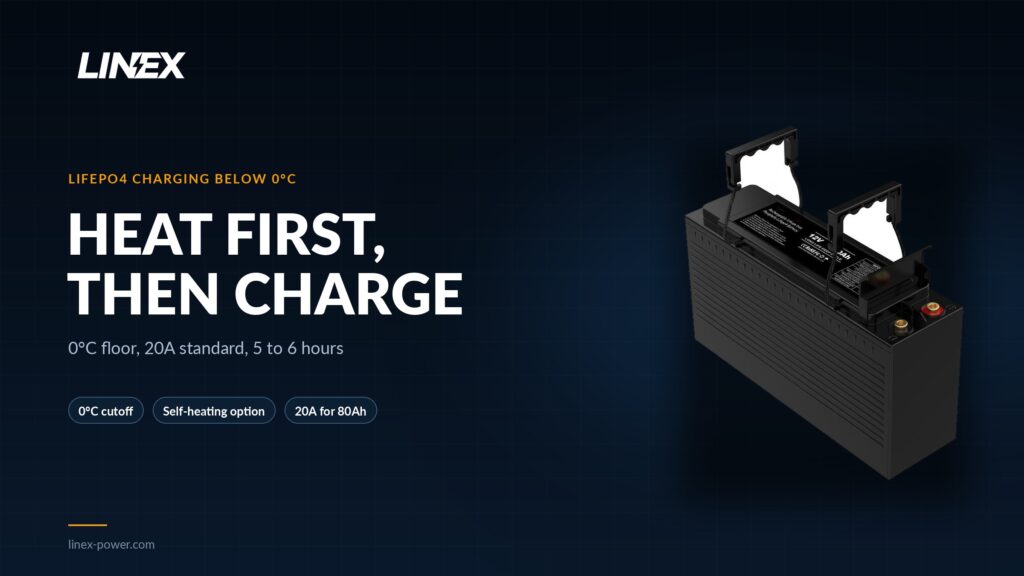
The charge floor is 0°C, the discharge floor is -20°C
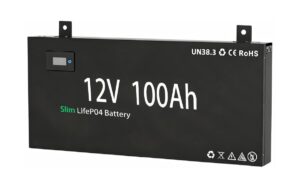
LINEX publishes a 0°C to 50°C charge window and a -20°C to 60°C discharge window for the standard 12V 100Ah LiFePO4 battery. Battery University lists 0°C to 45°C for Li-ion charging and -20°C to 60°C for discharge, and states that “No charge permitted below freezing.” The two windows are not interchangeable. A pack that runs a load at -10°C still has to warm up before it can take charge.
| Model | Charge window | Discharge window | Maximum charge current | Heating option |
|---|---|---|---|---|
| 12V 100Ah standard | 0°C to 50°C | -20°C to 60°C | 100A | None listed |
| Ultra Slim 12V 100Ah | 0°C to 55°C | -20°C to 60°C | 50A | Optional self-heating |
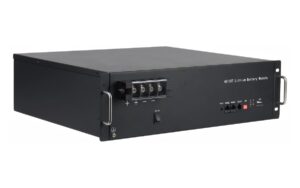
| 48V 100Ah rack reference | 0°C to 65°C | -20°C to 65°C | 100A | External heat only |
The discharge figure is not a promise of full capacity. Cold raises internal resistance, so a pack at -20°C delivers less energy and its voltage sags further under load. Treat the 1,280Wh rating as a new-pack number, not a cold-weather number.
Below 0°C, lithium plates onto the anode
Below 0°C, charging pushes lithium ions toward an anode that cannot absorb them fast enough. The diffusion rate falls, and the ions can deposit as metallic lithium on the surface instead of intercalating into the graphite. Battery University notes that the pack may appear to charge normally while plating occurs. The damage is permanent capacity loss, and in the worst case the plating forms dendrites that can pierce the separator.
The BMS charge cutoff prevents this. A pack that refuses charge at -5°C is working as designed. Raising the charge voltage, disabling the temperature protection or leaving the pack on a charger that ignores the BMS all defeat the protection.
Between 0°C and 5°C, reduce the charge current
Battery University puts fast charging at 5°C to 45°C and recommends lowering the current below 5°C even though charging is allowed above 0°C. For a 100Ah pack, 0.1C is 10A and 0.2C is 20A. LINEX lists 20A as the standard charge current and 50A as the recommended current for the 12V 100Ah model, so a cold pack should be held at the low end until the cells pass 5°C. The 100A maximum is a limit, not a target.
| Cell temperature | Charge allowed | Suggested current, 100Ah pack | Basis |
|---|---|---|---|
| Below 0°C | No | 0A | BMS cutoff and BU-410 |
| 0°C to 5°C | Yes, reduced | 10A to 20A | BU-410 low-temperature guidance |
| 5°C to 10°C | Yes | Up to 50A | Datasheet recommended current |
| 10°C to 30°C | Best range | Up to 50A recommended, 100A maximum | Datasheet and BU-410 |
| Above 30°C | Yes, watch cell temperature | 50A recommended | BU-410 best-range guidance |
A charger that cannot measure cell temperature should not be asked to make this decision. The BMS opens the charge path when the pack is too cold, and the charger sees a battery that refuses current.
Self-heating packs warm the cells before charge starts
The Ultra Slim 12V 100Ah lists self-heating as an optional feature. The option adds a heater that the BMS controls, and the charge path should stay off until the cell sensors pass the cutoff. The pack then accepts charge at its normal profile: 14.6V absorption and 13.5V to 13.8V float.
Ask for four details in the quotation: the heater set point, the power draw, the number of temperature sensors, and whether the heater runs from the charger or from the pack. Those details decide how long a cold pack takes to become chargeable and how much energy the heater consumes before any charge reaches the cells.
External heat covers packs without a built-in heater
A standard 12V 100Ah pack has no heater, so heat has to come from the enclosure. Four options cover most installations: an insulated battery box, a thermostat-controlled heater pad, a heated equipment room, and a charge window that only allows charging when the BMS reports above 0°C. Insulation slows heat loss but adds no heat. A pad adds heat only when the thermostat calls for it. The charge window adds no hardware but can leave the pack partially charged for days.
| Option | Best for | Control | Watch |
|---|---|---|---|
| Insulated battery box | Campervan, cabin or small cabinet | None | Adds no heat; leave summer ventilation |
| Thermostat heater pad | Enclosed battery compartment with AC power | Thermostat and cell sensor | Even heat; fail-safe if the pad sticks on |
| Room heating | Equipment room or garage | Room thermostat | Energy cost; door left open |
| Charge-window control | Solar or unattended site | BMS temperature data | Pack may stay partial for days |
Insulation is the first layer for any of them. A sealed box loses heat more slowly than a bare battery tray, and a pad in an insulated box reaches its set point faster than the same pad in open air. Leave a ventilation path for summer, because the enclosure that keeps heat in during winter can trap heat during a heat wave.
The charger must respect the same temperature limit
A charger with a lithium profile holds 14.6V absorption and 13.5V to 13.8V float. That profile says nothing about temperature. If the charger keeps applying 14.6V while the BMS has opened the charge path, the site can cycle between charge and protection. Use a charger with a battery temperature sensor, or one that reads the BMS charge-enable signal, and set the charge window above 0°C. A solar controller with only ambient temperature compensation is not enough.
This matters most on unattended sites. A campervan owner can wait for midday. A remote repeater cannot. If the site has no heater and no temperature-aware charger, plan for the pack to stay partially charged through a cold snap and size the bank for that reduced capacity.
Charging time: heat first, then 5 to 6 hours at 20A
Once the cells are above 0°C, the 12V 100Ah pack takes 5 to 6 hours on a 20A charger to replace 80Ah, according to LINEX’s published charging table. A 50A charger cuts that to 2 to 2.5 hours. A 10A DC-DC feed needs 10 to 12 hours. Add the heater warm-up time before any of those figures. A pack that starts at -10°C cannot accept current until the cells pass the cutoff, and the heater power and insulation decide how long that takes.
| Charge source | Current | Time to replace 80Ah | Basis |
|---|---|---|---|
| DC-DC charger | 10A | 10 to 12 hours | Calculated |
| Shore charger | 20A | 5 to 6 hours | Datasheet |
| Shore charger | 50A | 2 to 2.5 hours | Datasheet |
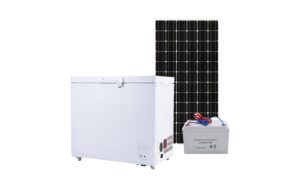
The times assume the charger holds its rated current for the whole cycle. A solar panel does not. A 200W panel produces 10A to 14A in good sun, which is one to two sunny days for 80Ah. In winter the panel output is lower and the days are shorter, so the charge window may close before the pack is full.
What to specify for a cold-climate 12V pack
The quotation should state the BMS low-temperature charge cutoff, the heater option and its set point, the absorption and float voltages, and the case size that fits the insulated compartment. The standard 12V 100Ah model measures 332 × 172 × 218mm and weighs about 10kg. The Ultra Slim measures 561 × 255 × 61.5mm and weighs 13kg. A pack that fits with insulation around it needs a different enclosure than the bare case.
The 12V 100Ah LiFePO4 battery page lists the full temperature table and charge profile. The 12V lithium battery range covers standard, thin and ultra-slim cases from 10Ah to 300Ah. The 48V LiFePO4 cold weather charging guide covers the same limits for rack systems. For a campervan or RV installation, the RV and van life application page lists the models that fit narrow compartments.
Frequently asked questions
The datasheet allows charging from 0°C, but that is the absolute floor, not a comfortable operating point. Battery University states that no charge is permitted below freezing and recommends 10°C to 30°C for best results. Hold charge until the cells are above 0°C, and preferably above 5°C.
Lithium ions plate onto the anode instead of entering the graphite. The pack can look like it is charging normally while the damage accumulates. Capacity drops permanently, and severe plating can form dendrites that create an internal short.
Only if the pack has to charge while the cells are below 0°C. A pack that is charged from a warm garage or only in daylight above freezing does not need a heater. The Ultra Slim 12V 100Ah offers self-heating as an option. The standard 12V 100Ah model does not list a heater.
Yes. The 12V 100Ah model discharges from -20°C to 60°C. Expect lower capacity and a larger voltage sag in the cold. Battery University’s general figure is that a battery at -18°C delivers about 50% of its 27°C capacity, and the exact number varies by chemistry and load.
Only when the cells are above the BMS charge cutoff. The controller may not know the cell temperature, so the BMS can block current while the panel is producing. Plan for the lost solar input on cold mornings rather than sizing the array around nameplate output.
Heat time plus 5 to 6 hours at 20A to replace 80Ah in a 12V 100Ah pack. A 50A charger cuts the charge stage to 2 to 2.5 hours, but the heating stage still comes first.
Sources: LINEX 12V 100Ah LiFePO4 product page (1,280Wh, 0°C to 50°C charge, -20°C to 60°C discharge, 20A standard charge, 50A recommended, 100A maximum, 14.6V absorption, 13.5V to 13.8V float, 332 × 172 × 218mm, about 10kg, 5 to 6 hours at 20A for 80Ah, 2 to 2.5 hours at 50A, 200W solar 10A to 14A); LINEX Ultra Slim 12V 100Ah product page (0°C to 55°C charge, -20°C to 60°C discharge, 50A maximum charge, optional self-heating, 561 × 255 × 61.5mm, 13kg); LINEX 12V lithium battery range; LINEX 48V LiFePO4 cold weather charging guide (48V charge window and cabinet heating options); LINEX RV and van life application page; Battery University BU-410 (Li-ion charge and discharge temperature limits, no charge below freezing, reduced current below 5°C, best range 10°C to 30°C, lithium plating); Battery University BU-502 (capacity at low temperature). Calculated values: 0.1C and 0.2C currents for a 100Ah pack; 10A charge time to replace 80Ah. Last updated 2026-11-04.