All-In-One 2KWh ESS
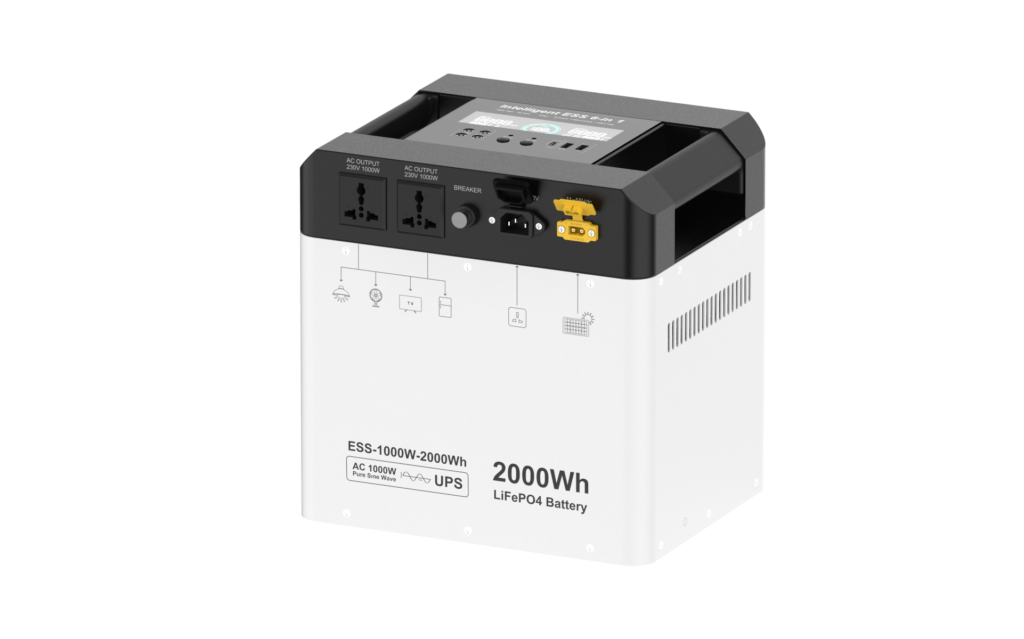
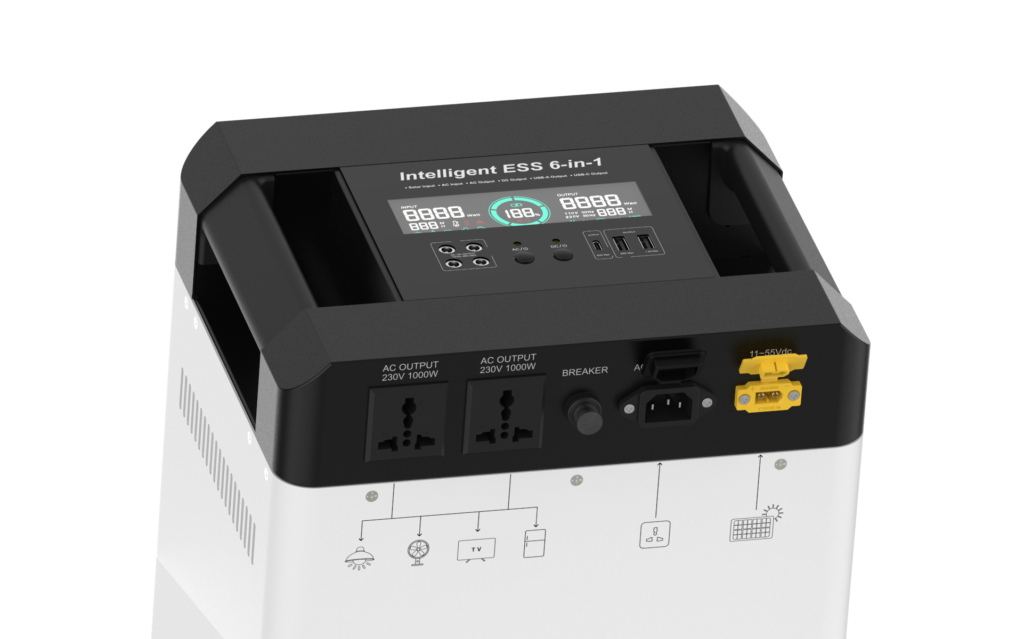
The All-In-One 2kWh ESS combines a 2009.6Wh LiFePO4 battery, inverter and controller in one enclosure. It delivers 1000W pure sine wave output through two 230V outlets, accepts up to 800W AC charging and 550W PV input, and includes four 12V DC ports, USB-C PD, USB-A outputs and smart BMS protection.
Key Features
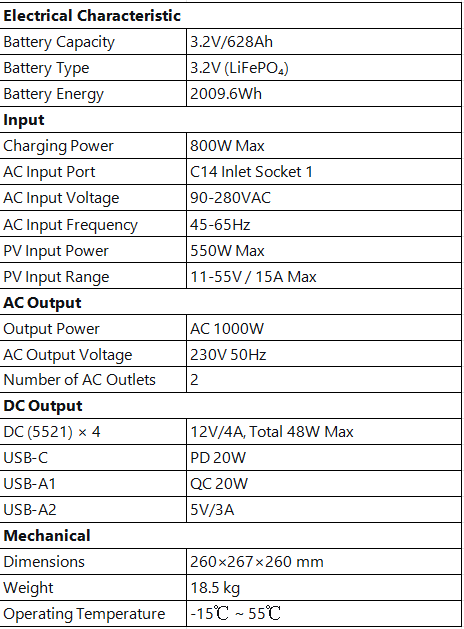
- ✓2009.6Wh LiFePO4 energy capacity for residential backup and small system integration
- ✓1000W pure sine wave AC output through two 230V outlets
- ✓AC charging up to 800W through one C14 inlet socket
- ✓Solar PV input up to 550W across an 11-55V range
- ✓Four 12V DC ports with 48W total maximum output
- ✓USB-C PD 20W, USB-A QC 20W and USB-A 5V/3A outputs
- ✓Smart BMS protection against over-voltage, over-current, over-temperature and short circuits
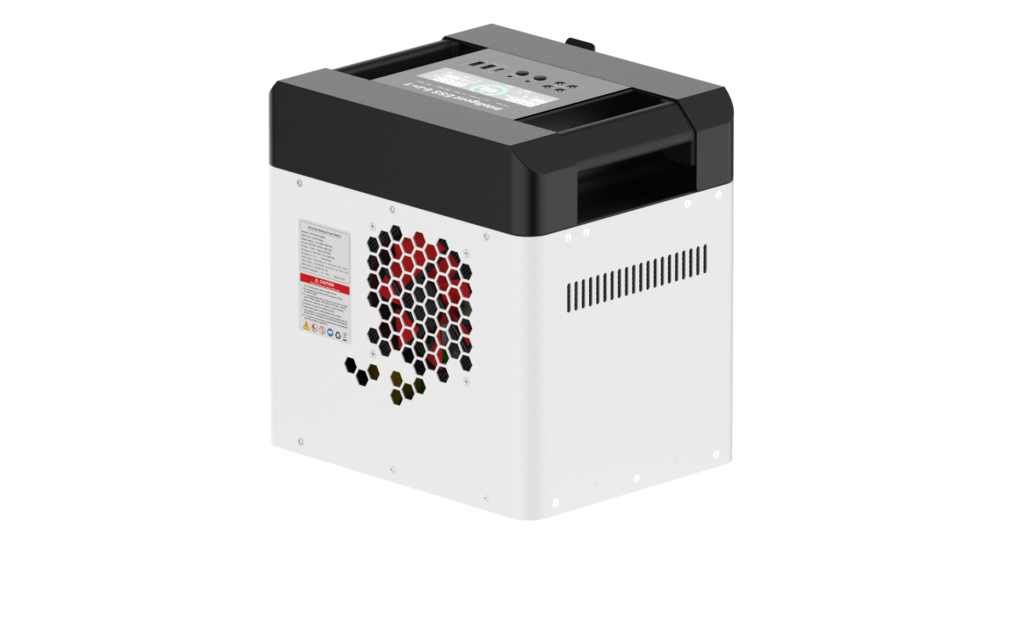
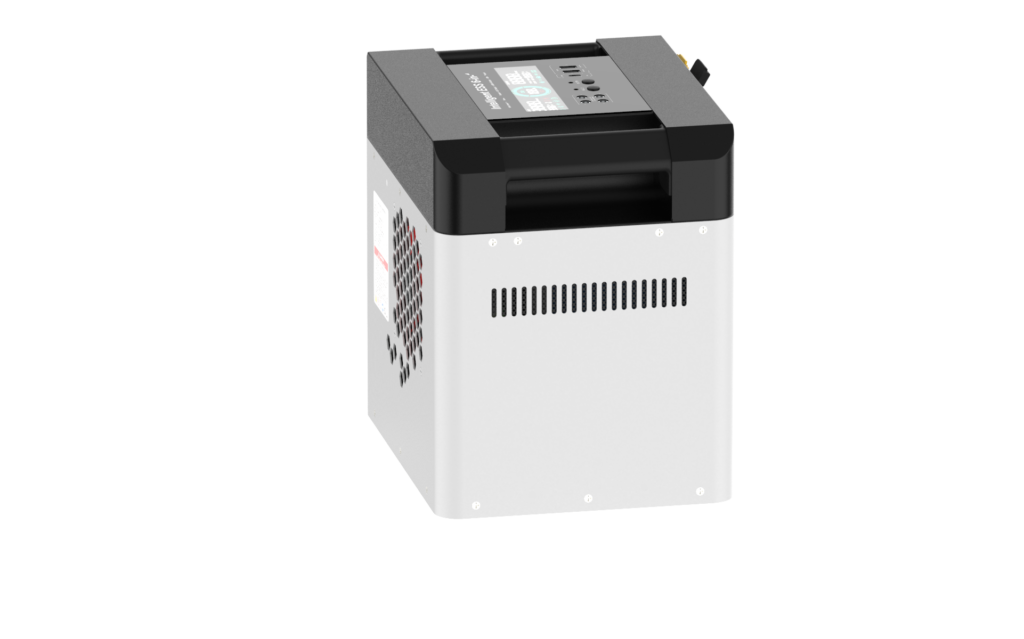
- ✓Compact 260 × 267 × 260mm enclosure weighing 18.5kg
Technical Specifications
Common FAQs
The unit provides 1000W pure sine wave AC output through two 230V outlets, alongside 12V DC and USB outputs. It suits compatible residential backup loads within the published limits. Check each appliance's running power, starting demand, power factor and required backup duration before selecting the unit for a project.
Use the published 2009.6Wh energy figure as the starting point, then allow for inverter efficiency, battery reserve, load variation, temperature and cable losses. Divide usable energy by measured load power for an initial estimate. Actual runtime depends on the complete load profile and installation conditions, so confirm the calculation before ordering.
Yes. AC charging is available up to 800W through the C14 inlet, while solar PV input supports up to 550W across 11-55V with 15A maximum current. Confirm the source voltage, current, wiring and installation conditions before connection.
The unit has two 230V AC outlets rated for 1000W output, four 12V DC ports with 48W total, USB-C PD 20W, USB-A QC 20W and USB-A 5V/3A. Match each device to the correct port and limit total demand to the published ratings, including startup requirements.
The enclosure measures 260 × 267 × 260mm, weighs 18.5kg and operates from -15 to 55°C. Confirm the mounting method, ventilation, clearances, cable routing and service access for the intended site. The supplied specification does not state a mounting arrangement, so confirm installation details with our team before ordering.
The smart BMS provides over-voltage, over-current, over-temperature and short-circuit protection. These functions help manage electrical and temperature-related operating risks within the battery system. They do not replace correct system sizing, wiring, ventilation or load selection. Review the complete installation requirements with the project team before commissioning.
UN38.3, CE and RoHS documents are available for this model. Confirm the target-market documentation, labeling, import requirements and any project-specific records before ordering. Provide the application, quantity, destination and installation conditions so the available document set can be checked against the procurement requirements.
Provide the target application, required loads, backup duration, AC voltage and frequency, PV voltage and current, installation method, quantity and destination. State whether DC and USB outputs are required. This information allows the model configuration, technical documents and commercial details to be confirmed with our team.