48V nominal comes from 15 LiFePO4 cells in series at 3.2V each
A 48V lithium ion battery is normally a 15S pack: 15 cells at 3.2V each, 48V nominal. Some suppliers build 16S packs at 51.2V, which is a different product with different charge settings. Telecom equipment has called the class 48V since the flooded plant era, when 24 lead-acid cells at 2V made a 48V string. The LINEX 48V range uses the 15S architecture, with 53.3V equalize, 51.0V float and 40.5V cutoff.
Check the charger against the pack, not against the label printed on the case.
A 48V inverter expects a DC window that covers 40.5V to 53.3V. If its maximum input is 50V, a 48V pack at full charge of 53.3V sits above it. If its low cutoff is 44V, the pack’s 40.5V cutoff never arrives and the inverter shuts down first. The 48V and 51.2V battery comparison shows where the two architectures diverge.
Current at 48V is one quarter of a 12V bank
A 48V bank carries one quarter of the current a 12V bank needs for the same load: a 5kW load pulls about 434A at 12.8V and 116A at 48V, at 90% inverter efficiency. Power is voltage times current, so the higher bank voltage cuts the conductor size. That is the difference between four times the copper cross-section and a fuse rated for 500A rather than 125A.
| Load (continuous) | Current at 12.8V | Current at 25.6V | Current at 48V | 48V fuse | 48V cable |
|---|---|---|---|---|---|
| 1kW | 87A | 43A | 23A | 30A | 4mm² |
| 3kW | 260A | 130A | 69A | 80A | 16mm² |
| 5kW | 434A | 232A | 116A | 125A | 25mm² |
| 10kW | 868A | 434A | 232A | 250A | 50mm² |
The table stops at the pack terminal. Cable length still matters, and a long run changes the answer.
A 5m one-way run in 25mm² copper loses about 0.8V at 116A, or 1.7% of 48V. Keep the inverter close to the bank or go up one cable size.
Telecom sites: 4.8kWh per unit and 100A discharge
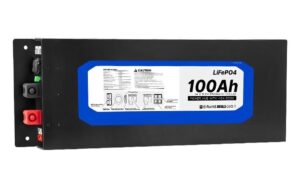
One 48V 100Ah unit stores 4.8kWh at a telecom site, or 3.84kWh at 80% depth of discharge, which runs a 1kW load for about 3.8 hours.
A base station runs on a -48V DC plant. Rectifiers hold the bus at 51.0V float and raise it to 53.3V for equalize, and the battery takes over when AC fails.
A 100A continuous rating covers a 4.8kW DC load at 48V. For longer holdover, parallel identical units or move to the 150Ah and 200Ah models, which store 7.2kWh and 9.6kWh. The telecom remote site battery guide covers rectifier settings and site loads, and the 48V lithium battery range lists every case size.
| Load | Current at 48V | Runtime per unit | Runtime with two units |
|---|---|---|---|
| 500W DC | 10A | 7.7h | 15.4h |
| 1kW DC | 21A | 3.8h | 7.7h |
| 2kW DC | 42A | 1.9h | 3.8h |
| 3kW AC | 69A | 1.2h | 2.3h |
| 5kW AC | 58A per unit, two required | not permitted on one | 1.4h |
Rack format: 3U, 43kg and 442mm deep
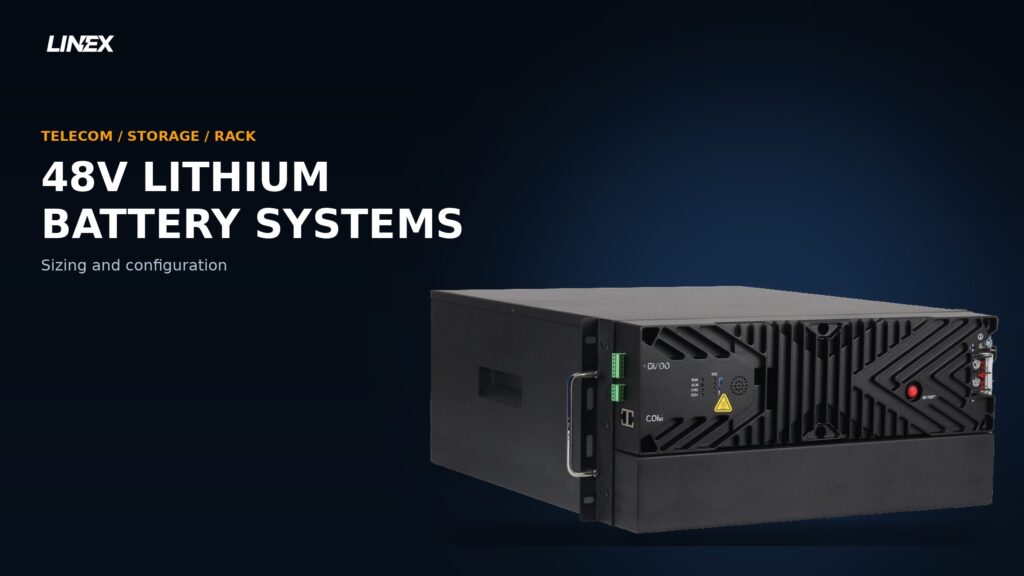
The 48V 100Ah telecom lithium battery is 442mm wide, 420mm deep and 133mm high, or 482mm deep including handles and terminals. It weighs 43kg and fits a standard 19-inch rack at 3U. Plan for two people on the lift and a shelf or rail rated for the weight, not just the front ears.
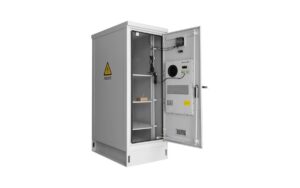
Its case is IP20, so it belongs indoors or inside a cabinet, not on a pole.
Front access to terminals and the RS485/RS232 ports keeps service possible without pulling the unit. Leave one U above and below for air, and put the heaviest modules low in the frame.
Storage systems: 4.8kWh modules and parallel expansion
Four 100Ah modules make a 19.2kWh bank, enough for a 5kW inverter at full load for about 2.8 hours. The current check comes first: a 5kW load at 48V draws 116A, just above one module’s 100A continuous limit, so the minimum is two modules even when the energy fits in one.
Parallel wiring follows the same rules as any lithium bank: same model, similar age, equal cable lengths and a fuse on each string. Two units give 200A continuous; confirm the model’s parallel limit before adding a third. The 48V solar battery sizing page covers array and inverter matching for off-grid builds.
What to check before specifying a 48V lithium ion battery
Five items decide whether a 48V pack fits a site. Charge window: 53.3V equalize, 51.0V float, 40.5V cutoff. Continuous current: the datasheet line “Max Charge / Discharge Current: 100A / 100A @25°C” is a 25°C figure, so ask for the derating curve at the site’s ambient. Communications: RS485 or RS232 on this model, and CAN only if the inverter requires it and the pack offers it. Enclosure: IP20 indoors, IP65 for pole or outdoor cabinets. Parallel limit: the datasheet usually gives a per-module figure, not a bank figure.
Ask for the UN38.3 test summary and the MSDS for the shipping file, and check that the model number on the quote matches the datasheet.
Check that any certificate claim names a document number. For a rack build, the installation checklist covers torque, breaker placement and commissioning.
Frequently asked questions
Not exactly. 48V is the class name inherited from lead-acid plants. LINEX 48V packs use 15 cells at 48V nominal; a 16S pack is 51.2V and uses different charge settings. The charge settings are what matter: 53.3V equalize, 51.0V float and 40.5V cutoff.
About 3.8 hours on a DC load at 80% depth of discharge, or 3.5 hours through a 90% efficient inverter. A 2kW load halves that to 1.9 hours.
Yes, with the same model and age, equal cable lengths and a fuse on each string. Two units give 9.6kWh and 200A continuous. Confirm the BMS parallel limit before adding a third.
No. 5kW at 48V and 90% efficiency draws about 116A, above the 100A continuous rating. Use two units in parallel, which also gives 9.6kWh.
53.3V for equalize, 51.0V float and 40.5V cutoff. Set the rectifier to the pack’s figures, not to a generic lead-acid equalize profile of 56V or more, which the BMS will block to protect the cells.
Sources: LINEX 48V 100Ah, 150Ah and 200Ah datasheets (4.8kWh, 7.2kWh and 9.6kWh nominal; 100A continuous; 53.3V equalize, 51.0V float, 40.5V cutoff; 3U, 442 x 420 x 133mm, 43kg, IP20, RS485/RS232; 6,000 cycles at 80% DoD and 25°C; charge 0°C to 65°C). Cable and fuse figures follow the 48V range page; voltage drop uses standard copper resistance at 20°C.