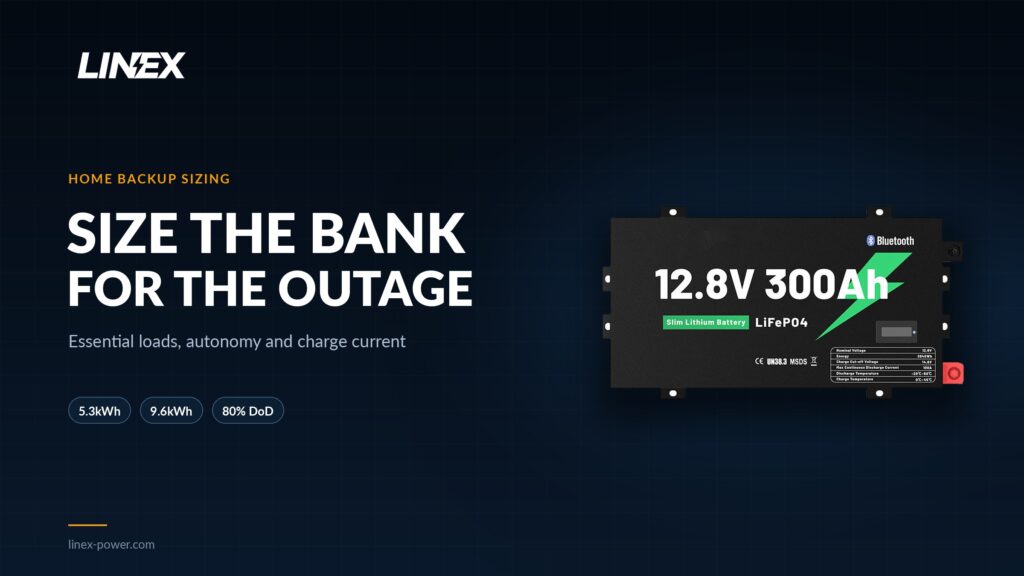
Backup capacity starts with the essential-load list
A house battery backup system without solar should be sized from the watts that must stay on and the hours they must run, not from the whole-house bill. A 3kWh daily load on a 5kWh battery lasts about 1.3 days. A 5kWh daily load on a 10kWh battery lasts about 1.5 days. The difference is the load list, not the battery label.
Start with a room-by-room list. A fridge, six LED lights, a router, a TV and phone chargers add up to roughly 3kWh per day. Add a well pump or sump pump and the figure moves toward 5kWh. Add one room air conditioner and it reaches about 10kWh. “Size for the loads you must carry, not for the whole house” is the rule the storage page uses, and it keeps the bank from being built around appliances that can wait.
| Essential load | Running power (W) | Hours per day (h) | Daily energy (kWh) |
|---|---|---|---|
| Fridge | 150 | 8 | 1.2 |
| LED lights (6) | 60 | 5 | 0.3 |
| Router and phone chargers | 30 | 24 | 0.72 |
| TV | 100 | 4 | 0.4 |
| Well pump | 750 | 0.5 | 0.38 |
| Total | 3.0 |
A 5kWh bank covers about eight hours at 500W
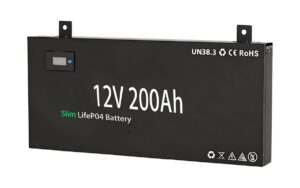
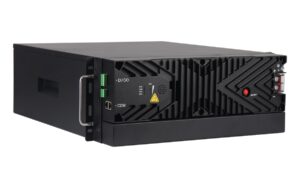
A 5,324Wh wall-mounted battery delivers about 4.0kWh to the load at 80% depth of discharge and 95% inverter efficiency. That runs 500W of essential loads for about 8 hours, or 1,000W for about 4 hours. A 48V 100Ah rack module stores 4.8kWh and runs the same 500W load for about 7.3 hours.
The arithmetic is usable kWh = nominal kWh x depth of discharge x inverter efficiency. For the wall unit, 5.324 x 0.80 x 0.95 = 4.05kWh. Divide by the load in kW to get hours. The same formula works for a 9.6kWh rack module or a 19.2kWh bank; only the first number changes.
| Battery | Nominal energy (Wh) | Usable at 80% DoD (Wh) | After 95% inverter (Wh) | 500W (h) | 1,000W (h) | 2,000W (h) |
|---|---|---|---|---|---|---|
| Wall-mounted 5kWh ESS | 5,324 | 4,259 | 4,046 | 8.1 | 4.0 | 2.0 |
| 48V 100Ah rack | 4,800 | 3,840 | 3,648 | 7.3 | 3.6 | 1.8 |
| 48V 200Ah rack | 9,600 | 7,680 | 7,296 | 14.6 | 7.3 | 3.6 |
| 2 x 48V 200Ah | 19,200 | 15,360 | 14,592 | 29.2 | 14.6 | 7.3 |
Pump and compressor starting decide the inverter, not the battery
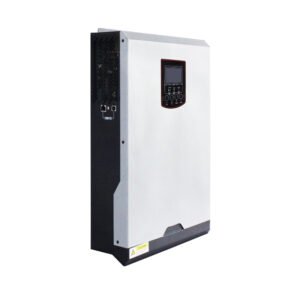
A battery sets runtime, and the inverter’s surge rating decides whether a pump or compressor starts. A motor that draws 750W running can pull three to six times that for a second or two. A 3kW inverter with a 6kW surge covers most household pumps. A 2kW inverter may trip on the same pump even when the battery has enough energy for hours.
Check the locked-rotor amps on the nameplate, not only the running watts. A 0.75kW pump with a locked-rotor current of 12A at 230V needs 2,760VA for the start interval. The inverter must supply that surge while the battery supplies the current. The application page puts the starting surge on the inverter rating, not the battery capacity, and that split is correct.
Grid charging: 40A to 60A refills a 10kWh bank in about two hours
Without solar, the recharge path is a grid-tied charger or a generator. Size the charger at 0.2C to 0.3C of the bank capacity. A 48V 200Ah bank wants 40A to 60A, which is about 2kW to 3kW at 51.2V. From 50% depth of discharge, 4.8kWh of refill takes about 1.6 to 2.4 hours before the absorption stage.
For the 5kWh wall unit, 20A to 30A is enough. The 48V rack datasheet lists 53.3V equalization and 51.0V float, so the charger must hold those voltages and not only reach a current rating. A generator used as the charge source should run above 50% load to avoid wet stacking, and the transfer switch must isolate the grid before the battery takes the load.
| Bank | Nominal energy (kWh) | 0.2C current (A) | 0.3C current (A) | Recharge from 50% DoD at 0.3C (h) |
|---|---|---|---|---|
| 48V 100Ah | 4.8 | 20 | 30 | 1.7 |
| 48V 200Ah | 9.6 | 40 | 60 | 1.7 |
| 2 x 48V 200Ah | 19.2 | 80 | 120 | 1.7 |
Two outages a week change the economics, not the capacity
A grid-charged battery does not need solar yield, so the sizing question is backup energy, not harvest. A 5kWh bank cycled once a day is rated for 6,000 cycles at 80% depth of discharge, which is about 16 years of equivalent cycling. At two outages a week, the same bank cycles about 104 times a year, so calendar life and electronics usually decide replacement before the cycle count does.
The running cost is the grid energy used to refill the bank divided by round-trip efficiency. At an assumed 90% round-trip efficiency, every 9kWh delivered to the load needs about 10kWh from the grid. That is the whole operating cost apart from standby consumption. A diesel generator adds fuel, oil, filters and test runs on top of the same delivered kWh.
Where the wall-mounted and rack units fit
The wall-mounted 5kWh ESS suits a garage or utility wall: 5,324Wh, 51.2V, 104Ah, 100A maximum charge and discharge, 46kg, IP20, RS485 and CAN, and parallel expansion to 15 units. The 48V 100Ah rack module is a 3U 19-inch unit at 4.8kWh and 43kg for a plant room or cabinet. The 48V 200Ah module is 9.6kWh and 78kg in a 482 x 610 x 178mm case.
For a 3kWh daily load, one wall unit covers about 1.35 days at 80% depth of discharge. For a 5kWh daily load with a pump, one 48V 200Ah module covers about 1.46 days. For 10kWh per day with air conditioning, two 48V 200Ah modules cover about 1.46 days. These figures follow the same method the storage page publishes for backup without solar, with 95% inverter efficiency included.
For the full range, see the home energy storage battery hub. The wall-mounted 5kWh ESS page lists the full specification, and the home battery backup application page has the essential-load table. The 48V 200Ah battery page covers the rack module, and the ESS sizing and budget guide covers the wider system. For conversions between Ah and kWh, the Ah to kWh calculator handles 12V, 24V and 48V banks.
Frequently asked questions
About 8 hours at a 500W essential load, or 4 hours at 1,000W. The figure assumes 80% depth of discharge and 95% inverter efficiency. A 2,000W load cuts runtime to about 2 hours.
Yes, if the inverter and busbar are sized for expansion. The wall-mounted 5kWh ESS supports parallel expansion to 15 units. Match the model, age and firmware, and leave breaker and cable capacity for the final bank.
It can run the pump, but the inverter must handle the starting surge. A 0.75kW pump with a 12A locked-rotor current needs about 2,760VA for the start interval. Use a 3kW inverter with a 6kW surge, and check the pump nameplate before sizing the bank.
Yes. The charger must hold 53.3V equalization and 51.0V float for the LINEX 48V rack modules. A 48V 200Ah bank wants 40A to 60A, which is about 2kW to 3kW. A lead-acid charger with a different profile does not match the LiFePO4 cells.
No. A 10kWh bank covers about 1.5 days of a 5kWh essential load, not whole-house consumption. An electric water heater or dryer can pull the bank down in about an hour. Use a dedicated essential-loads panel and size the bank for the circuits that must stay on.
Sources: LINEX Home Battery Backup application page (essential-load capacity table, 500W and 1,000W runtime method, 95% inverter efficiency, checked 2026-11-19); LINEX Home Energy Storage Battery page (backup without solar table, 0.2C to 0.3C charger sizing, 6,000 cycles, checked 2026-11-19); LINEX Wall-Mounted 5kWh ESS product page (5,324Wh, 51.2V, 104Ah, 100A, 46kg, IP20, RS485 and CAN, 15-unit parallel, checked 2026-11-19); LINEX 48V 100Ah product page (4.8kWh, 100A, 43kg, 3U, 6,000 cycles, 53.3V equalization, 51.0V float, checked 2026-11-19); LINEX 48V 200Ah product page (9.6kWh, 100A, 78kg, 482 x 610 x 178mm, 6,000 cycles, checked 2026-11-19); LINEX 48V battery hub (50Ah to 200Ah range, checked 2026-11-19). Last updated 2026-11-19.