LiFePO4 Batteries for Marine & Boating
12V and 24V LiFePO4 house-bank batteries for boats, yachts and sailing systems — 50Ah to 300Ah with multiple case formats.
Short answer: A marine house bank is sized from daily Ah consumption, not engine size. A boat using 100Ah per day needs a 125–150Ah LiFePO4 bank at 80% depth of discharge. Keep a separate start battery and charge the house bank through a DC-DC charger or an external regulator set for lithium.
LiFePO4 Batteries for Marine House Banks and Onboard Loads
A marine LiFePO4 battery bank must be matched to the vessel’s charging sources, inverter, onboard loads, cable system and installation environment. LINEX standard 12V and 24V deep-cycle models are intended for house-bank and onboard power applications unless a model-specific starting-current rating confirms engine-starting suitability.
- 12V and 24V systems — capacities from 50Ah to 300Ah for different onboard energy needs
- IP65 model enclosures — dust and water resistance does not mean continuous submersion protection
- Built-in BMS protection — current, voltage, short-circuit and temperature protection by model
- 6,000-cycle ratings — based on published model test conditions
- Multiple case formats — standard, thin and ultra-slim options for restricted lockers
Size the Marine House Bank
Calculate overnight and daily loads in watt-hours, including refrigeration, lighting, electronics, pumps and inverter use. Add charging losses, reserve capacity and the vessel’s actual operating pattern. The table is a selection starting point rather than a runtime guarantee.
| Vessel use | Starting point | Selection checks |
|---|---|---|
| Small boat or tender house loads | 12V 100Ah · 1.28kWh | Electronics, lights, small refrigeration, charger and locker size |
| Cabin cruiser house bank | 12V 200Ah · 2.56kWh | Overnight Wh use, inverter load, alternator charging and cable current |
| Native 24V onboard system | 24V 100Ah · 2.56kWh or 24V 200Ah · 5.12kWh | Charger, inverter and every DC load must support 24V |
| Restricted battery locker | Thin or ultra-slim 12V cases | Published dimensions, terminal clearance, mounting and ventilation |
House Bank Size by Daily Consumption
| Daily house load | Recommended bank (80% DoD) | Typical setup |
|---|---|---|
| 50Ah/day | 60–75Ah | Single 12V 100Ah |
| 100Ah/day | 125–150Ah | 2 x 12V 100Ah parallel or 24V 100Ah |
| 150Ah/day | 190–200Ah | 2 x 12V 100Ah + reserve |
| 200Ah/day | 250–300Ah | 3 x 12V 100Ah or 24V 150Ah |
Keep discharge below 80% depth of discharge for cycle life, and leave one battery isolated as an engine-start reserve.
Recommended Marine Battery Models
Compare standard, thin, ultra-slim and 24V configurations. Confirm the complete charging and protection system before replacing an existing bank.
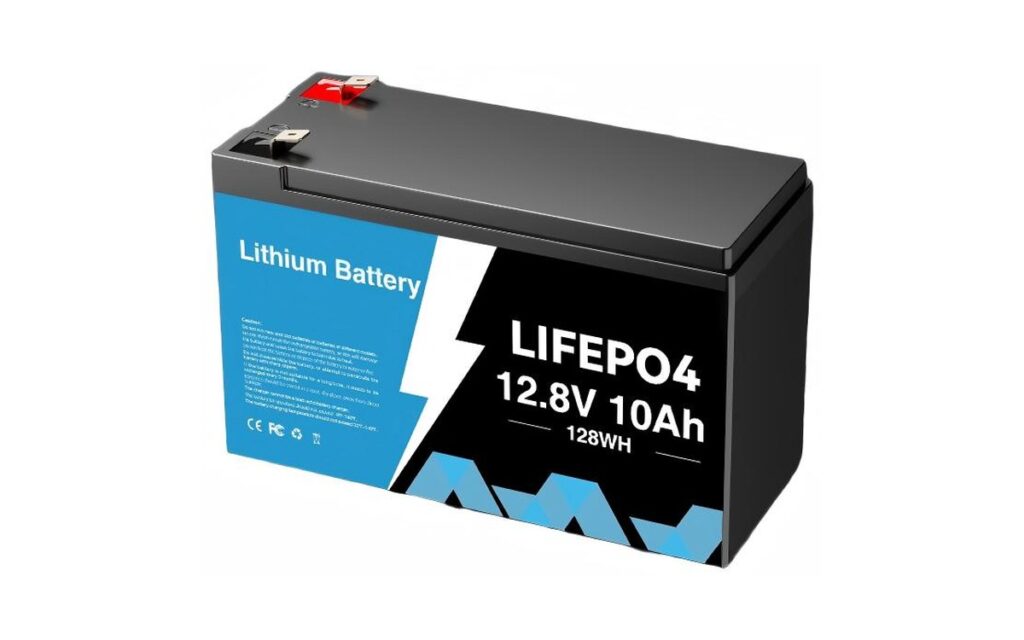 12V 10Ah LiFePO4 Compact Battery
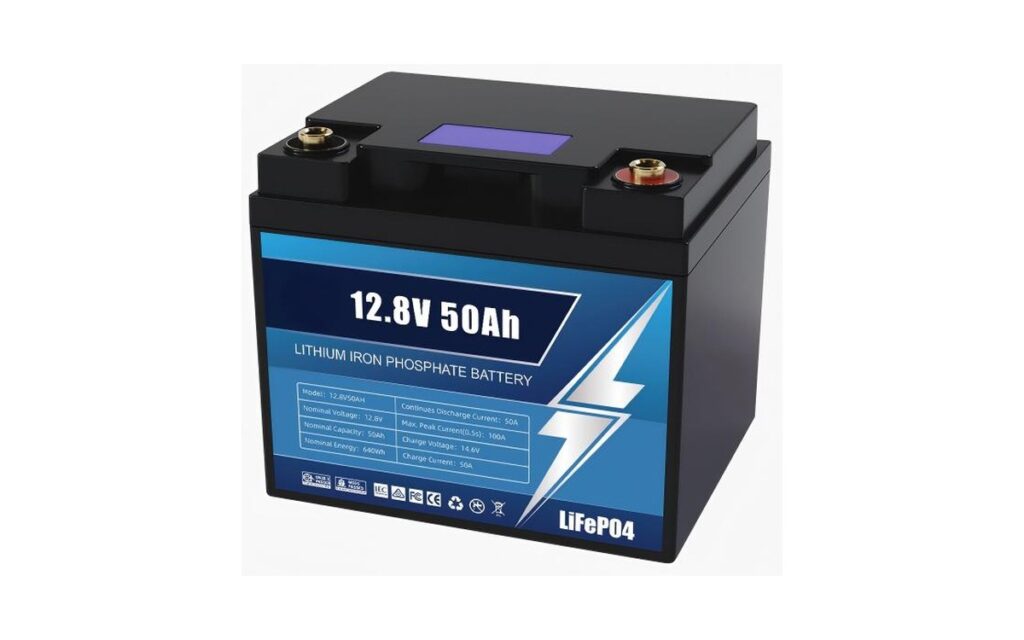 12V 50Ah LiFePO4 Deep-Cycle Battery
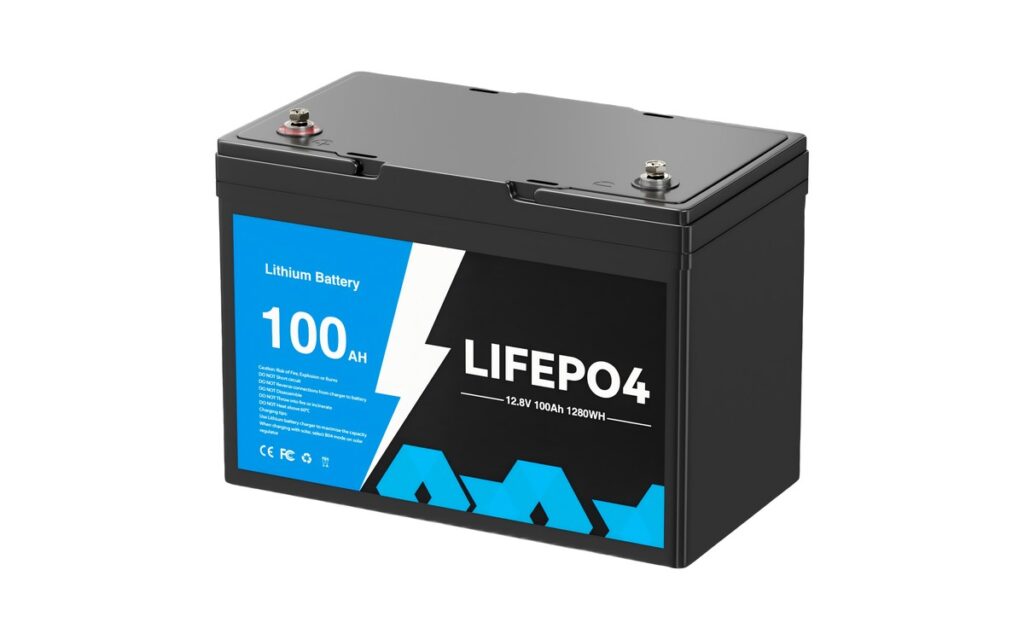 12V 100Ah LiFePO4 Battery for RV & Marine
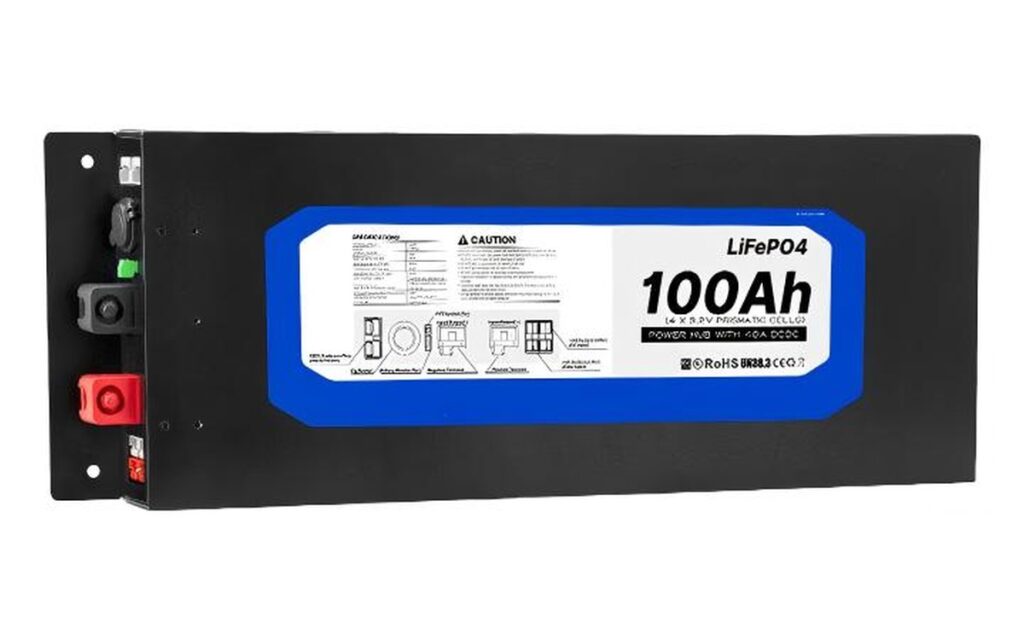 12V 100Ah Power Hub with 40A DC-DC for Van Conversions
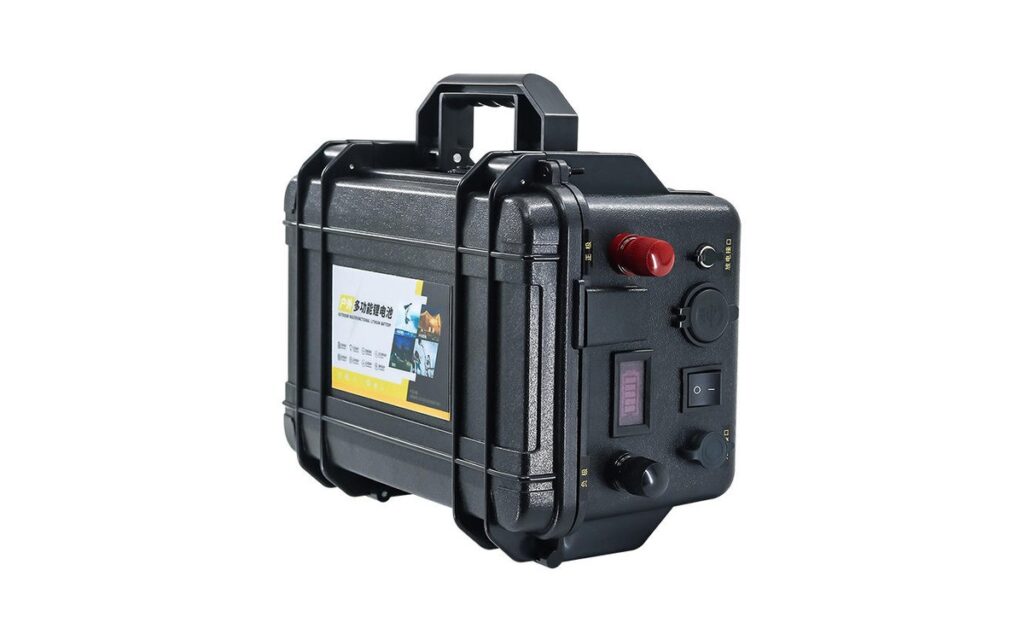 12V 100Ah Trolling Motor Battery for Boats
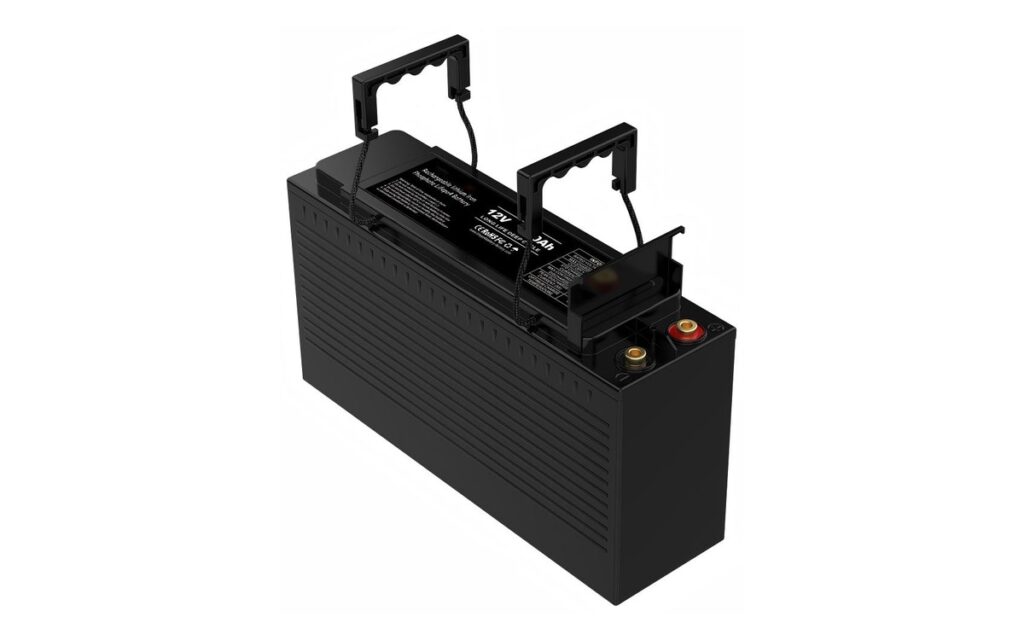 Thin 12V 100Ah LiFePO4 Battery for Narrow RV Compartments
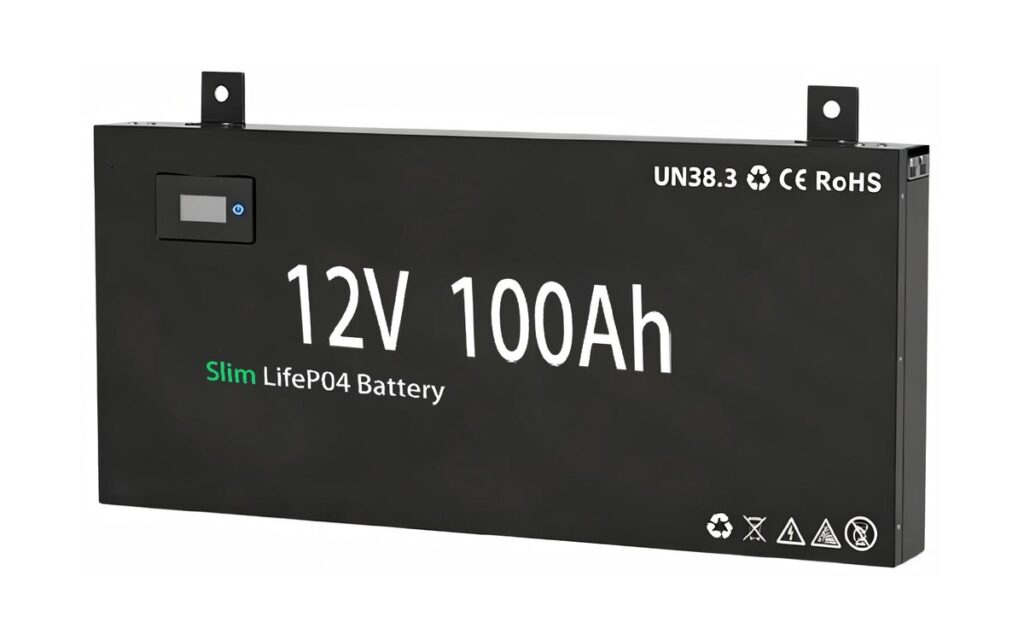 Ultra Slim 12V 100Ah LiFePO4 Battery for Tight Installations
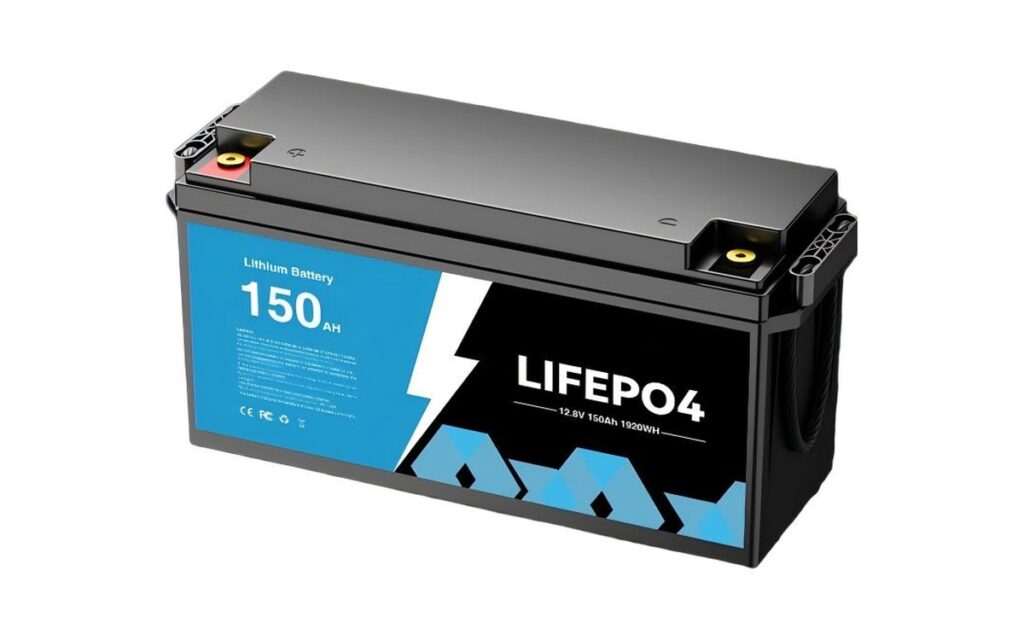 12V 150Ah LiFePO4 Deep-Cycle Battery
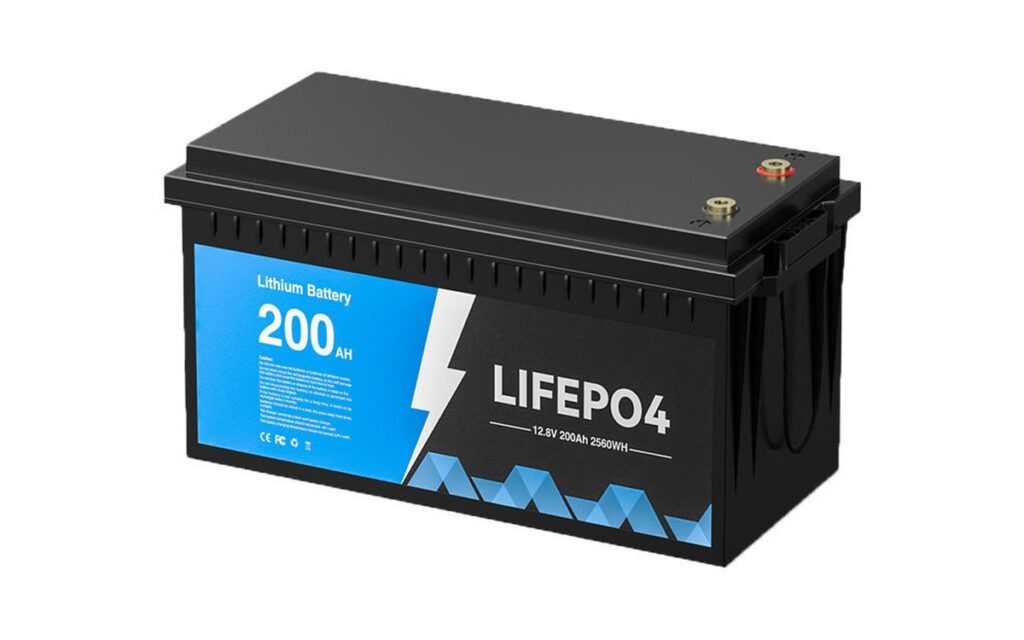 12V 200Ah LiFePO4 Deep-Cycle Battery
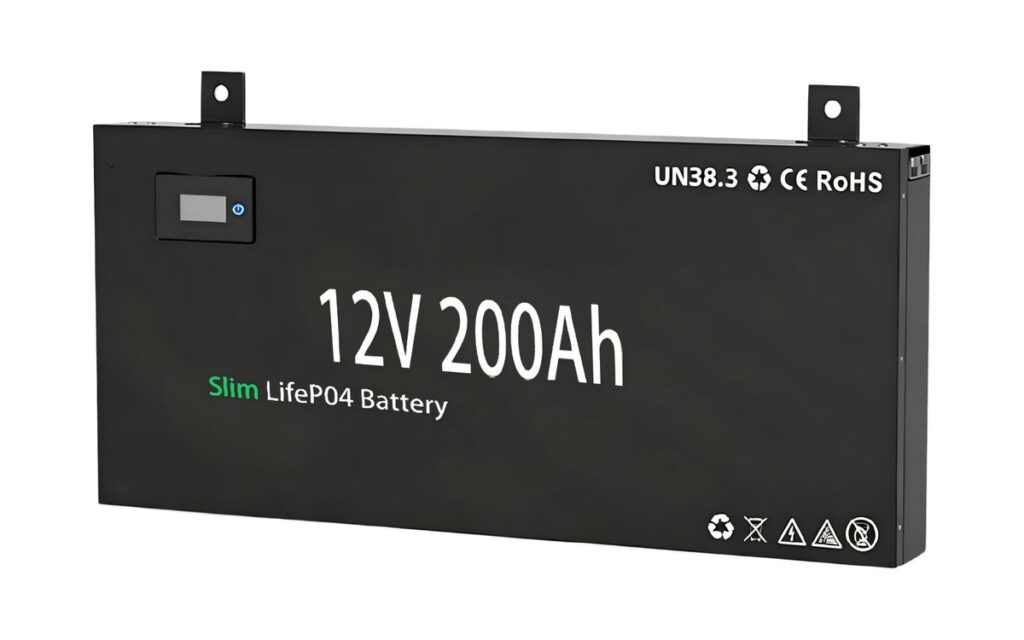 Ultra Slim 12V 200Ah LiFePO4 Battery
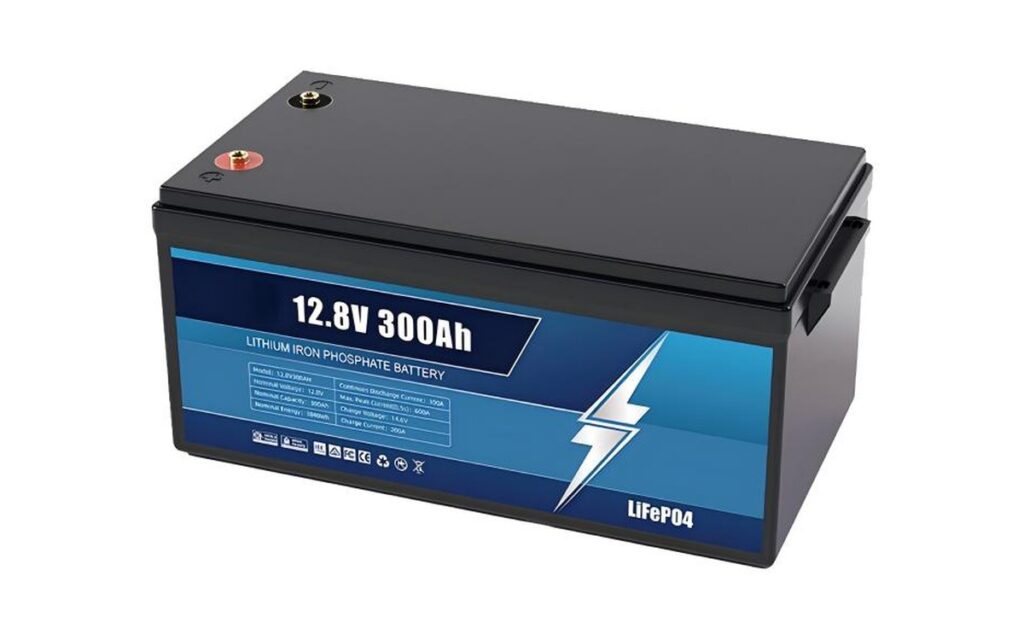 12V 300Ah LiFePO4 Deep-Cycle Battery
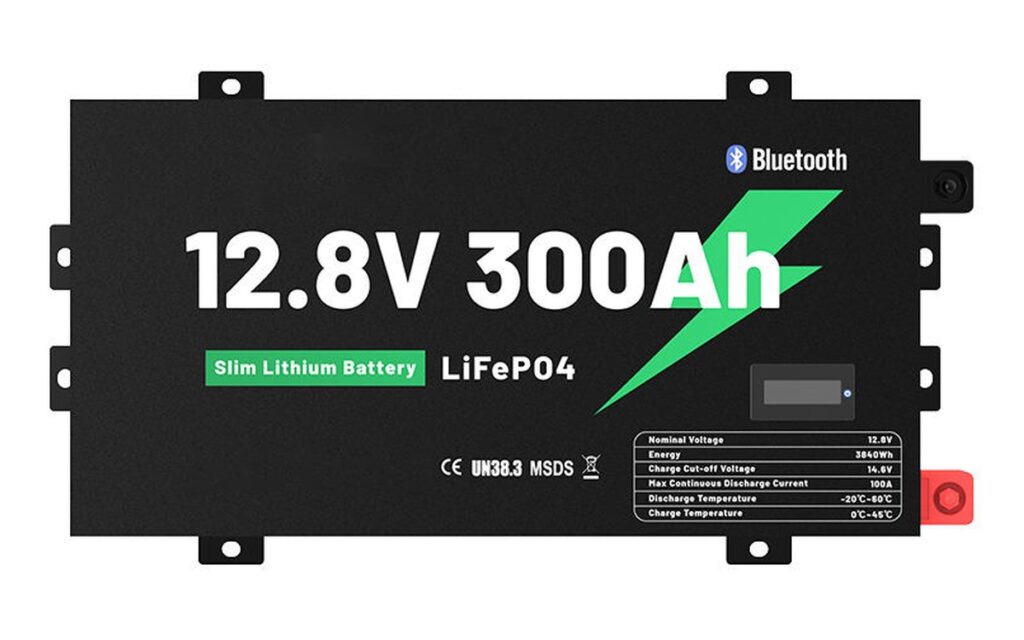 Ultra Slim 12V 300Ah LiFePO4 Battery
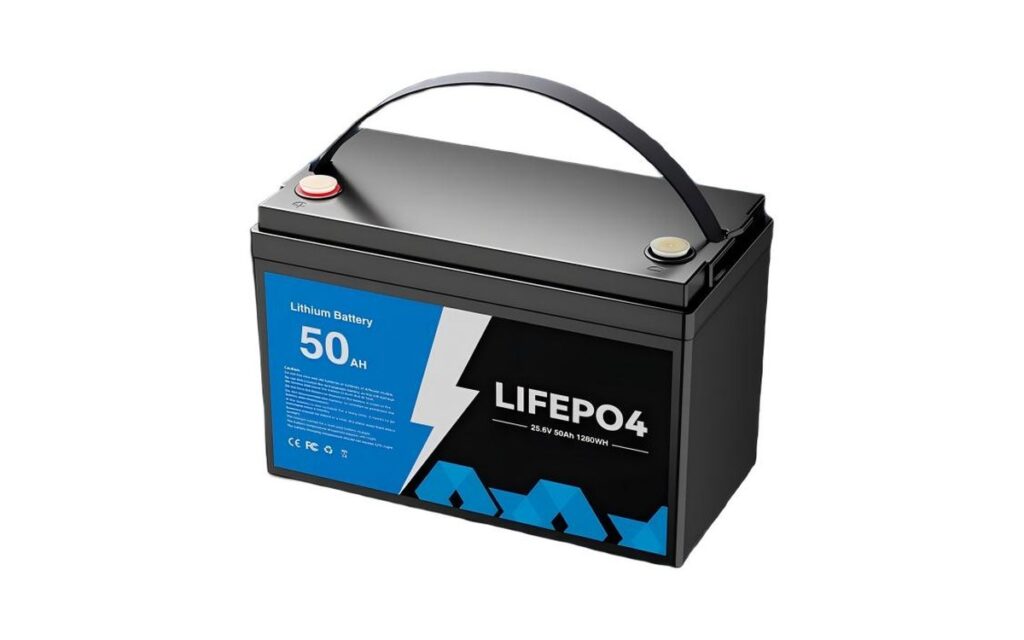 24V 50Ah LiFePO4 Deep-Cycle Battery
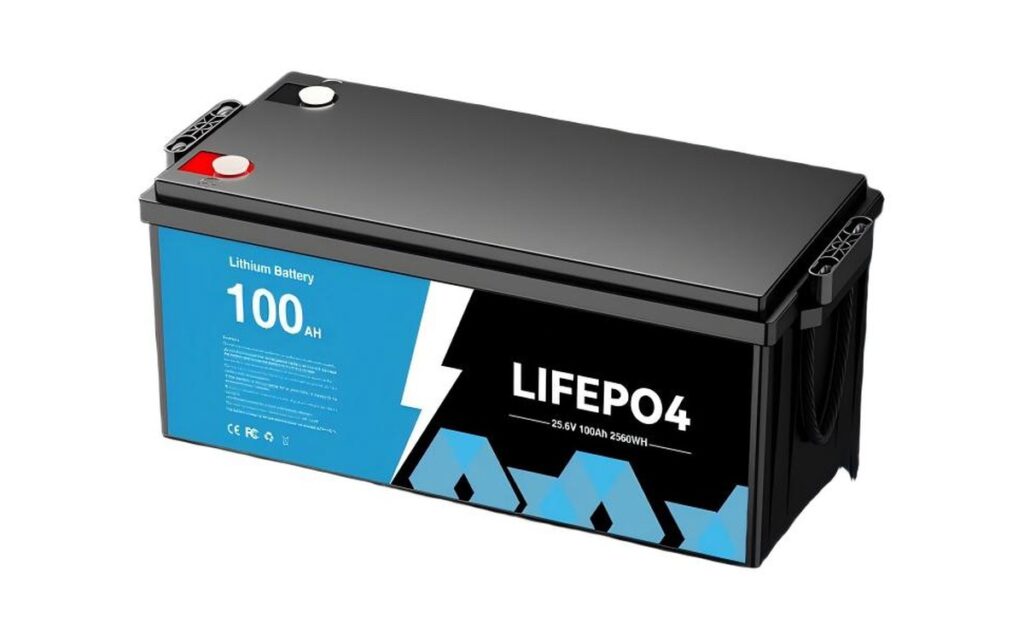 24V 100Ah LiFePO4 Deep-Cycle Battery
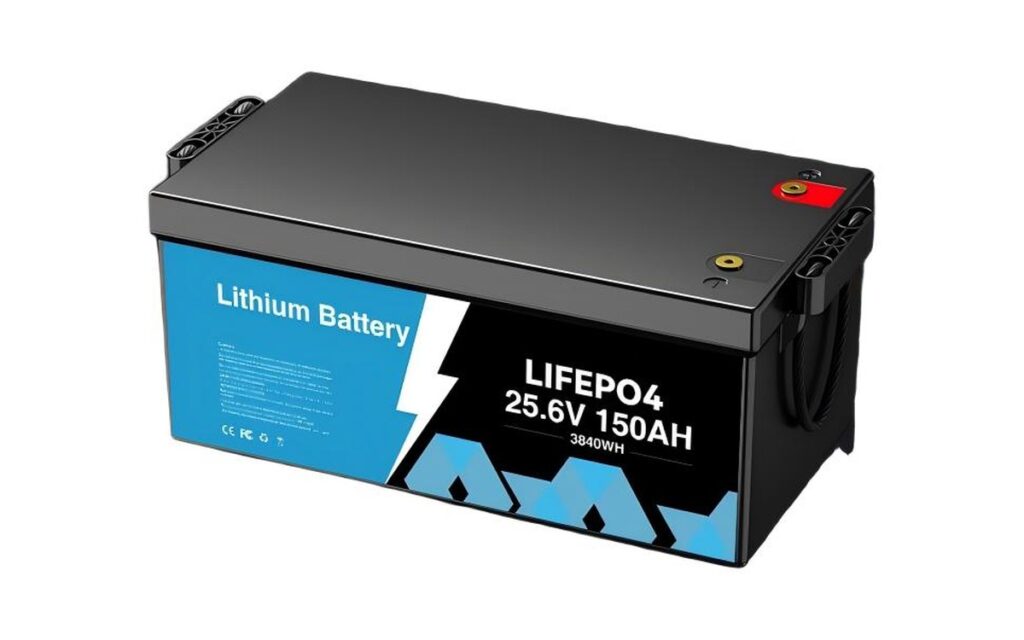 24V 150Ah LiFePO4 Deep-Cycle Battery
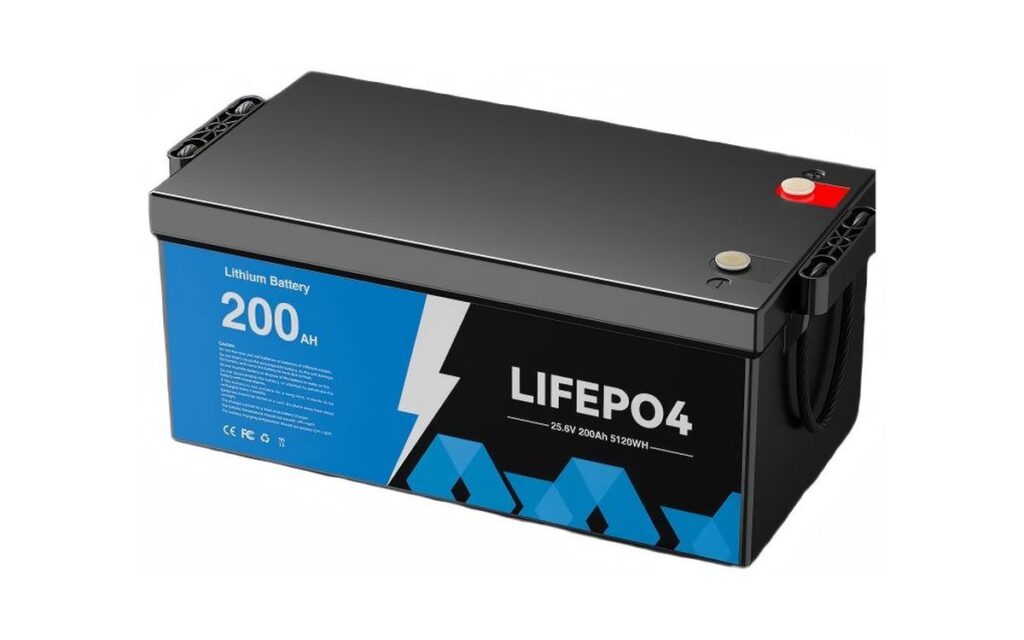 24V 200Ah LiFePO4 Deep-Cycle Battery
It is possible with a BMS rated for cranking current and a dual-circuit setup, but most builds keep a separate start battery. A sudden BMS disconnect on the start circuit is a safety issue; a dedicated lead-acid or high-current lithium start battery avoids it.
Use an external regulator or a DC-DC charger set to LiFePO4 voltages. Standard alternator internal regulators target lead-acid absorption and can leave lithium at 70–80% state of charge.
The chemistry is stable, but the BMS is not waterproof. Mount the battery in a dry, ventilated space; if that is impossible, choose an IP-rated enclosure and keep terminals protected from spray.
Marine Battery Group Sizes: 24, 27 and 31
Most boats are built around a BCI group size, and the tray decides what fits long before capacity does. A group size defines the case footprint, not the energy inside it — a Group 31 LiFePO4 can hold two to three times the usable energy of a Group 31 AGM of the same footprint.
| Group | Length × width × height (mm) | Inches | Typical fit |
|---|---|---|---|
| 24 | 260 × 173 × 225 | 10.2 × 6.8 × 8.9 | Small boats, tiller-steer, limited locker space |
| 27 | 306 × 173 × 225 | 12.0 × 6.8 × 8.9 | Mid-size cabin boats, single-house-bank setups |
| 31 | 330 × 173 × 240 | 13.0 × 6.8 × 9.4 | Larger boats, trolling banks, combined house and electronics loads |
Our 12V 100Ah marine model measures 332 × 172 × 218 mm: it sits on a Group 31 footprint but is 22 mm lower, which helps under bench seats and in low lockers. It does not drop into a Group 27 box (306 mm long) without modifying the tray. The 12V 200Ah measures 524 × 245 × 220 mm and needs its own tray rather than a standard group box.
Measure the tray, the height to the lid and the clearance around the terminals before ordering. Full BCI dimensions and terminal sizes are on the battery types and sizes page.
Replacing Lead-Acid With LiFePO4 on a Boat
The swap is physically simple and electrically different. A 100Ah LiFePO4 delivers about twice the usable energy of a 100Ah AGM at roughly a third of the weight, but it expects a different charge profile and a BMS that can carry the load.
| Factor | 12V 100Ah LiFePO4 (LINEX) | Typical 12V 100Ah AGM |
|---|---|---|
| Usable energy | 1.28 kWh (100% of rated, BMS-limited) | ≈0.6 kWh at 50% depth of discharge |
| Weight | ≈10 kg | ≈30–33 kg |
| Cycle life | 6,000 at 80% DoD, 25°C | ≈300–500 at 50% DoD |
| Continuous discharge | 100A (1,280W) | Typically 100A for 5–10 seconds, 25–30A continuous |
| Charging | 14.6V absorption, 13.5–13.8V float | 14.4–14.7V absorption, 13.2–13.6V float |
| Maintenance | Terminal check once a year | Water top-up, terminal cleaning, sulfation risk |
| Ingress protection | IP65 case | Case dependent; terminals usually exposed |
Three items change with the battery, not just the box:
- Charger. Set absorption to 14.6V and float to 13.5–13.8V, and switch off desulfation or equalise modes. A fixed automotive charger will leave the bank around 90–95% and is not suitable for daily cycling.
- Alternator. Use a DC-DC charger rather than a direct feed. An alternator regulated at 14.2–14.4V will not top the bank properly and can overheat at low rpm.
- Terminals. M8 studs, 8–10 Nm, re-checked after the first 20 hours of running. Tinned lugs and a fuse within 30 cm of the positive terminal are the minimum for a marine install.
Salt Air, IP65 and Installation Checks
Marine failures are usually mechanical or environmental rather than electrical: corrosion at the terminal, water sitting in the locker, or a battery clamped against a hull stringer that flexes. The checklist below is what we ask distributors to confirm before a boat goes back in the water.
| Check | What to do | Why it matters |
|---|---|---|
| Enclosure | IP65 battery, terminal covers fitted | Spray and salt mist reach every open locker |
| Mounting | Upright, clamped, off the bilge floor | Standing water and vibration kill cases and joints |
| Cables | Tinned lugs, fuse within 30 cm of positive | Corrosion raises resistance; a short needs a fuse |
| Clearance | At least 20 mm around the case | Heat has to leave the case, even without venting |
| Temperature | Keep charging below 50°C; no charging below 0°C | The BMS protects the cells, but repeated limits shorten life |
| Inspection | Quarterly terminal torque and corrosion check | Catches a loose joint before it becomes a hot spot |
Our marine units are IP65 rated and use the same 100A BMS as the RV range. If the boat has a 24V or 48V system, use the native 24V or 48V packs instead of putting 12V units in series — one BMS, one warranty, no balancing.
Marine LiFePO4 Battery FAQ
The standard deep-cycle pages do not publish cold-cranking ratings, so select them for house-bank and onboard loads unless a model-specific starting-current specification confirms suitability.
Use a charging method compatible with LiFePO4 and the vessel’s alternator. A DC-DC charger may be required to control current and isolate different battery systems.
Do not directly combine different chemistries without a validated electrical architecture. Keep banks isolated with suitable charging equipment or replace the complete bank after checking the system design.
IP65 provides resistance to dust and water exposure under specified conditions. It does not permit continuous submersion. Install the battery in a dry, ventilated and serviceable compartment.
Add the watt-hours used by refrigeration, navigation electronics, lighting, pumps and inverter loads. Include conversion losses, charging availability, reserve capacity and the expected time between charging periods.
Only if the selected model and BMS support series operation. Use identical batteries with matched age and state of charge, and confirm charger, balancer, protection and cable requirements.
Review enclosure placement, terminal protection, ventilation, cable glands, corrosion control, vibration, drainage and service access. IP rating alone does not replace correct marine installation practices.
Provide the vessel application, house-bank voltage, daily loads, inverter and charger ratings, alternator arrangement, available locker dimensions, quantity and destination.
No. The case is 332 mm long against 306 mm for a Group 27 box, so it needs a Group 31 tray or a modified mounting plate. Check the height too: 218 mm against 225–240 mm for the lead-acid groups, which usually leaves room under the lid.
You need a charger with a LiFePO4 profile: 14.6V absorption, 13.5–13.8V float, and no desulfation or equalise mode. Many modern multi-chemistry chargers already have it; a fixed lead-acid charger does not.
Use a DC-DC charger between the alternator and the bank. A direct connection runs at the alternator’s fixed 14.2–14.4V, will not fully charge a LiFePO4 bank and can overload a small outboard alternator at idle.
Related Marine Battery Resources
Browse all 12V and 24V deep-cycle battery models. Read the marine deep-cycle battery selection guide and the 12V 100Ah weight, fit and runtime guide.
Related: if you are choosing between the two, our RV vs marine comparison lists the installation differences side by side.
Need a reliable LiFePO4 battery supplier?
Wholesale pricing · OEM/ODM · Flexible MOQ · Global shipping