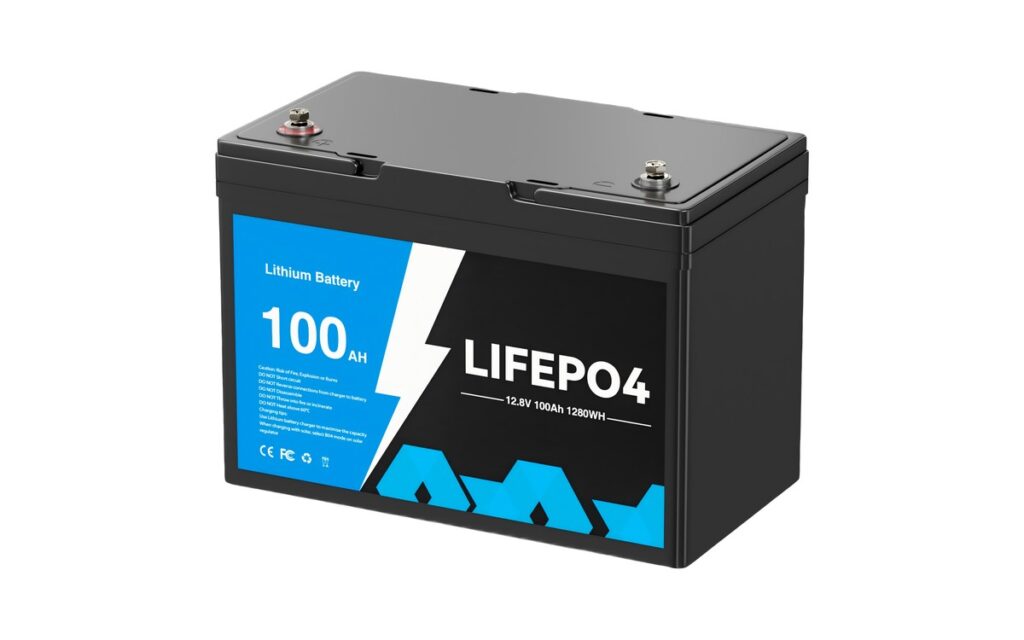
For a distributor, wholesaler or project integrator, battery selection starts with more than a product name. The same nominal voltage can describe batteries with very different usable capacity, cycle life, charging needs and operating limits.
This guide separates the two decisions buyers often combine: which battery types are suitable, and which battery sizes will deliver the required energy. These points help narrow a specification before comparing models, packaging or system configurations.
Actual performance depends on discharge depth, temperature, charge rate, storage conditions and the battery management or control system. Treat the figures below as practical ranges for early sourcing, not as a substitute for a product datasheet.
Main Battery Types
The lead-acid family remains common in backup systems, vehicles, telecom installations and entry-level storage. Flooded lead-acid batteries use liquid electrolyte and normally require ventilation and, depending on the design, regular maintenance. They are familiar and can handle established charging arrangements, but they are heavy and should not usually be deeply discharged on a regular basis.
AGM, or absorbed glass mat, batteries hold the electrolyte in a glass mat. They are sealed for normal use, have lower maintenance requirements than flooded designs and can deliver high short-term current. AGM is often selected where installation simplicity matters, although repeated deep cycling can shorten service life.
Gel batteries use a silica-based gel electrolyte. They are sealed and suited to applications that need controlled discharge and low maintenance, but charging voltage must be set correctly. Excessive charging can permanently damage the gel structure.
Lithium batteries use a lighter construction and generally provide more usable energy in the same nominal capacity. NMC, or nickel manganese cobalt, is widely used where high energy density and compact packaging are important. LiFePO4, or lithium iron phosphate, normally offers stronger thermal stability and longer cycle life, making it a frequent choice for stationary storage and backup applications.
The LiFePO4, NMC and AGM comparison provides more detail on chemistry differences. The electric vehicle battery market also commonly uses lithium chemistries such as NMC and LiFePO4, but vehicle requirements should not be used as a direct specification for stationary storage.
| Type | Typical cycle life | Rough characteristics |
|---|---|---|
| Flooded lead-acid | 300-800 cycles | Low initial complexity, heavy, ventilated installation and regular maintenance may be required |
| AGM lead-acid | 500-1,000 cycles | Sealed, low maintenance and good short-term current delivery; deep cycling needs care |
| Gel lead-acid | 800-1,500 cycles | Sealed and controlled discharge performance; sensitive to incorrect charging |
| NMC lithium | 1,000-2,000 cycles | High energy density and compact size; requires suitable protection and thermal controls |
| LiFePO4 lithium | 3,000-6,000 cycles | Long cycle life and good thermal stability; requires a compatible battery management system |
Cycle figures vary by manufacturer and test conditions. A battery rated for 5,000 cycles may achieve that result only at a specified depth of discharge, temperature and end-of-life capacity threshold. Ask suppliers to state these conditions before using cycle life in a financial or project model.
Batteries & Power
In storage products, battery sizes usually mean two related values: capacity and voltage. Capacity tells you how much energy the battery can store, while voltage indicates how the battery interfaces with the inverter, charger, motor or other load.
Capacity is commonly stated in amp-hours, or Ah. A 12V 100Ah battery has a nominal energy rating of about 1.2kWh, calculated as 12 x 100. The usable energy will be lower or higher in practical planning depending on the allowed depth of discharge, efficiency, temperature and the battery management system.
For a more direct system comparison, buyers often use kilowatt-hours, or kWh. The basic calculation is nominal voltage x amp-hours / 1,000. For example, a 48V 100Ah battery is approximately 4.8kWh nominal. This is a useful starting point, but do not present nominal kWh as guaranteed load runtime.
Voltage classes also affect system design. A 12V battery is common in small backup products, lighting systems, recreational equipment and compact solar applications. A 24V system can reduce current compared with 12V at the same power level, while 48V systems are widely used for larger residential and commercial storage because lower current can simplify cable and inverter sizing.
Higher voltage does not automatically mean more stored energy. A 12V 200Ah battery and a 24V 100Ah battery are both about 2.4kWh nominal. The correct choice depends on the inverter input, charge equipment, cable length, current limits and whether batteries will be connected in series or parallel.
When comparing battery sizes, confirm nominal capacity, usable capacity, continuous and peak discharge current, charge current, operating temperature and communication requirements. Also check how many units can be connected and whether the supplier permits mixed ages, models or capacities in one bank.
For a residential project, a complete residential storage product line can make inverter and battery matching easier. For smaller systems, a defined product such as the 12V 100Ah lithium battery gives the buyer a clear starting point for capacity and system compatibility.
Finally, match the battery and power requirements to the load rather than choosing by Ah alone. Identify the running load, startup surge, required backup time and recharge window, then select a battery for electricity storage that can meet those conditions within its stated operating limits.
Physical formats: what the case tells you
Compact cases are designed for limited spaces and moderate loads. They are common in portable power stations, small backup units, lighting systems and low-capacity RV installations. Buyers should check the handle, display, connector layout, mounting points and service access, not just the battery dimensions. A compact case may be easy to move but offer fewer connection options and less room for heat management.
Deep-cycle cases are built for repeated charging and discharging in RV, marine, off-grid and backup applications. They usually provide more usable capacity than a starter battery and may use common rectangular footprints. Confirm terminal position, case height, hold-down requirements and whether the enclosure is suitable for the intended compartment.
Rack and stacked units are intended for larger energy storage systems. A rack battery can be installed beside other modules, while stacked designs use a specified frame or cabinet. Buyers should expect communication ports, battery management settings, defined module limits and clear requirements for ventilation, cable length and installation sequence. A 48V rack product, such as this 48V 100Ah telecom lithium battery, is typically selected for telecom backup, server rooms and modular storage rather than handheld use.
Wall-mounted batteries save floor space and can suit homes, small offices and retail sites. They normally include a fixed enclosure, front or side connections and a clean installation profile. Before ordering, verify wall structure, lifting weight, cable entry, inverter compatibility and the clearance needed for inspection. A wall battery is not automatically easier to install than a floor unit.
Match battery type and size to the use case
RV: LiFePO4 deep-cycle batteries are a practical choice for lights, refrigerators, inverters and auxiliary equipment because they tolerate regular cycling and provide useful capacity at a relatively low weight. Match the battery voltage to the RV electrical system, then size capacity from daily loads, charging sources and the number of days required between charges. See the RV, marine and solar product line for common application formats.
Marine: Separate engine-starting and house-bank requirements. A starting battery must deliver high current for short periods, while a house battery supports electronics, refrigeration, pumps and lighting over longer periods. Check enclosure protection, terminal security, vibration exposure, charging profile and available compartment space. Do not substitute a deep-cycle model for a starting application without confirming the engine and charger requirements.
Telecom: Telecom sites generally need dependable standby capacity, remote monitoring and predictable performance during outages. Rack or cabinet batteries are easier to expand and maintain than a collection of small cases. Size the bank against the equipment load, required runtime, reserve margin and rectifier output. Confirm communication protocol, low-temperature charging limits and the available power for battery charging at the site.
Home storage: Start with the loads that must remain powered, such as refrigeration, lighting, networking and selected circuits, rather than the total connected load. A battery for power backup should be matched to inverter output as well as energy capacity. Check whether the system is designed for daily solar cycling, occasional outage backup or both, and confirm how much of the power in battery systems is actually usable after reserve limits and conversion losses.
Portable use: Portable power stations combine a battery, inverter, charger and outlets in one case. Buyers should compare continuous output, surge output, AC and DC ports, solar input range, recharge time and carry weight. Capacity alone does not show whether the unit can run a motor, medical device or heating load. Ask for tested operating limits for the intended equipment.
What to check when sourcing
- Confirm nominal voltage, rated capacity, usable capacity and permitted depth of discharge.
- Match continuous and peak output to the inverter, motor or equipment load.
- Check cell chemistry, battery management functions, charging temperature range and low-temperature protection.
- Verify dimensions, weight, terminals, connectors, mounting method and cable requirements.
- Ask how batteries communicate with the inverter, charger or monitoring platform.
- Confirm the recommended charging profile and the available charging power for battery banks.
- Request installation, storage and transport instructions for the selected format.
- Compare the complete system specification, not only the Ah figure on the label.
Battery type and size FAQ
Calculate the daily watt-hours used by lights, refrigeration, electronics and other loads, then allow for inverter losses and reserve capacity. Choose the voltage required by the RV system and select a LiFePO4 deep-cycle battery with enough usable energy for the planned time between charges. Charging input and available space also affect the final size.
A 48V system can reduce current at the same power level, which may simplify cable sizing and support larger inverter loads. It is often suitable for modular home storage, but it must match the inverter, charger and battery communication settings. A lower-voltage system may be more appropriate for small loads or existing equipment.
Usually, a deep-cycle battery is intended for sustained loads rather than the high short-duration current needed to start an engine. Some batteries are designed for dual-purpose service, but the specification must state starting capability. Confirm engine requirements, peak current, terminal arrangement and charger compatibility before replacing a dedicated marine starting battery.
Use the telecom equipment load, required backup hours, system voltage, reserve requirement and expected charging time. Check the rectifier output and whether the battery can accept the available charging current. Rack format, monitoring communication, installation depth and low-temperature charging limits should also be confirmed before selecting the number of modules.
Compare usable energy, continuous and peak output, cycle operating limits, charging range, battery management functions, dimensions, weight and connection method. Also check inverter communication, installation orientation, temperature protection and service access. Two batteries with the same Ah rating may deliver different practical results when their voltage, discharge limits or supporting electronics differ.