Two days of autonomy is a design choice, not a battery rating. It means the bank must carry the site through two full days without solar input, and still have enough usable energy left to avoid a deep discharge. The calculation starts with the load, not with the array.
This example uses the published specs of the LINEX 48V 100Ah, 150Ah and 200Ah modules. For voltage, inverter window and array sizing, see the 48V lithium battery for solar guide, then apply the two-day method below.
Related tool: Ah to kWh calculator. Convert amp-hours to kilowatt-hours for 12V, 24V, 48V and 51.2V batteries.
How Do You Calculate a Two-Day Bank?
Start with the daily energy delivered to the load, measured in kWh. Multiply by two for the autonomy days. Then divide by two derating factors: the depth of discharge you are willing to use, and the efficiency of the path from battery to load.
The formula is: nominal bank kWh = daily kWh × 2 ÷ (depth of discharge × system efficiency). At 80% depth of discharge and 90% efficiency, the divisor is 0.72, so the multiplier is about 2.78. A 6kWh daily load becomes 16.7kWh of nominal battery capacity.
Use metered daily data where possible. Nameplate estimates usually run high because they assume every appliance runs at full power at once. Where a year of data exists, use the highest normal day, not the annual average: autonomy is tested on the bad days.
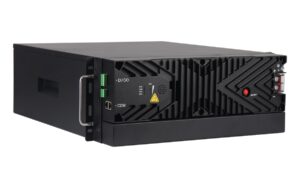
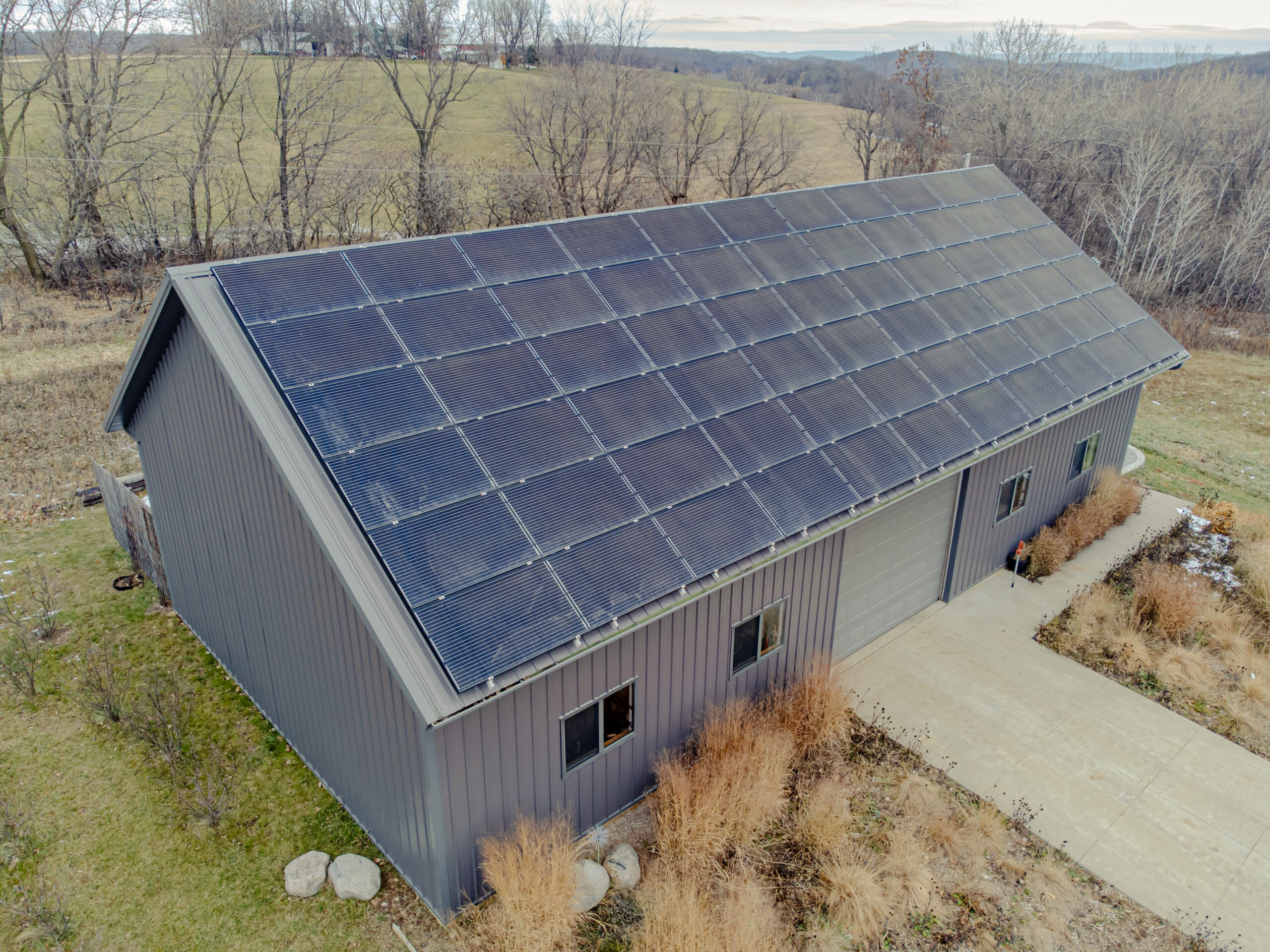
A telecom site, cabin or small home uses 6kWh per day. Two days of autonomy require 12kWh delivered at the load. Dividing 12kWh by 0.72 gives 16.7kWh nominal. Four 48V 100Ah modules provide 19.2kWh nominal, or 13.8kWh at the load after the same 80% depth and 90% efficiency assumptions. For the full model range and sizing tables, see our telecom battery backup guide.
Three modules would give 14.4kWh nominal and 10.4kWh delivered, which is short of the 12kWh target. That is why the count steps from three to four rather than landing on a neat round number. The fourth module is not spare capacity; it is the difference between meeting the two-day target and missing it.
| Daily load | Two-day energy at the load | Nominal bank required at 80% DoD and 90% efficiency | 48V 100Ah modules | Installed nominal energy | Delivered usable energy |
|---|---|---|---|---|---|
| 4 kWh | 8 kWh | 11.1 kWh | 3 | 14.4 kWh | 10.4 kWh |
| 6 kWh | 12 kWh | 16.7 kWh | 4 | 19.2 kWh | 13.8 kWh |
| 8 kWh | 16 kWh | 22.2 kWh | 5 | 24.0 kWh | 17.3 kWh |
| 10 kWh | 20 kWh | 27.8 kWh | 6 | 28.8 kWh | 20.7 kWh |
The table is a starting point, not a load study. A large motor, defrost cycle or high standby load can hide short peaks behind a daily average. Check peak demand against the inverter and the module’s 100A limit as well as daily energy.
Why Size at 80% Depth of Discharge?
The 48V 100Ah module is rated for 6,000 cycles at 80% depth of discharge and 25°C. That rating is the basis for the 80% assumption in the table. Sizing at 100% discharge would take the bank outside its published cycle rating and leave no margin for cold nights, ageing cells or a missed solar day.
At 80% depth, one 100Ah module delivers 3.84kWh of stored energy. After the 90% efficiency assumption, 3.46kWh reaches the load. That is the number to compare with nightly consumption when you are checking a bank size, not the 4.8kWh nameplate figure.
Temperature matters too: the datasheet gives 0°C to 65°C charge and -20°C to 65°C discharge. Freezing nights reduce what the calculated 80% actually delivers.
What Else Changes the Battery Count?
The 48V 150Ah module stores 7.2kWh and the 200Ah module stores 9.6kWh. Two 200Ah modules give 19.2kWh, the same nominal energy as four 100Ah modules, with fewer connections and less wiring. The trade-off is weight and handling: each 200Ah module weighs 78kg and occupies 4U, against 43kg and 3U for the 100Ah.
| Specification | 48V 100Ah | 48V 150Ah | 48V 200Ah |
|---|---|---|---|
| Nominal energy | 4.8 kWh | 7.2 kWh | 9.6 kWh |
| Usable at 80% DoD | 3.84 kWh | 5.76 kWh | 7.68 kWh |
| Rack height | 3U | 4U | 4U |
| Dimensions (W × D × H) | 442 × 420 × 133mm | 482 × 440 × 178mm | 482 × 610 × 178mm |
| Weight | 43kg | 60kg | 78kg |
| Max charge / discharge | 100A / 100A | 150A / 150A | 100A / 100A |
| Cycle life | 6,000 at 80% DoD | 6,000 at 80% DoD | 6,000 at 80% DoD |
Also check the inverter’s DC window and charge profile. The 48V modules specify 53.3V equalization, 51.0V float and 40.5V discharge cutoff. A hybrid inverter configured for a different lithium profile may stop charging early or fail to reach absorption, which reduces the energy actually available each day.
Plan for load growth. A bank sized exactly to today’s 6kWh has no room for a second radio or an added freezer. Leaving one module position free is cheaper than replacing the bank in year three.
How Do You Recharge and Expand the Bank?
The array has to replace what the load takes out, plus losses, within the available sun hours. The solar sizing guide uses a starting range of 1.2–1.5kW of panels per 5kWh of battery in a good-sun region. A 19.2kWh bank therefore starts around 4.6–5.8kW of array, with more capacity in a low-sun or winter site.
Parallel expansion should use identical modules, matched firmware and equal cable lengths to the busbar, with a breaker or fuse per string. Do not mix a 100Ah and a 200Ah module on the same bus: the smaller unit works harder and the pair shares current unevenly. If the site needs more energy later, add the same model rather than a larger one.
The standard 48V 100Ah module is IP20, so it belongs in a protected room or an outdoor cabinet, not on an open rack in the rain. The 48V 100Ah LiFePO4 product page lists the full mechanical and electrical specification, including the 482mm installed depth with handles and terminals.
For a second opinion on the bank size before ordering, the lithium battery bank sizing guide walks through the same Ah, kWh and depth-of-discharge relationship from the other direction.
Frequently asked questions
Six modules. The two-day load is 20kWh, the nominal requirement at 80% depth and 90% efficiency is 27.8kWh, and six 100Ah modules provide 28.8kWh nominal, or 20.7kWh delivered at the load.
Yes. Two 48V 200Ah modules provide the same 19.2kWh nominal as four 100Ah modules. The 200Ah option uses fewer cables and connections, but each module weighs 78kg and needs 4U of rack space, so plan lifting equipment and cabinet depth.
Yes at the battery terminals. A 4.8kWh module at 80% depth gives 3.84kWh of stored energy. After the 90% efficiency assumption used in this example, about 3.46kWh reaches the load.
The standard 48V 100Ah module is IP20, so it needs a protected indoor room or a weatherproof cabinet. An outdoor cabinet adds the enclosure protection, insulation and thermal management that the battery itself does not provide.
The module specifies 53.3V equalization, 51.0V float and 40.5V discharge cutoff. Confirm these values against the inverter or rectifier manual before commissioning, and check that the charge current stays within the module’s 100A limit.
If you have the daily kWh and site location, we can check the two-day bank against the module count, inverter window and cabinet space. Send your load profile and we will return a configuration with the matching UN38.3, CE and RoHS documentation.