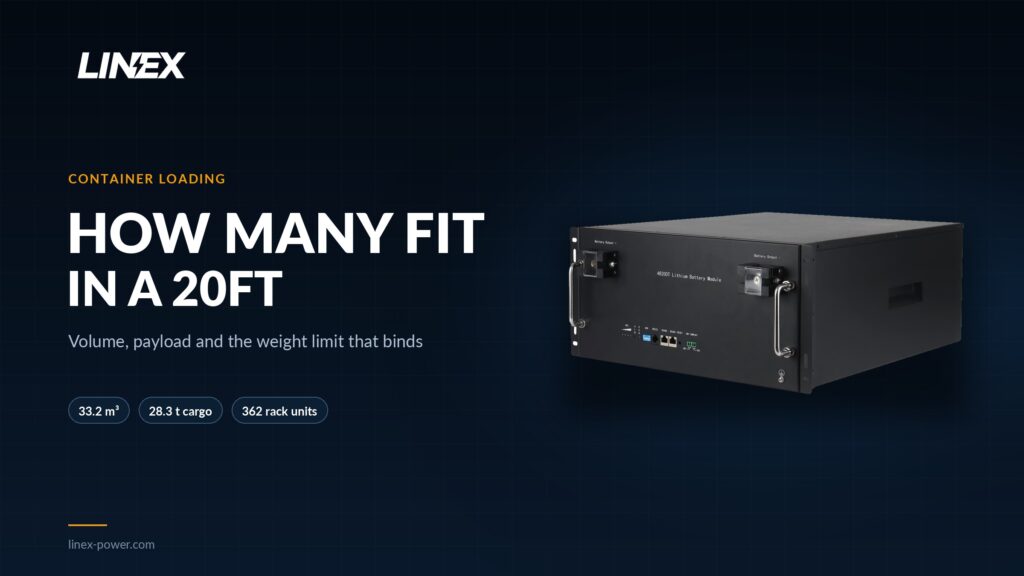
A 20ft container has 33.2 m³ of space and about 28.3 tonnes of cargo
A standard 20ft dry container measures about 5.90 m long, 2.35 m wide and 2.39 m high inside, which gives 33.2 m³ of volume. Its common rating is 30,480 kg maximum gross mass, and the tare weight of the box takes about 2,200 kg of that, leaving roughly 28,280 kg for cargo.
The CSC plate on the container door is the authority for the actual box. ISO 668:2020 permits Series 1 containers up to 36,000 kg gross, and some older or light-rated 20ft boxes are plated at 24,000 kg. Check the plate before the forwarder builds the loading plan, because the same nominal 20ft box can arrive with a different payload.
| Container | Internal volume | Maximum gross mass | Typical tare | Typical cargo |
|---|---|---|---|---|
| 20ft standard | 33.2 m³ | 30,480 kg | about 2,200 kg | about 28,280 kg |
| 40ft standard | 67.6 m³ | 30,480 kg | about 3,800 kg | about 26,680 kg |
| 40ft high cube | 76.3 m³ | 30,480 kg | about 3,935 kg | about 26,545 kg |
Volume decides the small 12V packs, payload decides the rack modules
A 12V 100Ah pack takes 0.0124 m³ and weighs 10 kg, so the 33.2 m³ box runs out of space at 2,666 units before the 28.3-tonne payload runs out at 2,828. A 48V 200Ah module is the opposite: 0.052 m³ and 78 kg, so volume allows 634 units but the payload stops at 362.
The split falls between the 12V 200Ah and 12V 300Ah models. Below that line, cartons and pallets decide the count. Above it, the CSC plate decides. The table uses bare unit dimensions and does not subtract cartons or pallets.
| Model | Unit weight (kg) | Bare volume (m³) | Units by volume | Units at 28.3t | Binding limit |
|---|---|---|---|---|---|
| 12V 100Ah | 10 | 0.0124 | 2,666 | 2,828 | Volume |
| 12V 150Ah | 15 | 0.0197 | 1,685 | 1,885 | Volume |
| 12V 200Ah | 22 | 0.0282 | 1,175 | 1,285 | Volume |
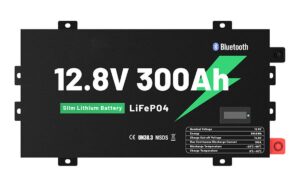
| 12V 300Ah | 30 | 0.0312 | 1,063 | 942 | Payload |
| 48V 100Ah | 43 | 0.0269 | 1,233 | 657 | Payload |
| 48V 150Ah | 60 | 0.0378 | 879 | 471 | Payload |
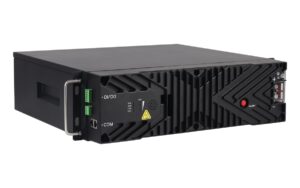
| 48V 200Ah | 78 | 0.0523 | 634 | 362 | Payload |
The 48V 100Ah row uses the 482mm depth that includes the handles and terminals. The 48V 200Ah module is 9.6kWh in a 482 × 610 × 178 mm case, and its product page lists 78 kg and a 100A charge and discharge limit.
A 40ft high cube adds volume, not payload
A 40ft high cube holds 76.3 m³, about 2.3 times the volume of a 20ft box. Its cargo limit is about 26,545 kg, slightly less than the 28,280 kg of a standard 20ft, because the bigger box has a heavier tare weight.
Two 20ft containers carry about 56.6 tonnes between them. One 40ft high cube carries 26.5 tonnes. For a dense battery load the extra 43 m³ is mostly air, and the two-box plan moves more product. It also lets the second box wait for a later production batch instead of holding one large mixed load.
The 40ft box makes sense when the load is light for its volume, such as a mixed order of small 12V packs where the cartons fill the space before the weight reaches the limit. Run the weight column first and the volume column second.
Cartons and pallets take 10% to 15% of the usable volume
Bare unit dimensions are not a loading plan. A carton adds 20mm to 40mm on each axis, and a pallet adds 100mm to 150mm of height plus a footprint that cannot be loaded through. For planning, take 10% off the usable volume for a fully cartoned load and 15% when the cartons are palletised.
That allowance changes the count for the 12V 100Ah to 12V 200Ah models, where volume is the binding limit. On the 12V 300Ah and the 48V modules, payload binds, so cartons change the floor space, the unloading time and the stack height, not the unit count.
Worked example: 12V 100Ah packs in a 20ft
A 12V 100Ah pack measures 332 × 172 × 218 mm and weighs about 10 kg. Bare volume allows 2,666 units, and the 28.3-tonne payload allows 2,828, so volume sets the order at about 2,666 units. A 10% packaging allowance brings the planning number to about 2,400 units and 24 tonnes.
On a 20ft box plated at 36,000 kg gross, the payload allowance rises further, but volume still sets the count. The 12V 100Ah product page lists the 1,280Wh rating and the 4S configuration behind that number.
Worked example: 48V 200Ah rack modules in a 20ft
A 48V 200Ah module is 9.6kWh, 78 kg and 482 × 610 × 178 mm. The 28.3-tonne payload allows 362 units, which occupy 18.9 m³ of the 33.2 m³ box. That leaves 14.3 m³ of volume but only about 44 kg of payload, so the space cannot be filled with more batteries of any model. A mixed load has to start by trading rack modules for lighter packs, not by filling the empty space.
Mixed loads: build the weight column first
A mixed container is a weight problem before it is a volume problem. Take 150 units of 48V 200Ah at 78 kg and 1,500 units of 12V 100Ah at 10 kg. The rack modules weigh 11.7 tonnes and take 7.85 m³. The 12V packs weigh 15 tonnes and take 18.7 m³. The total is 26.7 tonnes and 26.5 m³, inside both limits with about 1.6 tonnes and 6.7 m³ to spare.
Load the heavy rack modules first, on the floor over the container’s cross members and close to the axles. Put the light cartons at the door end, and keep a 100mm gap at the doors for inspection. A loading photo taken before the doors close is the cheapest evidence if a carton arrives crushed.
Documents and labels for a Class 9 battery container
A container loaded with batteries alone ships as UN3480, Class 9. The booking needs the UN38.3 test summary, the MSDS, the dangerous goods declaration and the packing list. The container needs Class 9 placards on both sides and both ends, with the UN number displayed next to the placards.
The lithium battery import guide lists the full document set. Keep the packing list inside a document holder on the door, and send a copy to the consignee before the container leaves the factory. The lithium battery manufacturer guide covers the supplier checks that should happen before the container is booked.
Frequently asked questions
About 2,400 units after a 10% packaging allowance. Bare volume allows 2,666 units, and the 28.3-tonne payload would allow 2,828, so volume sets the count.
About 362 units. Each module weighs 78 kg, so 362 units reach 28.2 tonnes. The same box would hold 634 units by volume, but that load would weigh 49.5 tonnes.
No. A 40ft high cube has about 2.3 times the volume but slightly less cargo payload than a standard 20ft, because its tare weight is higher. For dense batteries, two 20ft boxes carry more weight than one 40ft box.
Leave clearance for ventilation, inspection and the carton stacking limit. The CSC plate sets the weight limit, and the carton specification sets the stack height. A full-height load that crushes the bottom cartons is worse than a half-height load that arrives intact.
The batteries ship as Class 9 dangerous goods, and the booking must be declared as UN3480. A standard dry container can carry them when the forwarder accepts lithium batteries and the stowage, labelling and documentation follow the IMDG rules.
The 48V 200Ah module at 78 kg is the heaviest unit in the range, and 362 units fill the payload. The 48V 150Ah module at 60 kg allows 471 units, and the 12V 300Ah pack at 30 kg allows 942.
Sources: ISO 668:2020 (container classification, dimensions and ratings; Series 1 gross mass up to 36,000 kg); Wikipedia intermodal container (20ft common gross 30,480 kg, tare about 2,200 kg, net about 28,280 kg; 40ft high cube tare about 3,935 kg, net about 26,545 kg); 12V 100Ah product page (1,280Wh, 10kg, 332 × 172 × 218 mm); 12V 150Ah product page (1,920Wh, 15kg, 483 × 170 × 240 mm); 12V 200Ah product page (2,560Wh, 22kg, 524 × 245 × 220 mm); 12V 300Ah product page (3,840Wh, 30kg, 523 × 269 × 222 mm); 48V 100Ah product page (4.8kWh, 43kg, 482mm depth with handles); 48V 150Ah product page (7.2kWh, 60kg, 482 × 440 × 178 mm); 48V 200Ah product page (9.6kWh, 78kg, 482 × 610 × 178 mm, 100A); LINEX lithium battery import guide (UN38.3, MSDS, Class 9 declaration, packing list); LINEX lithium battery manufacturer guide (supplier checks before booking); IMDG Code Class 9 requirements for UN3480. Last updated 2026-11-09.
Related: the battery recycling guide covers reverse logistics and the documents a return shipment needs.