3.2V per cell sets every pack voltage
A LiFePO4 cell has a nominal voltage of 3.2V, so a pack voltage is a cell count. Four cells in series make 12.8V, eight make 25.6V, and fifteen make 48V. Sixteen cells make 51.2V, a common nominal voltage for home ESS packs.
The 12V 100Ah LiFePO4 battery is a 4S build rated at 1,280Wh. The 24V 100Ah pack is an 8S build at 2,560Wh. The 48V telecom rack models use fifteen cells, which is why their equalization setting is 53.3V rather than the higher setting a 16-cell pack uses.
| Pack | Cells in series | Nominal voltage | Nominal energy | Usable at 80% DoD |
|---|---|---|---|---|
| 12V 100Ah | 4S | 12.8V | 1,280Wh | 1,024Wh |
| 12V 200Ah | 4S | 12.8V | 2,560Wh | 2,048Wh |
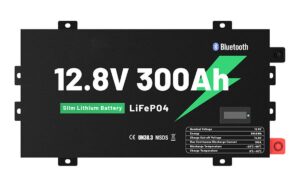
| 12V 300Ah | 4S | 12.8V | 3,840Wh | 3,072Wh |
| 24V 100Ah | 8S | 25.6V | 2,560Wh | 2,048Wh |
| 48V 100Ah | 15S | 48V | 4,800Wh | 3,840Wh |
| 48V 150Ah | 15S | 48V | 7,200Wh | 5,760Wh |
| 48V 200Ah | 15S | 48V | 9,600Wh | 7,680Wh |
The discharge curve is flat, so voltage is a poor fuel gauge
The 12.8V pack operates from 8.8V to 14.6V, or 2.2V to 3.65V per cell. Most of the stored energy sits between 3.0V and 3.3V per cell, so a small voltage change in the middle of the curve corresponds to a large change in state of charge. A voltage reading taken under load will mislead.
Use the BMS coulomb counter or an external shunt for state of charge. The 48V telecom packs report data over RS485 or RS232, and the smart models add CAN. The LiFePO4 voltage charts page lists open-circuit values if you need a rough check.
Usable energy is 80% of the label
LiFePO4 packs are usually rated for 80% depth of discharge in daily cycling, so usable energy is 80% of the nominal watt-hour figure. A 12.8V 100Ah pack stores 1,280Wh and delivers about 1,024Wh per cycle. A 48V 200Ah pack stores 9,600Wh and delivers about 7,680Wh.
A lead-acid battery with the same 100Ah label stores about 1,200Wh at 12V and is normally limited to 50% depth of discharge, or about 600Wh usable. The LiFePO4 pack gives about 71% more usable energy from the same amp-hour label. The gap comes from voltage and depth of discharge, not from a marketing claim. The LiFePO4 vs lead-acid cost comparison puts those usable watts against a ten-year replacement schedule.
Charge acceptance tops out at 1C
Charge current is set by the BMS and the cell specification, not by the charger’s maximum output. The 12V 100Ah pack accepts 100A maximum, recommends 50A and lists 20A as standard. That is 1C, 0.5C and 0.2C.
The 12V 200Ah pack also caps at 100A, which is 0.5C, so it takes about twice as long to charge from empty as the 100Ah pack at the same current. The 48V 100Ah pack accepts 100A, or 1C; the 48V 200Ah pack accepts 100A, or 0.5C. A larger pack does not automatically charge faster.
| Pack | Max charge current | C-rate | Charge voltage | Float voltage | Charge temperature | Discharge temperature |
|---|---|---|---|---|---|---|
| 12V 100Ah | 100A | 1C | 14.6V | 13.5V to 13.8V | 0°C to 50°C | -20°C to 60°C |
| 12V 200Ah | 100A | 0.5C | 14.6V | 13.5V to 13.8V | 0°C to 50°C | -20°C to 60°C |
| 24V 100Ah | 100A | 1C | 29.2V | 27.0V to 27.6V | 0°C to 50°C | -20°C to 60°C |
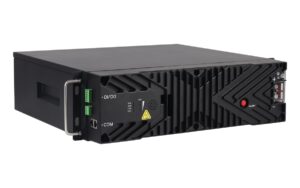
| 48V 100Ah | 100A | 1C | 53.3V | 51.0V | 0°C to 65°C | -20°C to 65°C |
| 48V 150Ah | 150A | 1C | 53.3V | 51.0V | 0°C to 65°C | -20°C to 65°C |
| 48V 200Ah | 100A | 0.5C | 53.3V | 51.0V | 0°C to 65°C | -20°C to 65°C |
6,000 cycles is a test result, not a calendar promise
The packs are rated for 6,000 cycles at 25°C and 80% depth of discharge. One cycle per day gives 16.4 years of cycling, but the 48V rack datasheet also lists a 10-year design life. The calendar limit arrives first in that comparison.
The 6,000-cycle figure assumes 25°C and a controlled charge profile. A pack that runs at 45°C or is held at full charge for long periods will not reach the same count. Treat the cycle rating as a comparison number between packs tested the same way, not as a warranty date. The assembly and test process behind a LINEX pack is documented stage by stage.
Cold stops the charge, heat shortens the life
The 12V range lists 0°C to 50°C for charging and -20°C to 60°C for discharge. The 48V telecom range lists 0°C to 65°C for charge and -20°C to 65°C for discharge. The BMS blocks charge below 0°C to keep lithium from plating on the anode.
The 48V datasheets list self-discharge under 5% in 90 days at 25°C, so a charged pack can sit for a season without a maintenance charge. Heat is the bigger enemy: keep the pack out of direct sun and leave clearance around the enclosure. The IP65 12V models can take weather; the IP20 48V rack models need a cabinet.
Pack energy density runs 111Wh/kg to 128Wh/kg
Pack-level energy density is rated energy divided by pack weight. The 12V 100Ah pack reaches 128Wh/kg at 10kg. The 48V 100Ah rack pack reaches 112Wh/kg at 43kg. The 48V 200Ah pack reaches 123Wh/kg at 78kg.
These numbers include the enclosure, BMS and terminals, so they sit below cell-level figures. They are the numbers that matter for a vehicle, a boat or a wall mount, because the installed pack carries all of that mass.
| Pack | Rated energy | Weight | Pack energy density |
|---|---|---|---|
| 12V 100Ah | 1,280Wh | 10kg | 128Wh/kg |
| 12V 200Ah | 2,560Wh | 22kg | 116Wh/kg |
| 12V 300Ah | 3,840Wh | 30kg | 128Wh/kg |
| 24V 100Ah | 2,560Wh | 22kg | 116Wh/kg |
| 48V 100Ah | 4,800Wh | 43kg | 112Wh/kg |
| 48V 150Ah | 7,200Wh | 60kg | 120Wh/kg |
| 48V 200Ah | 9,600Wh | 78kg | 123Wh/kg |
The chemistry does not replace the BMS
LiFePO4 is more thermally stable than NMC, but it is not immune to overcharge, over-discharge or short circuit. On a 12V pack the BMS enforces a 14.6V charge ceiling and an 8.8V to 10V low-voltage cutoff, and it lists over-temperature, over-current and short-circuit protection.
A LiFePO4 pack is not a drop-in replacement for a lead-acid battery unless the charger settings change. The 12V pack wants 14.6V charge and 13.5V to 13.8V float; a lead-acid charger may stop at a different point. Check the charger before the first cycle.
For the assembly side, read what goes into a LINEX LiFePO4 battery and the lithium battery manufacturer in China guide. Importers deciding between a finished pack and loose cells can start with lithium battery pack vs cells.
Frequently asked questions
3.2V. Four cells in series give 12.8V, eight give 25.6V, fifteen give 48V and sixteen give 51.2V.
Yes for a LiFePO4 pack rated for 6,000 cycles at 80% DoD. The BMS reserves the bottom of the range, and the cycle count already assumes that depth.
At 0°C the pack is at the edge of its charge window. The 12V range lists 0°C to 50°C, and the BMS should block charge below 0°C. Charging below freezing damages the anode, so warm the pack first.
Because both packs may share the same 100A charge limit. The 12V 200Ah and 48V 200Ah LINEX packs both list 100A maximum, which is 0.5C for 200Ah and 1C for 100Ah.
At the datasheet rating, yes. The LINEX packs list 6,000 cycles at 80% DoD, while a lead-acid battery is normally cycled at 50% DoD and has a much shorter cycle count. Calendar life and temperature still decide the real service life.
No. LINEX does not publish cold cranking amps for these packs, and the BMS is sized for continuous house loads, not starter surge. Use a battery rated for cranking.
Sources: LINEX 12V 100Ah, 12V 200Ah, 12V 300Ah, 24V 100Ah, 48V 100Ah, 48V 150Ah and 48V 200Ah datasheets (nominal voltage, capacity, charge and discharge current, voltage settings, temperature range, cycle life and weight); LINEX smart 48V datasheets (CAN and RS485); calculated values: usable energy = nominal energy × 0.80, pack energy density = rated energy ÷ weight, C-rate = charge current ÷ capacity. Last updated 2026-10-28.
For the wider model range, see the 12V lithium battery line and the 48V lithium battery range. The lithium battery manufacturer in China guide covers the sourcing checks that sit behind these pack figures.