Cold chain is the wrong term for a lithium battery shipment
A cold chain keeps vaccines and food at 2°C to 8°C. A lithium battery shipment has the opposite problem: the cargo is damaged by heat, not by a tropical night. The plan should be called a heat plan. It covers the state of charge, the stow position, the logger placement and the arrival check.
The term still appears in shipping instructions because forwarders reuse templates. A line that says “cold chain” tells the booking desk nothing about a Class 9 battery. Replace it with a temperature range and a maximum exposure time. A 12V 100Ah LiFePO4 pack has a charge range of 0°C to 50°C and a discharge range of -20°C to 60°C. Those are operating limits, not storage targets.
Cargo at the top of a container can pass 50°C
The Container Handbook, published by the German insurance association GDV, reports that daily overheating inside a container on sunny summer days averages 20°C even in temperate latitudes and is higher in the subtropics. It puts cargo surface temperatures above 50°C in the upper part of the container. A steel roof in direct sun is the hot spot.
“temperatures of > 50°C … may occur in the upper part of the container”
A 20ft container holds 33.2 m³. The top layer of cartons sits closest to the roof and receives radiant heat from the steel. The floor is cooler, but it carries the weight. A stow plan that fills the container to the roof without an air gap makes the top layer the hottest cargo in the box.
| Stow position | Relative heat | Why | What to request |
|---|---|---|---|
| Top tier, under the roof | Highest | Radiant heat from the steel roof, little air movement | Keep a 10cm to 15cm gap below the roof |
| Middle of the stow | Moderate | Heat from adjacent cartons, limited ventilation | Leave the planned ventilation channels open |
| Floor tier | Lowest | Cooler floor, but carries the stack weight | Use a pallet and spread the load |
| Near the doors | Variable | Door opening at ports, sun during truck transfer | Protect with a curtain or stow away from the door |
The datasheet temperature window has two sides
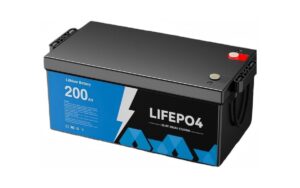
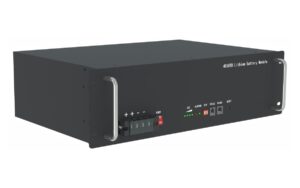
A LiFePO4 datasheet lists a charge range and a discharge range. The 12V 100Ah model charges from 0°C to 50°C and discharges from -20°C to 60°C. The 48V 200Ah telecom model charges from 0°C to 65°C and discharges from -20°C to 65°C. The charge range is narrower because charging below 0°C plates lithium metal on the anode.
The discharge range is not a storage rating. A pack can discharge at 60°C for a short period and still age faster if it sits at that temperature for weeks. Shipping is closer to storage than to cycling. Keep the pack below 45°C for long periods and below 30°C where the route allows it.
| Model | Charge range | Discharge range | Rated energy | Weight |
|---|---|---|---|---|
| 12V 100Ah | 0°C to 50°C | -20°C to 60°C | 1,280Wh | about 10kg |
| 12V 200Ah | 0°C to 50°C | -20°C to 60°C | 2,560Wh | about 22kg |
| 48V 200Ah | 0°C to 65°C | -20°C to 65°C | 9,600Wh | 78kg |
Calendar aging starts above 30°C
Battery University’s BU-808 page treats a cell dwelling above 30°C as running hot. Its storage table shows a lithium-ion cell at 100% charge keeping about 80% capacity after one year at 25°C, 65% after one year at 40°C, and 60% after three months at 60°C. The same cell at 40% charge keeps more capacity at every temperature.
The table is for lithium-ion generally, not for LiFePO4 alone. LFP cells are more thermally stable than NMC cells, so the absolute numbers will differ. The direction is the same: heat plus a full charge is the worst combination for calendar life. A pack shipped at 30% to 50% state of charge arrives with less stress than one shipped full.
| Storage temperature | Capacity after 1 year at 100% charge | Capacity after 1 year at 40% charge | Note |
|---|---|---|---|
| 0°C | 94% | 98% | Cold slows aging |
| 25°C | 80% | 96% | Reference point |
| 40°C | 65% | 85% | Container reading in a warm route |
| 60°C | 60% after 3 months | 75% | Top tier in tropical sun |
UN38.3 proves transport safety, not heat tolerance
UN38.3 test T.2 cycles a cell or battery between -40°C and 72°C, holds each extreme for at least six hours, repeats the cycle ten times and then rests the sample for 24 hours. The test screens for separator failure and leakage after a temperature swing. It is a transport safety test, not a long-duration aging test.
A UN38.3 test summary is required for transport and should be on file for every model. It does not tell the buyer how a pack will perform after 30 days at 50°C. The test spends six hours at the upper limit, not 720 hours. Treat the summary as a ticket to ship, not as a heat warranty.
| UN38.3 test | What it covers | What it does not cover |
|---|---|---|
| T.1 Altitude simulation | Low pressure at altitude | Long-term heat exposure |
| T.2 Thermal test | Ten cycles between -40°C and 72°C | Weeks at 50°C in a container |
| T.3 Vibration | Road, rail and sea vibration | Carton or pallet strength |
| T.5 External short circuit | A short across the terminals | BMS firmware behavior after aging |
Air freight: 30% state of charge is a rule
IATA’s 2026 lithium battery guidance document states that lithium-ion cells and batteries shipped by themselves under UN3480 and PI 965 must be at a state of charge not exceeding 30% of rated capacity. A higher state of charge needs approval from the state of origin and the operator. The rule exists because a lower state of charge reduces the energy available for thermal runaway.
A 12V 100Ah pack at 30% state of charge holds about 384Wh, not 1,280Wh. A 48V 200Ah pack at 30% holds about 2.88kWh, not 9.6kWh. The lower energy limits the consequence of a failure. The airline is not protecting the battery from heat; it is limiting the energy that could feed a thermal runaway.
| Mode | Rule | State of charge | Documents |
|---|---|---|---|
| Air, UN3480, PI 965 | IATA DGR | 30% or less | UN38.3 summary, MSDS, shipper declaration |
| Air, UN3481, PI 966 or 967 | IATA DGR | 30% recommended for equipment | UN38.3 summary, MSDS |
| Sea, UN3480, P903 | IMDG Code | No 30% cap in P903 | UN38.3 summary, MSDS, dangerous goods declaration |
| Road, UN3480 | ADR or local rules | No 30% cap | UN38.3 summary, MSDS |
Sea freight: the 30% cap is not an IMDG rule
The IMDG Code packs lithium-ion batteries under UN3480 and packing instruction P903. P903 does not set the 30% cap that IATA PI 965 sets for air freight, so a sea shipment can leave at a higher state of charge. A carrier can still apply a 30% cap as a booking condition, and the current IMDG amendment should be checked before the booking.
The sea risk is heat, not cabin pressure. Book a below-deck slot away from the engine room and heated fuel tanks. Avoid the top tier under a sun-exposed hatch. Leave the ventilation gaps that the stow plan allows, and do not pack cartons against the container roof. A 48V 200Ah pack weighs 78kg, so a 300-pack load is 23.4 tonnes, close to the 28.3-tonne cargo limit of a 20ft container.
| Sea stow check | Why it matters | Record |
|---|---|---|
| Stow position | Below deck and away from heat sources | Bay, row and tier on the stow plan |
| Container condition | A sound roof and floor keep water and heat out | CSC plate and inspection photos |
| Ventilation | Air movement reduces the top-tier temperature | Gaps left in the stow |
| Weight distribution | A 23.4-tonne load must sit inside the payload limit | Loading plan and tally |
| Carrier acceptance | Some lines apply a 30% state of charge cap | Booking confirmation |
Three loggers make the trip auditable
Place one logger near the door, one in the middle of the stow and one at the front top. Set the interval to 15 minutes. The door logger shows the port and truck exposure, the middle logger shows the cargo body, and the top logger shows the roof effect. A single logger in the door area can miss the hottest zone.
Set the alarm thresholds at 30°C, 45°C and 50°C. The 30°C line marks the start of accelerated aging. The 45°C line is a practical caution for long exposure. The 50°C line is the upper charge limit of the 12V 100Ah model and close to the 60°C discharge limit. A 48V 200Ah pack has a 65°C discharge limit, but a 65°C reading still means the cargo sat at the edge.
| Threshold | Meaning | Action |
|---|---|---|
| 30°C | Accelerated calendar aging begins | Note the hours above the line |
| 45°C | Long exposure is a concern | Inspect the stow and ventilation |
| 50°C | 12V 100Ah charge limit | Do not charge until the pack cools |
| 60°C | 12V 100Ah discharge limit | Stop discharge and inspect |
| 65°C | 48V 200Ah discharge limit | Isolate the pack and check for swelling |
On arrival, let the pack settle before charging
A pack that arrives at 55°C should not be put on charge. Move it to a shaded, ventilated area and wait until the case is inside the charge range. For the 12V 100Ah model that means below 50°C, and preferably below 35°C. For the 48V 200Ah model the charge range runs to 65°C, but a cooler pack is easier on the cells.
Check the open-circuit voltage of each pallet sample, look for swelling or a deformed case, and wake the BMS before connecting a charger. A swollen pack should be isolated, not tested. A 48V 200Ah module weighs 78kg and needs two people or a rack lift; dropping it at this stage can cost more than the freight.
What to write into the shipping instruction
Write the state of charge, the UN number, the class, the packing instruction, the stow request, the logger plan and the arrival check into the shipping instruction. Add the UN38.3 test summary and the MSDS to the document pack. The forwarder needs the battery model and the Wh rating, not just the word “battery”.
The 48V 200Ah telecom battery page lists the 9.6kWh rating, the 78kg weight and the -20°C to 65°C discharge range used in the stow plan. The LiFePO4 import guide covers the document pack. The container loading article turns the weight and volume into a load plan. The cold-weather charging article covers the other end of the temperature range. The certificate guide explains the UN38.3 summary.
A hot-climate shipment is a heat-exposure problem with a state-of-charge rule, a stow plan and a logger record. The pack that arrives cool and at 30% to 50% state of charge has a better chance of meeting its cycle rating.
Frequently asked questions
No. The 30% cap comes from IATA PI 965 for air shipments of UN3480 batteries. P903 in the IMDG Code does not set the same cap, but a carrier can add it as a booking condition, and the current amendment should be checked. Confirm the carrier’s acceptance policy before you load.
By air, no. UN3480 lithium-ion batteries must be at 30% or less unless the state of origin approves a higher level. By sea, P903 does not set a 30% cap, so a full charge can be booked, but it accelerates calendar aging in a hot container. Ship at 30% to 50% and charge at the destination.
The Container Handbook reports daily overheating of about 20°C above ambient even in temperate latitudes, with cargo surface temperatures above 50°C in the upper part of the container. A tropical route with a steel roof in direct sun can push the top tier higher. A logger is the only reliable record for a specific container.
A reefer is not required for a LiFePO4 pack that stays inside its discharge range. The pack has a discharge range down to -20°C and up to 60°C or 65°C, and a reefer adds cost and booking constraints. A below-deck stow, a shaded container and a 30% to 50% state of charge cover many hot-climate routes. Use a reefer only when the route or the customer requires a fixed temperature.
Isolate the pallet, let it cool, and inspect for swelling or a deformed case. Measure the open-circuit voltage of a sample and run a capacity test on one unit before releasing the lot. A 60°C reading is at the discharge limit of the 12V 100Ah model, so the pack should not be charged or discharged until it cools.
LiFePO4 cells use an olivine cathode that is more thermally stable than the layered oxide cathode in NMC cells. That does not make LFP immune to heat. Calendar aging still accelerates above 30°C, and a full charge plus high temperature is the worst combination for either chemistry.
Sources: IATA Guidance Document for Lithium Batteries and Sodium ion Batteries 2026 (UN3480, PI 965, 30% state of charge, UN38.3 test summary, checked 2026-11-12); GDV Container Handbook section 10.3.2.1 (daily overheating about 20°C in temperate latitudes, higher in the subtropics, cargo surface temperatures above 50°C in the upper part of the container, checked 2026-11-12); Battery University BU-808 (30°C heat threshold, storage table at 0°C, 25°C, 40°C and 60°C, checked 2026-11-12); UN Manual of Tests and Criteria, Part III, subsection 38.3, test T.2 (thermal cycling between -40°C and 72°C, six hours at each extreme, ten cycles, 24 hours rest, checked 2026-11-12); LINEX 12V 100Ah product page (1,280Wh, 0°C to 50°C charge, -20°C to 60°C discharge, about 10kg, checked 2026-11-12); LINEX 48V 200Ah product page (9,600Wh, 0°C to 65°C charge, -20°C to 65°C discharge, 78kg, checked 2026-11-12); LINEX container loading guide (33.2 m³ and about 28.3 tonnes of cargo in a 20ft container, checked 2026-11-12). Last updated 2026-11-12.