48V Telecom Battery: How to Choose One for a Base Station
When a site goes dark, nobody remembers the rectifier settings. Everybody blames the battery.
And here’s the thing we’ve learned building these systems: most “battery problems” on a telecom site were decided at purchase time, long before anyone installed anything. The wrong capacity, the wrong form factor, a battery that can’t talk to the network. By the time it shows up at 2 a.m., it’s too late to choose differently.
So here’s the whole selection path in one article: site, capacity, form, platform, specs, monitoring, environment, supplier.
Start with the site, not the battery
Before looking at any battery, answer one question: what does this site need to power, and for how long?
Load (in watts) × backup hours = energy needed. That’s the whole math. A site drawing 300W that needs 4 hours of backup needs 1,200Wh. Round that up for aging and temperature, and you’re looking at roughly 2kWh of battery.
On a 48V system, the common sizes come out like this: a 100Ah battery stores 4.8kWh, a 150Ah stores 7.2kWh, a 200Ah stores 9.6kWh. That’s why most base stations land on the 100-200Ah range, and why the load profile matters more than the site’s nameplate.
Three rough buckets: good-grid urban sites that need short outage coverage; weak-grid sites that cycle daily; and critical sites that need long autonomy. Same battery line, different capacities. (We walked through the runtime math in detail in our 48V backup runtime article.)
Rack, wall, or pole: match the form factor to the site
The battery has to physically live at the site, and that constraint eliminates options fast.
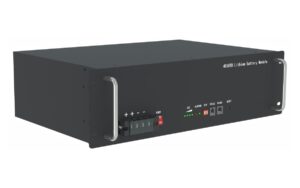
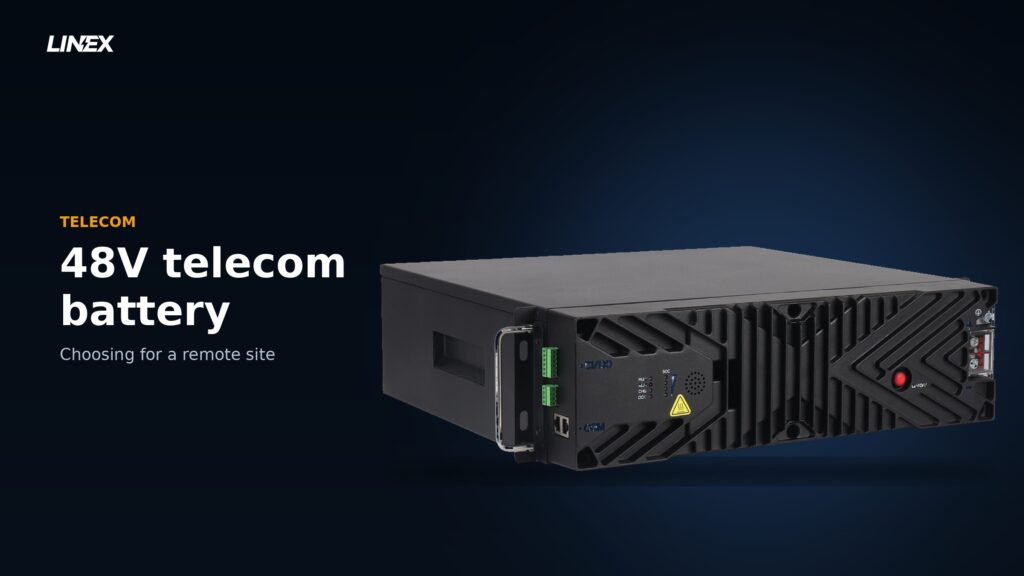
Rack-mount 3U, 19-inch. The standard choice for cabinets and equipment rooms. Our 48V line comes in 100, 150 and 200Ah in this format. If there’s a cabinet, start here.
Pole or wall mount, 50Ah. For RRU/AAU sites and small footprint installs: 2.4kWh (48V/50Ah), IP65 rated, modular so units can be paralleled as the site grows. When there’s no room for a cabinet, this is how you get backup to the top of the site. See our IP65 48V 50Ah pole-mounted battery for this format.
The check: cabinet space, weight handling (a 48V 100Ah unit is around 43kg), and how anyone will service the site later. A battery nobody can reach is a battery nobody maintains.
Standard or smart: two 48V platforms, two jobs
There are two families of 48V battery, and the choice usually comes down to the site’s history.
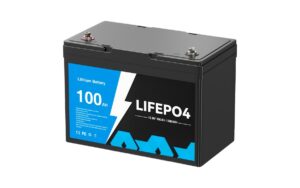
Standard line. RS485/RS232 communication, full BMS protection and cell balancing. This is the workhorse for new builds and straightforward replacements. Like our standard 48V 100Ah unit.
Smart line. Built-in DC-DC boost up to 57V, and, the useful part. It can work alongside lead-acid, and old and new lithium units can be mixed in one bank. That matters for two scenarios: converting an existing lead-acid site without ripping everything out, and expanding a lithium bank in stages without matching batch numbers.
New site: standard is usually enough. Lead-acid conversion or staged growth: smart saves real money and pain.
The numbers on the spec sheet that actually matter
People compare amp-hours. The spec sheet is where the real story is.
- Voltage window: boost charge 53.3V, float 51.0V, discharge cutoff 40.5V. These need to line up with how the rectifier is set. A battery and a rectifier that disagree on voltage is a battery that never reaches full charge, and dies early.
- Current: 100A continuous charge and discharge (with a 10A current limit on the charge side for standard models).
- Cycle life: 6,000 cycles at 25°C / 80% depth of discharge, with a 10-year design life.
- Self-discharge: under 5% per 90 days. Matters for sites that sit idle.
- BMS protections: over-temperature, over-current, short circuit, over-discharge, charge current limiting, balancing, SOC/SOH reporting. Get the full list in writing.
Ah is a label. Cells and BMS are the battery.
Don’t buy a silent battery
For a remote site, a battery that can’t be monitored is a battery you find out about when it fails.
Communication is a selection criterion, not a bonus: RS485/RS232 (or CAN on the smart line), SOC/SOH telemetry, and alarm reporting that reaches the NOC. If you’re integrating into an existing monitoring platform, check the protocol before you order. Not after the pallet arrives.
Heat, altitude, and the enclosure question
Telecom sites are hard on batteries: hot equipment rooms, no shade, high sites.
Our 48V units charge from 0 to 65°C and discharge from -20 to 65°C, and are rated to 3,600m altitude. Heat is the quiet killer of battery life, so airflow and shade aren’t optional details. They’re capacity planning.
Then there’s the enclosure. Indoor cabinets (IP20, 10U to 47U) and outdoor cabinets (IP65, 45mm EPS insulation, 6U to 26U, with fan cooling and AC redundancy options) exist because some sites have a room and some have a pole. The full range is here.
What to demand from any supplier
When you’re buying for sites you can’t easily visit, the supplier checklist is mostly about documents and honesty:
- Certifications you can verify: UN38.3, CE, FCC.
- A real spec sheet: voltage windows, currents, dimensions, communication protocols, temperature range.
- The BMS protection list, in writing. Not “full protection” as a phrase.
- OEM/ODM capability if you sell under your own brand.
- Factory-direct or through a chain of traders. Ask plainly.
- A sample and test report process you can follow before committing to a batch.
A supplier who answers all six is worth talking to. One who answers two is telling you where the risk lives.
Mistakes that cost the most
- Buying on amp-hours alone. Missing the voltage window means the rectifier never fully charges the battery.
- Ignoring communication. A great battery you can’t monitor is a liability at 3 a.m.
- Skipping thermal planning. The same battery lasts years longer on a ventilated site than in a hot box.
- No growth plan. Sites grow. Check whether the platform supports mixed old/new units before you need to expand.
- Treating nominal capacity as the whole spec. Check what’s behind it.
48V Telecom Battery Runtime: How Long Will It Last?
Runtime depends on usable energy, the site load and conversion efficiency. A 48V 100Ah LiFePO4 pack stores 4.8kWh nominal; at 90% depth of discharge and about 95% efficiency, roughly 4.1kWh is delivered. Divide that by the average DC load to estimate hours.
| Average site load | 48V 100Ah (~4.1kWh) | 48V 150Ah (~6.2kWh) | 48V 200Ah (~8.2kWh) |
|---|---|---|---|
| 300W | About 13.7 hours | About 20.5 hours | About 27.4 hours |
| 600W | About 6.8 hours | About 10.3 hours | About 13.7 hours |
| 1,200W | About 3.4 hours | About 5.1 hours | About 6.8 hours |
| 2,400W | About 1.7 hours | About 2.6 hours | About 3.4 hours |
These are estimates at 25°C with new cells. Derate for low temperature, aging and rectifier losses, and size the bank for the required autonomy hours rather than the average load alone.
If the operator requires eight hours of autonomy at 800W, the bank needs roughly 6.4kWh delivered. A 48V 150Ah pack, or a 48V 200Ah pack with margin.
Rack, Cabinet and Parallel Planning
Most 48V telecom sites use 19-inch rack batteries inside an outdoor cabinet. Five points decide whether the installation stays serviceable:
- Parallel strings: keep cable lengths equal so current shares evenly between batteries; confirm the BMS supports the number of parallel units you plan.
- Protection: size the DC breaker for peak site load plus the battery’s continuous discharge rating.
- Communications: confirm RS485/RS232 or CAN addressing for paralleled packs, and verify telemetry from every battery at commissioning.
- Thermal: leave airflow clearance; cabinet cooling must cover battery heat plus solar gain, not just ambient temperature.
- Expansion: reserve rack space and busbar capacity for a second string instead of replacing the cabinet later.
For enclosure specifications, see the telecom battery cabinet selection guide.
Buying for a project? See the 48V lithium battery supplier page for capacity options, OEM terms and export documentation.
Rack Formats, Weights and Parallel Rules
All four standard 48V models mount in a 19-inch rack. Check the cabinet’s usable depth against these figures, not the “rack compatible” label:
| Model | Energy | Format | Weight | Communication |
|---|---|---|---|---|
| 48V 50Ah | 2.4 kWh | 3U (19″) | 29 kg | RS485, RS232 |
| 48V 100Ah | 4.8 kWh | 3U (19″) | 43 kg | RS485, RS232 |
| 48V 150Ah | 7.2 kWh | 4U (19″) | 60 kg | RS485, RS232 |
| 48V 200Ah | 9.6 kWh | 4U (19″) | 78 kg | RS485, RS232 |
The 100Ah sits in 3U (133mm tall, 442mm wide, 420mm deep before handles and terminals); the 150Ah and 200Ah are 4U at 178mm tall, and the 200Ah is deeper at 610mm.
When expanding a bank, four rules cover most of it:
- Same model, same age, same batch. Mixing a 100Ah with a 150Ah on one bus works on paper and fails in practice. The BMS units fight over current sharing.
- Equal cable runs to the busbar. Same gauge, same length, same terminal torque; unequal lengths mean one battery does more of the work.
- Charge voltage inside the model spec. Float charge is 51.0V and equalization 53.3V on our 48V models. Do not let a misconfigured rectifier push past that.
- Communication protocol must match the site controller. Standard models speak RS485/RS232; the Smart series uses CAN/RS485. A mismatch means the BMS alarm never reaches anyone.
Related: compare 48V 100Ah vs 200Ah for site autonomy, or check rest and charging voltages before commissioning.
The short version
Match the battery to the site: capacity from load × hours, form factor from space, platform from the site’s history, and specs from the rectifier’s settings. Demand communication, verify documents, and plan for heat and growth. Do that and the battery quietly does its job for a decade, which is exactly what you want from it.
For more on keeping base stations online, see our related guide.
Tell us your site load and backup hours, and we’ll come back with a configuration from our 48V lithium battery line. Batteries, cabinets, factory direct.
For telecom & remote site solutions, contact our team.
Frequently Asked Questions
About eight hours at a 400W site load and four hours at 800W, assuming 90% usable depth of discharge and 95% conversion efficiency. High-temperature cabinets reduce this, so size against the summer load.
48V is the nominal label; 51.2V is the actual nominal voltage of a 16-cell LiFePO4 pack (16 x 3.2V). Chargers and inverters must be set for the pack voltage window, not just the label.
Only if they use the same BMS protocol and are within a small voltage difference at connection. Mixing old and new packs causes uneven current sharing and shortens the newer battery.
Outdoor sites do: the cabinet provides IP protection, thermal management and physical security. Indoor sites can use 19-inch rack batteries without a cabinet.