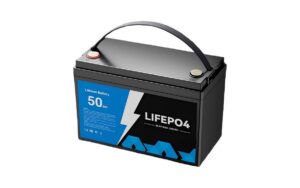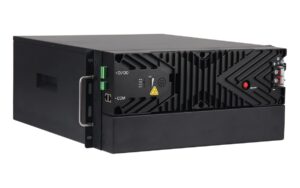
A buyer sends the same request to five suppliers: “48V 100Ah LiFePO4, rack mount, UN38.3, 5-year warranty, 50 units.” The quotes come back between roughly $1,000 and $1,600 per unit. Someone is being robbed, or someone is quoting a different product.
Usually it is the second one. In 48V lithium batteries the price difference is rarely a discount. It is a difference in cells, BMS, enclosure, certification scope or what the Incoterm includes. This guide shows how to normalize quotes so you compare the same thing, and where the money actually goes.
Why price per Ah hides the real number
Amp-hours only mean something together with voltage. A “48V 100Ah” pack is 4.8kWh nominal; the same 100Ah at 51.2V is 5.12kWh. About 6.7% more energy for the same Ah label. And that is before the more important difference: usable energy.
Most LiFePO4 packs are specified for 80% depth of discharge in daily cycling. A 4.8kWh pack therefore delivers roughly 3.84kWh usable, not 4.8. If one supplier quotes 48V and another 51.2V, and one quotes usable capacity while the other quotes nominal, price per Ah can differ by 15% or more before you even reach the cell quality question.
Normalize everything to nominal kWh first, then to usable kWh at the stated DoD. That is the number you can compare.
How to calculate cost per kWh
The formula is the same one used to size a battery bank:
kWh = nominal voltage × Ah ÷ 1,000
Then:
Price per kWh = total landed cost ÷ total kWh
| Pack | Nominal energy | Usable at 80% DoD | What to compare |
|---|---|---|---|
| 48V 50Ah | 2.4kWh | ~1.92kWh | $/kWh, BMS current rating |
| 48V 100Ah | 4.8kWh | ~3.84kWh | $/kWh, rack format, comms |
| 48V 150Ah | 7.2kWh | ~5.76kWh | $/kWh, weight per kWh |
| 48V 200Ah | 9.6kWh | ~7.68kWh | $/kWh, shipping weight |
| 51.2V 100Ah | 5.12kWh | ~4.1kWh | $/kWh, cell count and charger profile |
Worked example, with illustrative numbers only: Supplier A quotes $1,200 FOB for a 48V 100Ah rack pack (4.8kWh), $250/kWh. Supplier B quotes $1,380 for a 51.2V 100Ah pack (5.12kWh). $270/kWh. On the invoice B looks 15% more expensive per unit; per kWh it is 8% more. If B uses matched tier-one cells and A does not, the 8% is the cheapest insurance in the deal. Substitute your own quotes into the same arithmetic.
The five things that actually move a 48V quote
1. Cell grade and cell source
Cells are usually the largest single cost line in a LiFePO4 pack. Often more than half of the bill of materials. Tier-one cells (EVE, CATL, Gotion and similar) with documented capacity and IR matching cost more than mixed-batch or secondary-market cells, and the difference is not visible from the outside.
This is where most of a suspiciously large price gap lives. Ask for the cell model, a per-unit capacity test and IR matching data before you accept a lower quote as a win.
2. BMS: standard or smart
A standard BMS with RS485/RS232 reporting is a different product from a smart BMS with CAN bus, remote monitoring and a built-in DC-DC converter that can boost to 57V for hybrid sites still running lead-acid strings. The smart board can add a meaningful percentage to the unit cost, and it also changes what the site integrator has to buy separately.
3. Format and enclosure
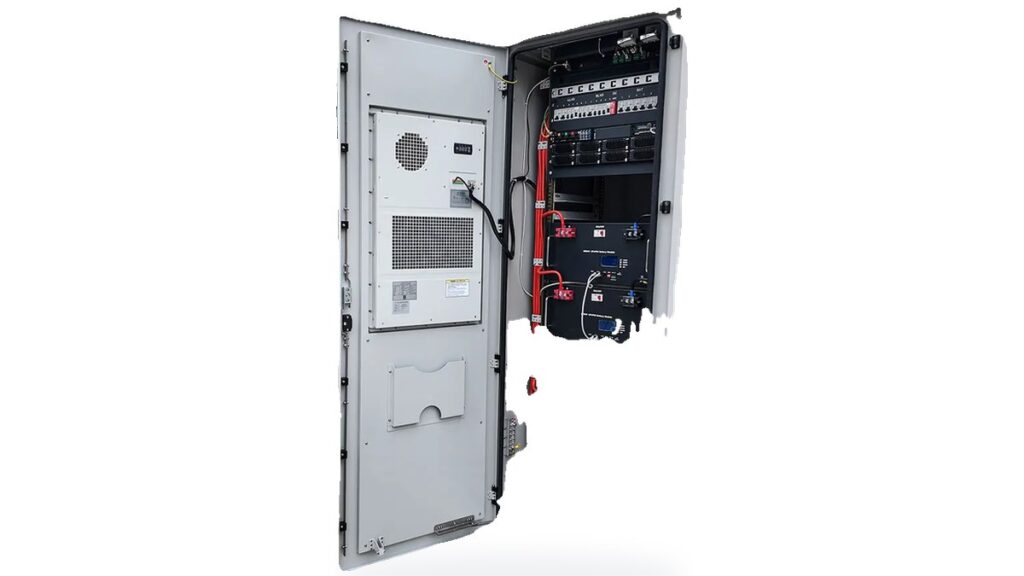
A 19-inch rack module, an IP65 pole-mount unit and an outdoor cabinet are three different pieces of hardware. Aluminum enclosures, sealed connectors, thermal management and IP65 testing all cost money. A quote that looks cheap may simply be a rack module being compared against a pole-mount unit. Check the format line before the price line.
4. Certification and documentation scope
UN38.3, MSDS, IEC 62619, CE and RoHS are not free. Each model needs its own test evidence, and a report that covers a different model is not a substitute. When one quote includes model-specific test reports and the other says “certificates available”, you are comparing two different deliverables.
5. Freight, packaging and MOQ
Lithium batteries ship as Class 9 dangerous goods (UN3480 for batteries alone, UN3481 when packed with equipment). Packaging, labeling, dangerous goods documentation and forwarder handling all carry cost. Freight per kWh also falls sharply with volume: a full pallet or a mixed container spreads the fixed costs across more units, while a 20-unit trial order can carry a freight bill that rivals the product cost.
Landed cost: the formula buyers forget
FOB price is not your cost. Landed cost includes everything required to get the batteries into your warehouse:
Landed cost = FOB × quantity + freight + insurance + duty + port charges + inland transport
Duty is usually calculated on the CIF value (FOB + freight + insurance) at your country’s tariff rate for the HS code. Lithium-ion accumulators generally fall under HS 8507.60; confirm the exact code and rate with your customs broker, because it varies by market and by product configuration.
| Cost line | How to estimate | Watch out for |
|---|---|---|
| FOB unit price | Quote × quantity | Ex-works quotes exclude inland China haulage |
| Freight | Forwarder quote by CBM and weight | Class 9 surcharges; batteries are heavy for their volume |
| Insurance | Typically a small % of CIF | Confirm dangerous goods are covered |
| Duty | CIF × national tariff rate | Rate and HS code differ by country |
| Port and clearance | Fixed fees per shipment | Documentation errors cause storage charges |
| Inland transport | Port to warehouse | Class 9 handling may limit carriers |
Divide the landed total by total kWh and you have the only number worth comparing: landed cost per kWh. On small trial orders, freight can add 10–20% or more to the unit cost, which is why a 50-unit quote and a 500-unit quote are not comparable without normalizing.
A quote comparison worksheet
Ask every supplier for the same fields, in writing, and put them in one table. If a supplier cannot fill a row, that is information too.
| Field | Why it matters |
|---|---|
| Model and format | Rack, pole-mount or cabinet. Not interchangeable |
| Nominal voltage and Ah | Converts to kWh; 48V vs 51.2V changes the math |
| Nominal kWh / usable kWh at stated DoD | The real capacity you are paying for |
| Cell model and grade | Largest cost driver and the main quality variable |
| BMS type, current rating, protocols | Determines load capability and integration work |
| Certification scope | Model-specific UN38.3, MSDS, IEC 62619 where required |
| Warranty terms | Years, capacity threshold, cycle limit, exclusions |
| MOQ and lead time | Affects freight per unit and your cash cycle |
| Incoterm and packaging | FOB vs CIF vs DDP changes the landed cost materially |
| Landed cost per kWh | The only apples-to-apples number |
Five pricing red flags
- 20–30% below every other quote for an identical spec. Either the cells, the BMS or the certification scope is different. Ask which one.
- Price per Ah only, no kWh and no DoD. It is a way to avoid stating usable energy.
- “A-grade cells” with no test data. Grade labels are not standardized; capacity and IR tables are.
- Quotes that quietly exclude the rack, cabinet, cables or freight. Compare the full bill of materials, not the battery alone.
- Warranty that covers “defects” but not capacity or cycle life. For a battery, capacity fade is the main failure mode.
Negotiating without trading away quality
The cheapest way to reduce a 48V battery quote is to change the cells, which is exactly the change you do not want. Negotiate on the variables that do not touch the bill of materials:
- Volume across models. A mixed order of 50Ah, 100Ah and 200Ah units can reach a better price tier than a single-model trial.
- Mixed container loading. Combine batteries with cabinets, racks or other product lines to fill a container and cut freight per kWh.
- Annual frame agreement. Committed annual volume with scheduled releases usually beats one-off pricing.
- Payment terms and packaging. Pallet standardization, neutral packaging or simplified labeling can reduce cost without touching quality.
- Spare parts bundle. Adding BMS spares or cabling to the first order often costs less than sourcing them later.
Frequently asked questions
Not inherently. A 48V 100Ah pack is 4.8kWh and a 51.2V 100Ah pack is 5.12kWh, so the 51.2V unit contains about 6.7% more energy. Compare landed cost divided by kWh for each, and also check which charge profile your inverter or rectifier expects. The cheaper pack is not cheaper if it does not integrate.
Most of the gap comes from four things: cell grade and source, BMS capability, enclosure format, and the certification scope included. Freight and MOQ explain the rest on small orders. A quote that is far below the market usually differs on at least one of these. Ask the supplier to confirm each item in writing.
Lithium-ion accumulators generally fall under HS 8507.60. The exact subheading and duty rate depend on your country and on how the product is configured and packaged. Confirm with your customs broker before you calculate landed cost, since duty is charged on the CIF value.
Yes, under UN38.3 testing and Class 9 dangerous goods rules, but air freight is expensive per kilogram and many carriers limit state of charge and packaging. For 48V 100Ah and larger packs, sea freight is the normal choice; air is usually reserved for samples or urgent single units.
Not automatically. Price is a signal only when the specification is identical and the supplier documents the cells. A higher quote with no cell model, capacity test or IR data is just a higher quote. Ask for the same evidence from every supplier before you let price decide.
The bottom line
Price per Ah is a marketing number. Landed cost per kWh, at a stated depth of discharge, with a documented cell and BMS, is a purchasing decision. Build the worksheet once, use it for every quote, and the 30–40% gaps will explain themselves. Usually in the cell column.
If you are pricing a 48V project now, send the site count, capacity per site and destination port. We will quote battery, rack and accessories together with the model-specific documentation, so the landed number is comparable from the start. Start with the 48V lithium battery range, or convert any pack to kWh with the Ah to kWh calculator.