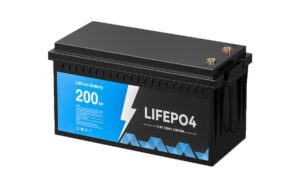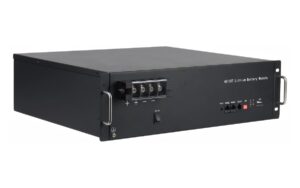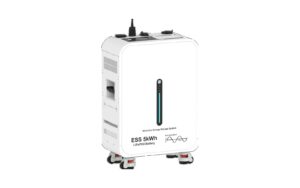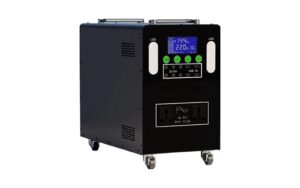
A pack manufacturer assembles cells, BMS and enclosure
A battery pack manufacturer buys LiFePO4 cells, connects them into a pack, adds a BMS and enclosure, and tests the finished unit. The cell maker produces the 3.2V cells. The pack house turns those cells into a 12V, 24V or 48V battery. Most importers need the pack house, not the cell maker.
That distinction sets the audit. At a cell maker, ask for the cell datasheet and the cell-level UN38.3 report. At a pack house, ask for the cell purchase record, the welding method, the BMS model and the pack-level test log. A trading company can sell the same pack, but it cannot show you the process.
| Supplier type | What it makes | What to ask for | Main risk |
|---|---|---|---|
| Cell maker | 3.2V LiFePO4 cells | Cell datasheet, cell-level UN38.3 report, capacity and internal resistance data | Large cell-level order, no finished pack |
| Pack assembler | Finished battery pack | Cell brand and grade, BMS model, welding record, aging and pack test log | Cell grade changes between orders |
| Trading company | Resells packs | Factory name, authorization, cell batch record, factory audit access | No control over the production line |
A pack quote should name the cell brand, the BMS model and the test standard. A quote that lists only the voltage, capacity and price is a catalog entry, not a manufacturing offer.
The business license scope should include battery pack assembly
For a Chinese supplier, the first document is the business license. Check the legal name, the unified social credit code, the registered address and the business scope. The scope should include battery pack assembly, lithium battery manufacturing or lithium battery sales. A trading-only scope is not disqualifying, but it changes the audit: you are vetting the factory behind the trader.
The name on the license must match the name on the invoice, the bank account and the certificate. A UN38.3 report in another company’s name does not cover your supplier. A certificate in another company’s name is one of the red flags listed in the supplier guide.
| Document | What it proves | Red flag |
|---|---|---|
| Business license | Legal entity, registered address and business scope | Scope is trading only, or the address differs from the factory |
| ISO 9001 certificate | Quality management system and the certified site | Certificate names another site or another company |
| UN38.3 test summary | Transport test for a specific cell and pack model | Model or applicant does not match the quote |
| MSDS | Chemistry, handling and transport classification | Generic file with no model or revision date |
| IEC 62619 or UL 1973 evidence | Industrial or stationary safety testing, when required | Claimed verbally with no report number |
| Cell purchase record | Cell brand, grade and batch | No batch code, or a photo of cells with sanded markings |
| Warranty terms | Replacement and RMA process | Verbal warranty only, no written terms |
Ask for the documents before the sample, not after the deposit. A supplier who has the file ready answers the same day. A supplier who needs a week to find a certificate is telling you how the order will run.
Certificates must name the exact model and cell
A UN38.3 test summary covers a specific cell or battery model. The model on the report must match the pack you are buying, and the applicant or manufacturer should be the factory you are vetting. A report for a 100Ah cell does not cover a 200Ah pack built from that cell unless the pack model is also listed.
Ask for the report number, the issuing lab and the test date. Then check the report against the datasheet: nominal voltage, capacity, cell model and case size. A PDF with no report number, or a report that names a different factory, is not evidence.
LINEX’s cell verification guide puts the limit plainly: “UN38.3 is a transport test, not a quality certificate, but the paperwork still has to match what you are shipping.” The same logic applies to ISO 9001 and to IEC 62619. A certificate proves that a defined scope was audited or tested. It does not prove that every pack on the line meets the datasheet.
For industrial and stationary projects, buyers often ask for IEC 62619 or UL 1973 test evidence in addition to UN38.3. UN38.3 covers transport. IEC 62619 covers industrial battery safety, and UL 1973 covers stationary and motive auxiliary power battery systems in North America. Confirm which standard your destination market requires before you compare quotes.
Cell traceability: brand, grade and batch report
Ask for the cell brand, the grade and the batch code in writing. A 48V 100Ah telecom pack, for example, lists “Grade-A EVE or CATL LiFePO4 cells” on its product page. That is the level of detail a pack quote should carry. A line that says only “Grade A” without a cell report is not traceable.
Grade B cells can pass a short capacity test and still lose capacity over months. Two packs can look identical and differ in price because the cells inside are different grades. Ask for a capacity test report at a stated C-rate, the internal resistance, and a photo of the cell markings.
Traceability also matters after delivery. A serial number linked to a cell batch and a test record supports warranty claims and certification audits. A pack with no serial number and no batch record is hard to defend when a customer reports a failure.
BMS limits set the warranty, not the cell
The BMS sets the continuous and peak current, the low-temperature charge cutoff, the overcharge and overdischarge thresholds, and the short-circuit protection. A pack can have good cells and a BMS that trips at a lower current than the label suggests. Ask for the BMS model, the datasheet and the current limits.
For telecom or ESS projects, ask for the communication protocol and the register map. A 48V 100Ah telecom pack lists 100A charge and discharge at 25°C, a 10A charging current limitation, RS485 and RS232 communication, a 3U 19-inch rack case, 43kg and IP20. Those line items are what you compare across quotes.
| BMS field | What to ask | Why it matters |
|---|---|---|
| Continuous discharge current | Amps at 25°C, and the derating above 25°C | Sets the continuous load the pack can carry |
| Peak current | Amps and duration | Sets the inverter surge or motor start limit |
| Charge current limit | Standard, recommended and maximum amps | Sets charger size and charge time |
| Low-temperature cutoff | Cutoff temperature and recovery temperature | Blocks charging below 0°C to protect the cells |
| Cell balancing | Passive or active, and the balance threshold | Prevents one cell from limiting the pack |
| Communication | RS485, RS232 or CAN, plus the register map | Needed for site monitoring and system integration |
A BMS that cannot state its continuous current in writing is a BMS you cannot size a system around. The pack label may say 100Ah, but the BMS may limit the load to 50A or 80A.
A factory audit can start on a video call
Ask for a live video walkthrough, not a recorded brochure video. The walkthrough should show the cell storage area, the assembly benches, the welding station, the BMS installation, the aging or test area and the packing line. A factory that cannot show the cell storage and the test area is likely a trader with a showroom.
Watch the cell storage temperature and the organization of the benches. Ask how cells are graded before assembly and how the welding current is set. Ask for a recent batch record with capacity and internal resistance, and compare the serial numbers on the record with the packs in the video.
For a large first order, book a third-party inspection at the factory before shipment. The inspector should check the quantity, the serial numbers, the cell markings, the BMS model, the capacity test records and the carton labels. An inspection at a warehouse after the container is loaded is too late to fix a cell-grade problem.
Sample testing: capacity, internal resistance and BMS cutoff
Test a production sample, not a golden sample. Charge and discharge it at the stated C-rate, record the capacity in Ah and Wh, measure the internal resistance, and check the cell balance after a full cycle. Then test the BMS cutoff and recovery.
| Test | Method | Pass criterion | Red flag |
|---|---|---|---|
| Capacity | Discharge at 0.5C from full to the low-voltage cutoff at 25°C | At least 95% of the rated Ah and Wh | Below 90% of rated capacity |
| Internal resistance | AC or DC measurement at 25°C | Within the supplier’s datasheet value | More than 20% above the datasheet |
| Cell balance | Measure each cell or group after a full charge | Delta within the supplier’s stated limit | One cell group drifts after one cycle |
| BMS cutoff | Trigger overcharge, overdischarge, short circuit and low-temperature cutoff | Cutoff and recovery match the BMS datasheet | No cutoff, or no recovery after the fault clears |
| Self-discharge | Store at 25°C for 30 days, then measure open-circuit voltage and capacity | Within the datasheet’s self-discharge limit | Exceeds the datasheet limit, or the open-circuit voltage keeps falling |
A 100Ah pack that delivers 95Ah at 0.5C is within normal temperature and test-method variation. A pack that delivers 85Ah is not a 100Ah pack, whatever the label says. Run the test at 25°C and record the temperature, because capacity falls in the cold.
First order controls: pre-production sample and pre-shipment inspection
Agree on a pre-production sample before the bulk run. The sample should come from the production line, not from the lab, and it should carry the same cell brand, BMS model and firmware as the order. Keep one sealed sample as the reference for the shipment.
Put the datasheet, the certificate list, the packaging artwork and the inspection checklist in the purchase order. The pre-shipment inspection should verify the serial numbers, the cell batch, the BMS model, the quantity and the carton labels against that reference. Payment should follow milestones, not a full transfer to a personal account before production.
Red flags that end the evaluation
A price far below the market is the first red flag. Others include a certificate in another company’s name, a cell report that does not match the pack model, a BMS with no datasheet, and a factory video that shows only a showroom.
Ask the supplier to explain each gap in writing. A real factory can produce the document or the record. A trader will answer with a story about the certificate being “with the lab” or the report being “the same for all models”. When the same gaps appear across several documents, the evaluation is over.
The lithium battery manufacturer guide covers the supplier checks in a longer sequence, and the lithium battery import guide lists the transport documents for a first shipment. The LiFePO4 cell verification guide explains the capacity, internal resistance and cell-marking checks, and the LiFePO4 supplier checklist covers the commercial side. For the BMS questions, the battery management system checklist lists the protections and current limits. The 48V 100Ah telecom battery product page shows the level of BMS and cell detail a quote should provide.
Frequently asked questions
A cell manufacturer makes the 3.2V LiFePO4 cells. A battery pack manufacturer buys those cells, assembles them with a BMS and enclosure, and tests the finished pack. Most importers buy from a pack manufacturer.
Ask for UN38.3, MSDS and ISO 9001 as a baseline. Add IEC 62619 or UL 1973 when the destination market or the project requires industrial or stationary safety evidence. Match every certificate to the exact model and factory name.
Start with a live video walkthrough of the cell storage, assembly line and test area. Then request a production sample and a batch test record. For a large order, book a third-party inspection at the factory before shipment.
Capacity at a stated C-rate, internal resistance, cell balance after a full cycle, BMS cutoff and recovery, and a 30-day self-discharge check. Record the temperature and the test equipment with the results.
A price far below the market, a certificate in another company’s name, no cell batch record, no BMS datasheet, and a request for full payment to a personal account. Any one of these needs an explanation before the order moves forward.
Yes, if the factory behind it is identified and audited. Ask for the factory name, the authorization letter and the cell batch record. A trader that refuses to name the factory is not a supply partner you can audit.
Sources: LINEX lithium battery manufacturer guide (supplier checks for certificates, cells, BMS, factory video, samples and red flags; UN38.3, MSDS, IEC 62619, CE and destination-specific marks); LINEX lithium battery import guide (UN38.3 test summary, MSDS, Class 9 declaration, commercial invoice, packing list, CE and RoHS); LINEX LiFePO4 cell verification guide (seven cell checks, capacity test at 0.2C and 0.5C, internal resistance, cell markings, UN38.3 model match; direct quotation on UN38.3 as a transport test, not a quality certificate); LINEX LiFePO4 supplier checklist (supplier evaluation steps); LINEX battery management system checklist (BMS protections and current limits); LINEX 48V 100Ah telecom battery product page (100A charge and discharge at 25°C, 10A charging current limitation, RS485 and RS232, 3U 19-inch rack, 43kg, IP20, 6,000 cycles, Grade-A EVE or CATL LiFePO4 cells); LINEX 24V and 48V product pages (pack voltage classes); IATA lithium battery shipping page (air transport rules, packing instructions and documentation); ISO 9001 overview (quality management system standard); UL 1973 standard page (batteries for stationary and motive auxiliary power applications). Last updated 2026-11-07.