Four formats cover almost every ESS order
An energy storage system reaches an importer as a 19-inch rack module, a stacked all-in-one unit, a wall-mounted unit, or a project-built container. The first three are catalog products with fixed dimensions and datasheets. The fourth is a project quote. The four ESS form factors differ more in who can install them than in cell chemistry.
Rack modules are sold by the unit and installed in a cabinet. Stacked units arrive as a complete floor-standing box with the inverter and MPPT inside. Wall units hang on a wall and use no floor area. Container systems are assembled around the same rack modules, with the enclosure, cooling and fire detection added as project scope.
Rack modules trade floor space for rack units
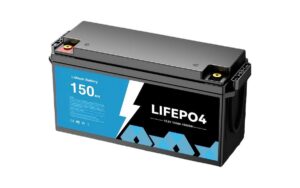
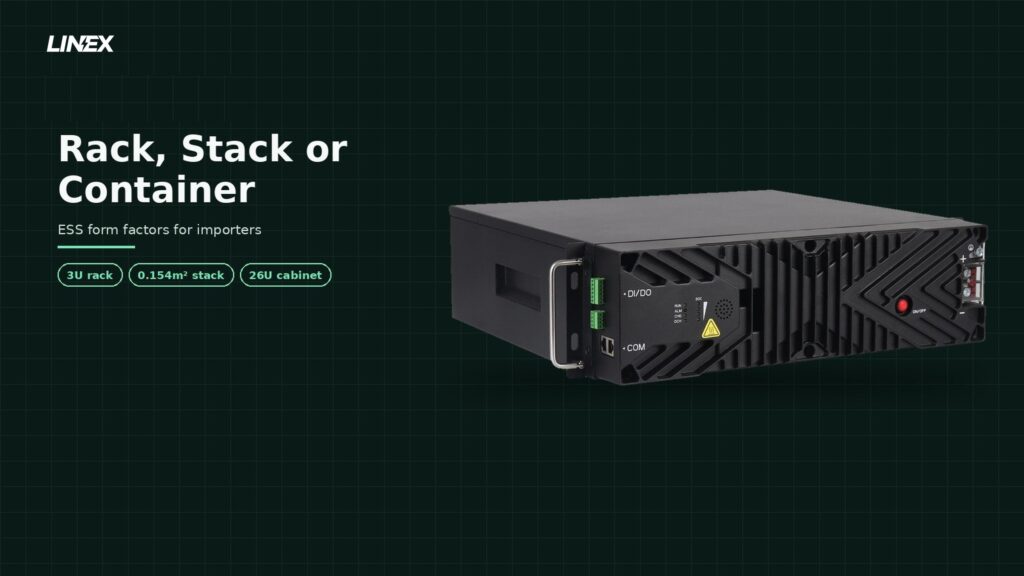
A 48V rack module is sized in rack units: the 100Ah model is 3U and the 150Ah and 200Ah models are 4U. The 100Ah module measures 442 × 420 × 133mm at 43kg, or 482mm deep with handles and terminals; the 150Ah measures 482 × 440 × 178mm at 60kg, and the 200Ah measures 482 × 610 × 178mm at 78kg. All three run 6,000 cycles at 80% depth of discharge.
Energy per rack unit is the number an importer should compare. The 100Ah module gives 4.8kWh over 3U, or 1.6kWh per U. The 150Ah gives 7.2kWh over 4U, or 1.8kWh per U. The 200Ah gives 9.6kWh over 4U, or 2.4kWh per U. The 200Ah wins on density and loses on handling weight.
| Rack module | Height | Dimensions (W × D × H) | Nominal energy | Max continuous discharge | Weight |
|---|---|---|---|---|---|
| 48V 100Ah | 3U | 442 × 420 × 133mm | 4.8kWh | 100A | 43kg |
| 48V 150Ah | 4U | 482 × 440 × 178mm | 7.2kWh | 150A | 60kg |
| 48V 200Ah | 4U | 482 × 610 × 178mm | 9.6kWh | 100A | 78kg |
Depth is the hidden constraint. The 200Ah module lists 610mm, which is more than the 600mm depth of the largest published outdoor cabinet. Confirm the internal depth and the shelf rating before pairing the two.
A 26U cabinet holds 33.6kWh of 100Ah modules
A 26U cabinet leaves 22U for batteries once 4U goes to a rectifier and distribution, which fits seven 3U 100Ah modules or five 4U 200Ah modules. Seven 100Ah modules give 33.6kWh and weigh 301kg before the cabinet. Five 200Ah modules give 48kWh and weigh 390kg.
The 200Ah mix carries 43% more energy for 30% more module weight. That trade only works if the cabinet shelf, the floor and the door opening accept the load. A 42U cabinet raises the count to twelve 100Ah modules or nine 200Ah modules, but it does not raise the floor rating, so check the installation drawing rather than the U number alone.
| Cabinet | Usable U after 4U for services | 3U 100Ah modules | Energy | 4U 200Ah modules | Energy |
|---|---|---|---|---|---|
| 12U | 8U | 2 | 9.6kWh | 2 | 19.2kWh |
| 26U | 22U | 7 | 33.6kWh | 5 | 48.0kWh |
| 42U | 36U | 12 | 57.6kWh | 9 | 86.4kWh |
Stacked all-in-one units put 16.08kWh on 0.154m²
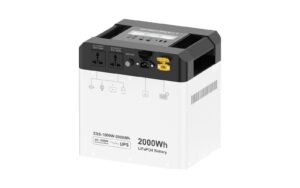
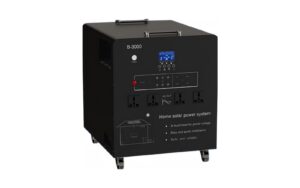
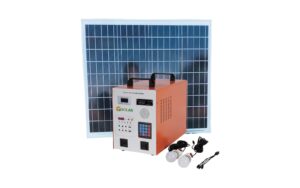
A stacked all-in-one unit puts the battery, inverter, MPPT and outlets in one floor-standing cabinet, and the 16.08kWh model needs 550 × 280mm of floor, or 0.154m². The 5.12kWh model is 807mm tall; the 10.55kWh and 16.08kWh models are 987mm tall.
Energy per square metre is 33.2kWh/m² for the 5.12kWh unit, 68.5kWh/m² for the 10.55kWh unit, and 104.4kWh/m² for the 16.08kWh unit. The two larger models share the same 200A maximum output and 6,200W rated discharge, so the extra height buys runtime rather than power.
The inverter side is already inside: 6,000W maximum PV input and an MPPT range of 120V to 450V. The enclosure is IP41 and rated from -15°C to 55°C, so it belongs in a plant room or under a shelter, not on an open wall.
Wall units use no floor area but cap at 5.32kWh
The wall-mounted model stores 5,324Wh at 51.2V, weighs 46kg, and hangs in a 410 × 185 × 610mm case, so it adds no floor footprint. It runs 104Ah with a 100A maximum charge and discharge current and a 50A nominal current.
At 51.2V, 100A is 5.12kW. That covers a small backup panel, a sump pump or a few circuits, not a whole-home load with an electric cooker. Two units in parallel give 10.64kWh only where the inverter, busbar and communication settings support parallel operation.
The rating is IP20, with a charge range of 0°C to 60°C and a discharge range of -20°C to 70°C. IP20 means indoor and dry. A garage wall works; a fence or an exposed yard does not.
Container systems are quoted per project
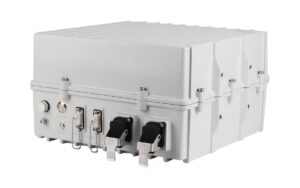
LINEX publishes enclosures from 6U to 26U, and anything above 26U is engineered and quoted per project rather than stocked as a catalog model. The outdoor cabinet range covers 6U, 9U, 12U, 15U, 18U, 20U and 26U, in 600 × 450mm or 600 × 600mm, with IP65 protection and 45mm EPS insulation.
A container project still uses the same 48V rack modules inside, so module current, depth and weight stay the same. What changes is the HVAC, fire detection, DC distribution, lighting and the factory acceptance test. The enclosure, cooling and fire system are project scope, and the battery modules are the same 48V rack units used in a cabinet.
An importer who has never handled a container should not start with one. The first order is better spent on a format that a local electrician can install and a local service team can maintain.
The format decides the lifting plan and the paperwork
A 43kg rack module and a 78kg rack module need different handling, and the UN38.3 test summary must name the exact pack model in the shipment. Plan a trolley for 43kg, a hoist for 78kg, and a wall survey for the 46kg wall unit.
Shipping documents follow the pack, not the cell. The file set is a UN38.3 test summary, an MSDS, and the Class 9 entry for lithium ion batteries above 100Wh. A 4.8kWh module is 4,800Wh, so it sits well above that line and cannot travel as excepted lithium ion cargo.
Ask for the test summary that names the module model and the cell model inside it. A cell-level report does not cover a finished pack, and customs can ask for the document after the container has arrived.
Stock the format your installer can service
The right first order is the format that a local electrician can install without a factory engineer, and for most importers that is the 5.12kWh all-in-one or the 48V 100Ah rack module. Both are single-person installs with standard tools, and both have a published datasheet with fixed dimensions.
| Order profile | Format | LINEX model | Why it fits |
|---|---|---|---|
| Retail and small solar | Stacked all-in-one | 5.12kWh, 550 × 280 × 807mm | One box, 6,200W output, no DC wiring between modules |
| Telecom and IT | Rack module | 48V 100Ah, 3U, 43kg | Fits a 19-inch cabinet, 100A continuous |
| Whole-home backup | Stacked all-in-one | 16.08kWh, 550 × 280 × 987mm | 104.4kWh/m², 200A maximum output |
| Commercial and utility | Container | Quoted per project | Above the 26U cabinet scope |
The format also sets the spare-parts plan. A rack site needs spare modules and a cabinet fan; an all-in-one site needs a spare unit or a service agreement, because the inverter and battery share one enclosure.
Frequently asked questions
3U is the height in a 19-inch rack. The 48V 100Ah module measures 133mm tall, 442mm wide and 420mm deep, and weighs 43kg.
Check the depth first. The 200Ah module lists 610mm depth and the 26U cabinet lists 600mm, so the module is deeper than the cabinet. Five 200Ah modules fit the 22U left after a 4U service allowance, but only if the enclosure depth and shelf rating allow it.
No. A stacked all-in-one is a floor-standing cabinet with the inverter and MPPT inside. A rack system is a set of 19-inch modules that needs an external inverter and cabinet. The 16.08kWh all-in-one is 550 × 280 × 987mm, while the 48V 100Ah rack module is 442 × 420 × 133mm.
The 5.12kWh, 10.55kWh and 16.08kWh models are IP41 and rated -15°C to 55°C, so they need a shelter. The outdoor cabinet is IP65, but it holds rack modules, not the all-in-one units.
With 6U reserved for a rectifier and distribution, 36U remains: twelve 3U 100Ah modules at 57.6kWh, or nine 4U 200Ah modules at 86.4kWh. Confirm the shelf load rating before ordering the 200Ah mix.
Sources: LINEX all-in-one 5/10/16kWh ESS datasheet (5,120Wh, 10,547Wh and 16,077Wh; 100A, 200A and 200A maximum output; 6,200W rated discharge; 6,000W PV input; MPPT 120V to 450V; 550 × 280 × 807mm and 550 × 280 × 987mm; IP41; -15°C to 55°C); LINEX wall-mounted 5kWh ESS datasheet (5,324Wh, 104Ah, 100A maximum, 50A nominal, 410 × 185 × 610mm, 46kg, IP20, 0°C to 60°C charge); LINEX 48V 100Ah, 150Ah and 200Ah rack datasheets (4.8kWh, 7.2kWh and 9.6kWh; 100A, 150A and 100A continuous; 3U and 4U; 43kg, 60kg and 78kg); LINEX outdoor cabinet datasheet (6U to 26U, 600 × 450mm and 600 × 600mm, IP65, 45mm EPS); LINEX indoor cabinet datasheet (10U to 47U). Cabinet module counts, kWh per U, kWh per square metre and weight totals are calculated from those figures with a 4U service allowance. Last updated 2026-10-27.
For the ESS range behind these formats, see the home energy storage battery supplier page. The all-in-one 5/10/16kWh ESS product page lists the stacked models, and the 48V lithium battery range covers the rack modules. Cabinet planning is covered in how many 48V 100Ah batteries fit a 26U cabinet, and outdoor enclosure options are on the telecom battery cabinet supplier page.